
About This Book
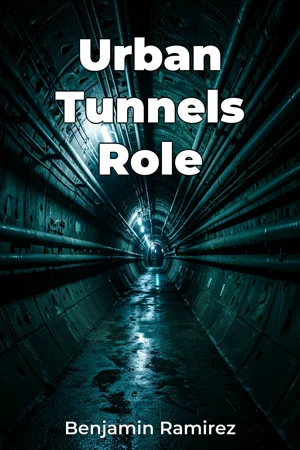
How do cities function when their lifeblood is hidden from view? "Urban Tunnels Role" delves into the often-unseen world of underground infrastructure, revealing its critical importance to the operation and evolution of modern urban centers. This book explores the intricate network of tunnels that support essential utilities and transportation systems, examining their design, construction, and impact on urban life. The primary focus is to illuminate the significance of tunnels in modern urban planning; their role in facilitating efficient utility distribution, such as water, electricity, and telecommunications; and their increasing importance in transportation networks, including subways, road tunnels, and high-speed rail. These three interconnected threads reveal the multifaceted nature of underground infrastructure and its indispensable contribution to the urban landscape. Understanding these systems is paramount for urban planners, engineers, and policymakers tasked with building sustainable and resilient cities for the future. Historically, underground infrastructure has evolved alongside urban development, initially serving basic sanitation needs and gradually expanding to accommodate more complex utilities and transportation demands. The book provides this context to illustrate how present-day challenges, such as increasing population density and climate change, necessitate innovative tunnel engineering and strategic urban planning. Readers will gain a foundational understanding of geological considerations, excavation techniques, and structural engineering principles relevant to tunnel construction. The central argument posits that underground infrastructure is not merely a functional necessity but a strategic asset that significantly shapes urban development, resilience, and quality of life. By understanding the role and potential of these subterranean networks, cities can optimize resource allocation, minimize environmental impact, and enhance overall urban sustainability. The book begins with an introduction to the concept of urban tunneling and its historical development, establishing the groundwork for understanding its modern applications. It then explores the utility aspect, detailing how tunnels house and protect essential services, reducing above-ground congestion and minimizing disruption during maintenance and upgrades. A major section is dedicated to transportation tunnels, examining their impact on traffic flow, accessibility, and urban sprawl. Case studies of cities around the world showcase best practices and innovative approaches to tunnel design and implementation. The book culminates by considering future trends, such as smart tunnels equipped with advanced monitoring systems, and their contributions to smart city initiatives. The analysis relies on a combination of engineering data, urban planning reports, and case studies from various cities globally. It draws upon academic research in civil engineering, urban studies, and environmental science, providing a robust and evidence-based perspective. Specific data sources include geological surveys, traffic flow analyses, and infrastructure performance reports. The book highlights the interdisciplinary nature of urban tunneling, connecting it to fields such as geology, environmental science, and urban sociology. Geological considerations are crucial for assessing ground conditions and mitigating risks during construction. Environmental impacts, such as groundwater contamination and noise pollution, are addressed through sustainable design and construction practices. Urban sociology provides insights into how tunnels influence social equity, accessibility, and community cohesion. A key differentiator of this book is its holistic approach, considering not only the technical aspects of tunnel engineering but also their broader social, economic, and environmental implications. It emphasizes the need for integrated planning and collaboration among various stakeholders to maximize the benefits of underground infrastructure. The tone is authoritative yet accessible, aiming to bridge the gap between technical expertise and general understanding. The writing style is clear, concise, and engaging, making complex concepts easily understandable for a broad audience. The target audience includes urban planners, civil engineers, policymakers, academics, and anyone interested in the future of cities. It would be valuable to students and professionals seeking a comprehensive understanding of underground infrastructure and its role in shaping the urban environment. As an Architecture and Technology book, it adheres to standards of technical accuracy and clarity. The scope of the book encompasses a wide range of urban tunneling applications but focuses primarily on developed countries with advanced infrastructure. It acknowledges the limitations of applying these models to developing countries with different economic and environmental realities. The insights presented can be applied practically in urban planning and infrastructure development projects. Engineers can learn from the case studies and best practices, while planners can use the information to make informed decisions about underground infrastructure investments. The book also provides a valuable resource for policymakers seeking to promote sustainable and resilient urban development. The book addresses ongoing debates regarding the cost-effectiveness of tunneling versus surface infrastructure, the environmental impacts of tunnel construction, and the ethical considerations of resource allocation in urban development projects. These controversies are explored through a balanced and objective lens.
How do cities function when their lifeblood is hidden from view? "Urban Tunnels Role" delves into the often-unseen world of underground infrastructure, revealing its critical importance to the operation and evolution of modern urban centers. This book explores the intricate network of tunnels that support essential utilities and transportation systems, examining their design, construction, and impact on urban life. The primary focus is to illuminate the significance of tunnels in modern urban planning; their role in facilitating efficient utility distribution, such as water, electricity, and telecommunications; and their increasing importance in transportation networks, including subways, road tunnels, and high-speed rail. These three interconnected threads reveal the multifaceted nature of underground infrastructure and its indispensable contribution to the urban landscape. Understanding these systems is paramount for urban planners, engineers, and policymakers tasked with building sustainable and resilient cities for the future. Historically, underground infrastructure has evolved alongside urban development, initially serving basic sanitation needs and gradually expanding to accommodate more complex utilities and transportation demands. The book provides this context to illustrate how present-day challenges, such as increasing population density and climate change, necessitate innovative tunnel engineering and strategic urban planning. Readers will gain a foundational understanding of geological considerations, excavation techniques, and structural engineering principles relevant to tunnel construction. The central argument posits that underground infrastructure is not merely a functional necessity but a strategic asset that significantly shapes urban development, resilience, and quality of life. By understanding the role and potential of these subterranean networks, cities can optimize resource allocation, minimize environmental impact, and enhance overall urban sustainability. The book begins with an introduction to the concept of urban tunneling and its historical development, establishing the groundwork for understanding its modern applications. It then explores the utility aspect, detailing how tunnels house and protect essential services, reducing above-ground congestion and minimizing disruption during maintenance and upgrades. A major section is dedicated to transportation tunnels, examining their impact on traffic flow, accessibility, and urban sprawl. Case studies of cities around the world showcase best practices and innovative approaches to tunnel design and implementation. The book culminates by considering future trends, such as smart tunnels equipped with advanced monitoring systems, and their contributions to smart city initiatives. The analysis relies on a combination of engineering data, urban planning reports, and case studies from various cities globally. It draws upon academic research in civil engineering, urban studies, and environmental science, providing a robust and evidence-based perspective. Specific data sources include geological surveys, traffic flow analyses, and infrastructure performance reports. The book highlights the interdisciplinary nature of urban tunneling, connecting it to fields such as geology, environmental science, and urban sociology. Geological considerations are crucial for assessing ground conditions and mitigating risks during construction. Environmental impacts, such as groundwater contamination and noise pollution, are addressed through sustainable design and construction practices. Urban sociology provides insights into how tunnels influence social equity, accessibility, and community cohesion. A key differentiator of this book is its holistic approach, considering not only the technical aspects of tunnel engineering but also their broader social, economic, and environmental implications. It emphasizes the need for integrated planning and collaboration among various stakeholders to maximize the benefits of underground infrastructure. The tone is authoritative yet accessible, aiming to bridge the gap between technical expertise and general understanding. The writing style is clear, concise, and engaging, making complex concepts easily understandable for a broad audience. The target audience includes urban planners, civil engineers, policymakers, academics, and anyone interested in the future of cities. It would be valuable to students and professionals seeking a comprehensive understanding of underground infrastructure and its role in shaping the urban environment. As an Architecture and Technology book, it adheres to standards of technical accuracy and clarity. The scope of the book encompasses a wide range of urban tunneling applications but focuses primarily on developed countries with advanced infrastructure. It acknowledges the limitations of applying these models to developing countries with different economic and environmental realities. The insights presented can be applied practically in urban planning and infrastructure development projects. Engineers can learn from the case studies and best practices, while planners can use the information to make informed decisions about underground infrastructure investments. The book also provides a valuable resource for policymakers seeking to promote sustainable and resilient urban development. The book addresses ongoing debates regarding the cost-effectiveness of tunneling versus surface infrastructure, the environmental impacts of tunnel construction, and the ethical considerations of resource allocation in urban development projects. These controversies are explored through a balanced and objective lens.
"Urban Tunnels Role" explores the hidden world of underground infrastructure and its vital role in modern cities. This book highlights how urban tunnels support essential utilities, like water and electricity, and transportation systems, such as subways, impacting urban development, resilience, and sustainability. Intriguingly, underground infrastructure has evolved alongside urban development, initially serving basic sanitation needs and expanding to meet current challenges like population density and climate change. The book emphasizes the importance of tunnels for efficient utility distribution and transportation networks. It examines geological considerations, excavation techniques, and structural engineering principles, providing a comprehensive understanding of tunnel construction. By understanding these subterranean networks, cities can optimize resource allocation and minimize environmental impact. Beginning with the historical development of urban tunneling, the book progresses through utility and transportation aspects, featuring global case studies of successful tunnel implementation. It concludes by exploring future trends like "smart tunnels," showcasing how advanced monitoring systems contribute to smart city initiatives. This approach ensures readers gain a holistic view of urban tunneling's role in shaping sustainable and resilient urban centers.
Book Details
ISBN
9788235207388
Publisher
Publifye AS
Your Licenses
You don't own any licenses for this book
Purchase a license below to unlock this book and download the EPUB.
Purchase License
Select a tier to unlock this book
Need bulk licensing?
Contact us for enterprise agreements.