
About This Book
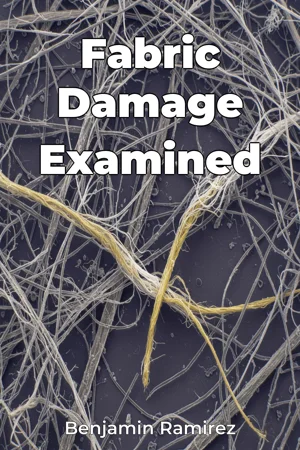
Have you ever wondered why your favorite shirt faded or disintegrated after just a few washes? "Fabric Damage Examined" delves into the science behind textile degradation caused by aggressive detergents and explores the intricate relationship between chemical action and fiber integrity. This book is crucial to understanding why and how fabrics fail, offering insights for textile designers, conservationists, and everyday consumers alike. This book examines the fundamental mechanisms by which common detergent ingredients interact with and ultimately damage textile fibers. It explains the importance of surfactant chemistry, enzyme activity, and pH levels in laundry formulations. It also clarifies how factors such as water temperature, wash duration, and mechanical action during washing contribute to fabric wear and tear. These topics are relevant as the textile industry seeks more sustainable practices, and consumers demand longer-lasting clothing. Our analysis builds upon decades of textile science research, tracing the evolution of detergent formulations from harsh, alkaline soaps to the more complex, enzyme-based detergents of today. An understanding of basic chemistry and fiber science enhances the reader's grasp of the material, although we provide clear explanations of essential concepts. The central argument is that aggressive detergent formulations, while effective at stain removal, often compromise the long-term durability of textiles. This book emphasizes that a balanced approach to cleaning is necessary, one that prioritizes both stain removal and fabric preservation. It underscores the need for informed choices in detergent selection and laundry practices. The book is structured into three parts. First, an introduction to fiber science, detailing the chemical composition and physical structure of common textile fibers such as cotton, wool, silk, and synthetics. Second, an examination of detergent chemistry, thoroughly explaining the role of surfactants, enzymes, builders, and bleaches in the washing process. Each component’s impact on different fiber types will be clarified. Third, the culmination synthesizes the information through case studies, demonstrating how specific detergent formulations and laundering conditions lead to specific types of fabric damage which include color fading, fiber weakening, and structural disintegration. We conclude with practical guidelines for selecting appropriate detergents and employing gentler washing techniques to extend the life of textiles. The arguments presented are substantiated by a comprehensive review of scientific literature, including peer-reviewed research articles, industry reports, and experimental data from laboratory testing of fabric samples subjected to various washing conditions. Unique to this work may be detailed microscopic and spectroscopic analyses of damaged fibers, providing visual evidence of the detrimental effects of aggressive detergents. "Fabric Damage Examined" bridges textile chemistry with consumer science. The book highlights the environmental impacts of detergent use and fast fashion, connecting to environmental science and sustainability. Additionally, the insights into fiber degradation are relevant to textile conservation in museums and archives, linking to the field of cultural heritage preservation. This book offers a unique perspective by integrating a detailed understanding of textile chemistry with practical advice for consumers and professionals. It emphasizes informed decision-making in detergent selection and addresses the need for more sustainable laundry practices. The tone is informative and analytical, presenting complex scientific concepts in an accessible manner. The writing style aims to clarify and educate, making the information understandable for a broad audience without sacrificing scientific rigor. The target audience includes textile designers, conservationists, fashion students, eco-conscious consumers and anyone interested in prolonging the life of their clothing and household textiles. This book is beneficial because it provides a scientific basis for understanding fabric care and empowers readers to make informed choices. As a work of non-fiction, it adheres to the conventions of presenting factual information supported by evidence. It avoids speculation and sticks to well-established scientific principles. The scope of the book is limited to the effects of detergents on common textile fibers. It does not cover all possible causes of fabric damage, such as sunlight exposure or mechanical abrasion from wear. Readers can apply the information to make better choices about the detergents they use, adopt gentler washing practices, and advocate for more sustainable laundry habits. They can also use the knowledge to identify and address signs of fabric damage early on, potentially saving items from irreversible deterioration. While there is general agreement on the basic principles of detergent chemistry and fiber science, some debate exists regarding the environmental impacts of specific detergent ingredients and the effectiveness of alternative cleaning methods. This book will present different sides of these debates, offering a balanced perspective.
Have you ever wondered why your favorite shirt faded or disintegrated after just a few washes? "Fabric Damage Examined" delves into the science behind textile degradation caused by aggressive detergents and explores the intricate relationship between chemical action and fiber integrity. This book is crucial to understanding why and how fabrics fail, offering insights for textile designers, conservationists, and everyday consumers alike. This book examines the fundamental mechanisms by which common detergent ingredients interact with and ultimately damage textile fibers. It explains the importance of surfactant chemistry, enzyme activity, and pH levels in laundry formulations. It also clarifies how factors such as water temperature, wash duration, and mechanical action during washing contribute to fabric wear and tear. These topics are relevant as the textile industry seeks more sustainable practices, and consumers demand longer-lasting clothing. Our analysis builds upon decades of textile science research, tracing the evolution of detergent formulations from harsh, alkaline soaps to the more complex, enzyme-based detergents of today. An understanding of basic chemistry and fiber science enhances the reader's grasp of the material, although we provide clear explanations of essential concepts. The central argument is that aggressive detergent formulations, while effective at stain removal, often compromise the long-term durability of textiles. This book emphasizes that a balanced approach to cleaning is necessary, one that prioritizes both stain removal and fabric preservation. It underscores the need for informed choices in detergent selection and laundry practices. The book is structured into three parts. First, an introduction to fiber science, detailing the chemical composition and physical structure of common textile fibers such as cotton, wool, silk, and synthetics. Second, an examination of detergent chemistry, thoroughly explaining the role of surfactants, enzymes, builders, and bleaches in the washing process. Each component’s impact on different fiber types will be clarified. Third, the culmination synthesizes the information through case studies, demonstrating how specific detergent formulations and laundering conditions lead to specific types of fabric damage which include color fading, fiber weakening, and structural disintegration. We conclude with practical guidelines for selecting appropriate detergents and employing gentler washing techniques to extend the life of textiles. The arguments presented are substantiated by a comprehensive review of scientific literature, including peer-reviewed research articles, industry reports, and experimental data from laboratory testing of fabric samples subjected to various washing conditions. Unique to this work may be detailed microscopic and spectroscopic analyses of damaged fibers, providing visual evidence of the detrimental effects of aggressive detergents. "Fabric Damage Examined" bridges textile chemistry with consumer science. The book highlights the environmental impacts of detergent use and fast fashion, connecting to environmental science and sustainability. Additionally, the insights into fiber degradation are relevant to textile conservation in museums and archives, linking to the field of cultural heritage preservation. This book offers a unique perspective by integrating a detailed understanding of textile chemistry with practical advice for consumers and professionals. It emphasizes informed decision-making in detergent selection and addresses the need for more sustainable laundry practices. The tone is informative and analytical, presenting complex scientific concepts in an accessible manner. The writing style aims to clarify and educate, making the information understandable for a broad audience without sacrificing scientific rigor. The target audience includes textile designers, conservationists, fashion students, eco-conscious consumers and anyone interested in prolonging the life of their clothing and household textiles. This book is beneficial because it provides a scientific basis for understanding fabric care and empowers readers to make informed choices. As a work of non-fiction, it adheres to the conventions of presenting factual information supported by evidence. It avoids speculation and sticks to well-established scientific principles. The scope of the book is limited to the effects of detergents on common textile fibers. It does not cover all possible causes of fabric damage, such as sunlight exposure or mechanical abrasion from wear. Readers can apply the information to make better choices about the detergents they use, adopt gentler washing practices, and advocate for more sustainable laundry habits. They can also use the knowledge to identify and address signs of fabric damage early on, potentially saving items from irreversible deterioration. While there is general agreement on the basic principles of detergent chemistry and fiber science, some debate exists regarding the environmental impacts of specific detergent ingredients and the effectiveness of alternative cleaning methods. This book will present different sides of these debates, offering a balanced perspective.
"Fabric Damage Examined" explores the science behind why our clothes degrade over time, focusing on the impact of detergents and laundry practices. It examines how detergent chemistry, including surfactant chemistry and enzyme activity, interacts with textile fibers like cotton, wool, and synthetics, leading to fiber degradation. The book reveals that while detergents effectively remove stains, aggressive formulations can compromise the long-term durability of textiles. Microscopic and spectroscopic analyses offer visual evidence of this damage. The book emphasizes the importance of understanding the composition of both textile fibers and detergent formulations to promote fabric preservation. It highlights the need for a balanced approach to cleaning, advocating for informed choices in detergent selection and gentler washing techniques. Addressing sustainable practices, it emphasizes the need for consumers and the textile industry to adopt practices extending the life of clothing and household textiles. The book progresses by first introducing fiber science and detailing the chemical composition of textiles. It then examines detergent chemistry, explaining the role of surfactants and enzymes. Finally, it synthesizes this information with case studies illustrating how specific detergents and conditions lead to fabric damage, concluding with practical guidelines for sustainable laundry habits.
Book Details
ISBN
9788235207265
Publisher
Publifye AS
Your Licenses
You don't own any licenses for this book
Purchase a license below to unlock this book and download the EPUB.
Purchase License
Select a tier to unlock this book
Need bulk licensing?
Contact us for enterprise agreements.