
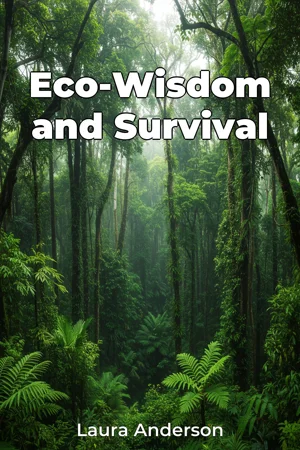
About This Book
Can ancient ways hold the key to our planet's future? "Eco-Wisdom and Survival" explores the profound ecological knowledge embedded within indigenous cultures around the globe and demonstrates its critical importance for achieving genuine sustainability in the 21st century. This book delves into the interconnectedness of traditional practices, environmental stewardship, and the pressing need for a paradigm shift in how we interact with the natural world. We examine two central themes. First, the depth and breadth of indigenous ecological knowledge (IEK), revealing sophisticated understandings of local ecosystems, sustainable resource management, and climate patterns developed over generations. Second, we analyze the practical application of IEK in contemporary conservation and development efforts, highlighting both successes and challenges in integrating traditional wisdom with modern scientific approaches. These topics are important because they offer alternative pathways towards environmental resilience at a time when conventional strategies are proving inadequate. The book provides vital context by exploring the historical marginalization of indigenous peoples and the systematic undervaluing of their knowledge systems. It reveals how colonial legacies and modern development models have disrupted traditional land management practices, leading to environmental degradation and loss of biodiversity and cultural heritage. Readers will benefit from a basic understanding of ecological principles and an openness to diverse perspectives on human-environment relationships. The central argument of "Eco-Wisdom and Survival" is that integrating indigenous ecological knowledge into mainstream environmental policy and practice is not merely a matter of cultural sensitivity, but a crucial imperative for achieving long-term ecological stability and social justice. This argument is critical because it challenges the dominant narrative of Western scientific supremacy in environmental management and emphasizes the value of place-based, culturally informed solutions. The book's structure follows a logical progression. We begin by defining indigenous ecological knowledge and exploring its diverse manifestations across different cultures. The initial chapters outline the core principles of IEK, including its holistic, relational, and adaptive nature. We then present case studies from various regions, demonstrating the practical application of IEK in areas such as sustainable agriculture, water management, and biodiversity conservation. We explore the complexities of integrating IEK with modern science, examining the challenges of knowledge translation, power imbalances, and the potential for collaborative research. The book culminates by proposing a framework for incorporating IEK into environmental policy and promoting genuine partnerships between indigenous communities, scientists, and policymakers. Practical implications are explored, including how IEK can inform community-based conservation initiatives, climate change adaptation strategies, and sustainable development projects. "Eco-Wisdom and Survival" draws upon a diverse range of evidence, including ethnographic studies, community-based research projects, scientific assessments of traditional practices, and policy documents related to indigenous rights and environmental management. Unique data sources include oral histories, traditional ecological calendars, and participatory mapping exercises conducted in collaboration with indigenous communities. The book connects to various fields, including anthropology, ecology, environmental policy, and development studies. It draws on anthropological insights to understand the cultural context of IEK, ecological principles to assess the scientific validity of traditional practices, environmental policy frameworks to explore the legal and institutional mechanisms for incorporating IEK, and development studies to examine the role of IEK in promoting sustainable livelihoods and community resilience. These connections enrich the book's argument by providing a multi-faceted perspective on the relationship between indigenous knowledge, environmental sustainability, and social justice. The book stands out by offering a balanced and nuanced perspective on the integration of IEK with modern science, avoiding romanticized notions of indigenous wisdom while also challenging the limitations of purely technocratic approaches. It proposes a framework for collaborative knowledge production that respects both indigenous and scientific ways of knowing. The tone is informative and respectful, aiming to bridge the gap between academic research and practical application. While grounded in rigorous scholarship, the writing style is accessible to a broad audience interested in environmental issues and indigenous cultures. The target audience includes students, researchers, policymakers, conservation practitioners, and anyone interested in learning about indigenous knowledge and its potential for addressing environmental challenges. The book's value lies in its comprehensive overview of IEK, its critical analysis of the challenges and opportunities for integration, and its practical recommendations for promoting collaborative environmental stewardship. As a work of environmental non-fiction, the book adheres to principles of accuracy, objectivity, and transparency, providing clear citations for all sources and acknowledging any potential biases. The scope of the book is global, encompassing diverse cultural and ecological contexts. However, it acknowledges the limitations of generalizing across cultures and emphasizes the importance of understanding the specific context of each indigenous community and its knowledge system. The information shared can be applied in real-world scenarios such as community-based conservation projects, sustainable agriculture initiatives, and climate change adaptation planning. The book also addresses controversies in the field such as the issues of cultural appropriation, intellectual property rights, and the potential for misinterpreting or misapplying indigenous knowledge.
Can ancient ways hold the key to our planet's future? "Eco-Wisdom and Survival" explores the profound ecological knowledge embedded within indigenous cultures around the globe and demonstrates its critical importance for achieving genuine sustainability in the 21st century. This book delves into the interconnectedness of traditional practices, environmental stewardship, and the pressing need for a paradigm shift in how we interact with the natural world. We examine two central themes. First, the depth and breadth of indigenous ecological knowledge (IEK), revealing sophisticated understandings of local ecosystems, sustainable resource management, and climate patterns developed over generations. Second, we analyze the practical application of IEK in contemporary conservation and development efforts, highlighting both successes and challenges in integrating traditional wisdom with modern scientific approaches. These topics are important because they offer alternative pathways towards environmental resilience at a time when conventional strategies are proving inadequate. The book provides vital context by exploring the historical marginalization of indigenous peoples and the systematic undervaluing of their knowledge systems. It reveals how colonial legacies and modern development models have disrupted traditional land management practices, leading to environmental degradation and loss of biodiversity and cultural heritage. Readers will benefit from a basic understanding of ecological principles and an openness to diverse perspectives on human-environment relationships. The central argument of "Eco-Wisdom and Survival" is that integrating indigenous ecological knowledge into mainstream environmental policy and practice is not merely a matter of cultural sensitivity, but a crucial imperative for achieving long-term ecological stability and social justice. This argument is critical because it challenges the dominant narrative of Western scientific supremacy in environmental management and emphasizes the value of place-based, culturally informed solutions. The book's structure follows a logical progression. We begin by defining indigenous ecological knowledge and exploring its diverse manifestations across different cultures. The initial chapters outline the core principles of IEK, including its holistic, relational, and adaptive nature. We then present case studies from various regions, demonstrating the practical application of IEK in areas such as sustainable agriculture, water management, and biodiversity conservation. We explore the complexities of integrating IEK with modern science, examining the challenges of knowledge translation, power imbalances, and the potential for collaborative research. The book culminates by proposing a framework for incorporating IEK into environmental policy and promoting genuine partnerships between indigenous communities, scientists, and policymakers. Practical implications are explored, including how IEK can inform community-based conservation initiatives, climate change adaptation strategies, and sustainable development projects. "Eco-Wisdom and Survival" draws upon a diverse range of evidence, including ethnographic studies, community-based research projects, scientific assessments of traditional practices, and policy documents related to indigenous rights and environmental management. Unique data sources include oral histories, traditional ecological calendars, and participatory mapping exercises conducted in collaboration with indigenous communities. The book connects to various fields, including anthropology, ecology, environmental policy, and development studies. It draws on anthropological insights to understand the cultural context of IEK, ecological principles to assess the scientific validity of traditional practices, environmental policy frameworks to explore the legal and institutional mechanisms for incorporating IEK, and development studies to examine the role of IEK in promoting sustainable livelihoods and community resilience. These connections enrich the book's argument by providing a multi-faceted perspective on the relationship between indigenous knowledge, environmental sustainability, and social justice. The book stands out by offering a balanced and nuanced perspective on the integration of IEK with modern science, avoiding romanticized notions of indigenous wisdom while also challenging the limitations of purely technocratic approaches. It proposes a framework for collaborative knowledge production that respects both indigenous and scientific ways of knowing. The tone is informative and respectful, aiming to bridge the gap between academic research and practical application. While grounded in rigorous scholarship, the writing style is accessible to a broad audience interested in environmental issues and indigenous cultures. The target audience includes students, researchers, policymakers, conservation practitioners, and anyone interested in learning about indigenous knowledge and its potential for addressing environmental challenges. The book's value lies in its comprehensive overview of IEK, its critical analysis of the challenges and opportunities for integration, and its practical recommendations for promoting collaborative environmental stewardship. As a work of environmental non-fiction, the book adheres to principles of accuracy, objectivity, and transparency, providing clear citations for all sources and acknowledging any potential biases. The scope of the book is global, encompassing diverse cultural and ecological contexts. However, it acknowledges the limitations of generalizing across cultures and emphasizes the importance of understanding the specific context of each indigenous community and its knowledge system. The information shared can be applied in real-world scenarios such as community-based conservation projects, sustainable agriculture initiatives, and climate change adaptation planning. The book also addresses controversies in the field such as the issues of cultural appropriation, intellectual property rights, and the potential for misinterpreting or misapplying indigenous knowledge.
"Eco-Wisdom and Survival" highlights the crucial role of indigenous ecological knowledge (IEK) in achieving true sustainability. It explores how traditional practices offer profound insights into environmental stewardship, revealing sophisticated understandings of ecosystems honed over generations. The book champions the integration of IEK with modern science, moving beyond conventional approaches to environmental resilience. The book argues that incorporating IEK into environmental policy isn't just about cultural sensitivity but is essential for long-term ecological stability. For instance, traditional ecological calendars demonstrate how indigenous communities have long tracked climate patterns. It also addresses the complexities of integrating IEK with modern science, examining challenges like knowledge translation and power imbalances. The book begins by defining IEK and progresses through case studies of its practical applications in sustainable agriculture, water management, and conservation. It culminates in a framework for incorporating IEK into policy, promoting partnerships between indigenous communities, scientists, and policymakers, offering a balanced perspective that values both indigenous and scientific ways of knowing.
Book Details
ISBN
9788235207258
Publisher
Publifye AS
Your Licenses
You don't own any licenses for this book
Purchase a license below to unlock this book and download the EPUB.
Purchase License
Select a tier to unlock this book
Need bulk licensing?
Contact us for enterprise agreements.