
About This Book
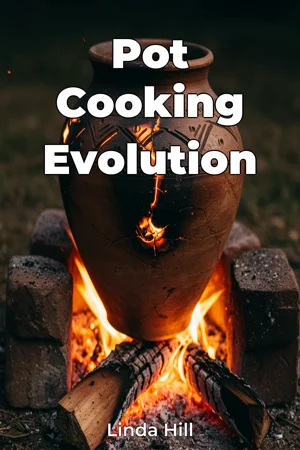
How has the simple cooking pot shaped human civilization? "Pot Cooking Evolution" explores the fascinating journey of food preparation vessels, tracing their development across diverse cultures and epochs. This book argues that the evolution of cooking pots is intrinsically linked to advancements in material science, adaptations in culinary techniques, and the very fabric of societal structures. Understanding this evolution provides crucial insights into the history of technology, foodways, and cultural exchange. The book delves into three key areas: materials, techniques, and cultural impact. First, it analyzes the innovative use of materials, from early clay vessels and woven baskets waterproofed with resin to the sophisticated metal alloys and ceramics of the modern era. The book discusses how the properties of these materials influenced cooking methods and expanded culinary possibilities. Second, it examines how culinary techniques adapted to the constraints and opportunities presented by different pot designs and heating methods. From simple boiling and steaming to complex braising and stewing, the book illustrates how pot cooking has shaped the flavors and textures of cuisines worldwide. Finally, the book considers the profound cultural impact of pot cooking, exploring how it influenced social gatherings, food distribution, and even religious practices. "Pot Cooking Evolution" presents a chronological survey of pot development, beginning with the earliest known examples of cooking vessels and continuing to contemporary innovations such as pressure cookers and slow cookers. Early chapters focus on the use of natural materials like gourds, animal hides, and woven plant fibers, as well as the groundbreaking invention of pottery. Later chapters explore the impact of metalworking on pot design, highlighting the advantages of copper, bronze, and iron. Further chapters examine regional variations in pot cooking, showcasing the unique traditions of Asia, Africa, Europe, and the Americas. The book culminates with a discussion of modern cooking technologies and their implications for food production and consumption. The arguments presented in this book are supported by a wide range of evidence, including archaeological finds, historical texts, ethnographic studies, and scientific analyses of cooking pot materials. The book draws on data from museum collections, excavation sites, and culinary archives around the world. It also incorporates experimental archaeology, in which researchers recreate ancient cooking techniques to better understand their effects on food. This book bridges the gap between archaeology, culinary history, and materials science. It also draws connections to anthropology by examining the social and cultural contexts of pot cooking. The book's interdisciplinary approach provides a holistic understanding of how cooking pots have shaped human civilization. "Pot Cooking Evolution" offers a unique perspective by focusing on the technological evolution of a seemingly simple object: the cooking pot. It challenges conventional narratives of culinary history by demonstrating the central role of material innovation in shaping foodways. Written in an accessible and engaging style, "Pot Cooking Evolution" is aimed at a broad audience, including culinary enthusiasts, history buffs, archaeologists, and anyone interested in the intersection of food, technology, and culture. The book does not assume any prior knowledge of archaeology or materials science but provides clear explanations of key concepts. As a work of non-fiction, "Pot Cooking Evolution" adheres to the highest standards of scholarly rigor. All claims are supported by evidence, and sources are carefully cited. While the book strives for comprehensive coverage, it acknowledges the vastness of the subject matter and focuses on key examples and trends. It does not delve deeply into the micronational analysis and focuses on large-scale timeframes and evolution. The information presented in "Pot Cooking Evolution" has practical applications for contemporary cooks. By understanding the principles of heat transfer, material compatibility, and culinary technique, readers can improve their cooking skills and experiment with new flavors and methods.
How has the simple cooking pot shaped human civilization? "Pot Cooking Evolution" explores the fascinating journey of food preparation vessels, tracing their development across diverse cultures and epochs. This book argues that the evolution of cooking pots is intrinsically linked to advancements in material science, adaptations in culinary techniques, and the very fabric of societal structures. Understanding this evolution provides crucial insights into the history of technology, foodways, and cultural exchange. The book delves into three key areas: materials, techniques, and cultural impact. First, it analyzes the innovative use of materials, from early clay vessels and woven baskets waterproofed with resin to the sophisticated metal alloys and ceramics of the modern era. The book discusses how the properties of these materials influenced cooking methods and expanded culinary possibilities. Second, it examines how culinary techniques adapted to the constraints and opportunities presented by different pot designs and heating methods. From simple boiling and steaming to complex braising and stewing, the book illustrates how pot cooking has shaped the flavors and textures of cuisines worldwide. Finally, the book considers the profound cultural impact of pot cooking, exploring how it influenced social gatherings, food distribution, and even religious practices. "Pot Cooking Evolution" presents a chronological survey of pot development, beginning with the earliest known examples of cooking vessels and continuing to contemporary innovations such as pressure cookers and slow cookers. Early chapters focus on the use of natural materials like gourds, animal hides, and woven plant fibers, as well as the groundbreaking invention of pottery. Later chapters explore the impact of metalworking on pot design, highlighting the advantages of copper, bronze, and iron. Further chapters examine regional variations in pot cooking, showcasing the unique traditions of Asia, Africa, Europe, and the Americas. The book culminates with a discussion of modern cooking technologies and their implications for food production and consumption. The arguments presented in this book are supported by a wide range of evidence, including archaeological finds, historical texts, ethnographic studies, and scientific analyses of cooking pot materials. The book draws on data from museum collections, excavation sites, and culinary archives around the world. It also incorporates experimental archaeology, in which researchers recreate ancient cooking techniques to better understand their effects on food. This book bridges the gap between archaeology, culinary history, and materials science. It also draws connections to anthropology by examining the social and cultural contexts of pot cooking. The book's interdisciplinary approach provides a holistic understanding of how cooking pots have shaped human civilization. "Pot Cooking Evolution" offers a unique perspective by focusing on the technological evolution of a seemingly simple object: the cooking pot. It challenges conventional narratives of culinary history by demonstrating the central role of material innovation in shaping foodways. Written in an accessible and engaging style, "Pot Cooking Evolution" is aimed at a broad audience, including culinary enthusiasts, history buffs, archaeologists, and anyone interested in the intersection of food, technology, and culture. The book does not assume any prior knowledge of archaeology or materials science but provides clear explanations of key concepts. As a work of non-fiction, "Pot Cooking Evolution" adheres to the highest standards of scholarly rigor. All claims are supported by evidence, and sources are carefully cited. While the book strives for comprehensive coverage, it acknowledges the vastness of the subject matter and focuses on key examples and trends. It does not delve deeply into the micronational analysis and focuses on large-scale timeframes and evolution. The information presented in "Pot Cooking Evolution" has practical applications for contemporary cooks. By understanding the principles of heat transfer, material compatibility, and culinary technique, readers can improve their cooking skills and experiment with new flavors and methods.
"Pot Cooking Evolution" unveils the profound impact of cooking pots on human history, arguing that these simple vessels have driven technological advancements, influenced culinary techniques, and shaped cultural practices. The book explores how innovations in material science, like the transition from early clay pots to metal alloys, directly expanded culinary possibilities and altered cooking methods. Early chapters detail the use of natural materials, while later chapters move through the metal ages and explore regional cooking variations across continents like Asia, Africa, Europe, and the Americas. The book uniquely bridges archaeology, culinary history, and material science to highlight the central role of pot technology in foodways. Did you know that the development of sophisticated braising and stewing methods was enabled by specific pot designs? Or that pot cooking has deeply influenced social gatherings and even religious practices? The book progresses chronologically, showcasing the evolution from basic boiling and steaming techniques, to pressure cookers and slow cookers, while always emphasizing the cultural impact of pot cooking evolution.
Book Details
ISBN
9788235207234
Publisher
Publifye AS
Your Licenses
You don't own any licenses for this book
Purchase a license below to unlock this book and download the EPUB.
Purchase License
Select a tier to unlock this book
Need bulk licensing?
Contact us for enterprise agreements.