
About This Book
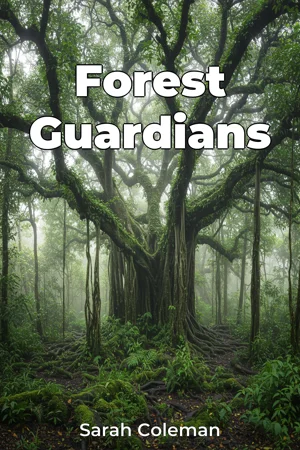
Have trees always been mere resources to humankind, or have they played a deeper, more sacred role in our collective consciousness? "Forest Guardians" delves into the intricate and enduring relationship between humanity and the arboreal world, exploring how trees, forests, and their associated protector spirits have been woven into the fabric of mythology, religion, and literary traditions across diverse cultures and throughout history. This book is a comprehensive exploration of the spiritual and symbolic significance of forests. The core topics examined are: the veneration of sacred trees and groves as focal points of religious practice; the prevalence of mystical forests as settings for transformative events in myths and legends; and the ubiquitous belief in guardian spirits who protect and embody the essence of woodlands. These topics are vital because they reveal a fundamental aspect of the human condition: the innate tendency to find meaning and spiritual connection in the natural world. Understanding these connections provides insights into the evolution of human beliefs, social structures, and artistic expression. To fully appreciate the profound impact of forests on human culture, "Forest Guardians" considers the historical context of deforestation, shifting agricultural practices, and the ongoing tension between resource exploitation and conservation efforts. Prior knowledge of basic world history and comparative religion will enhance the reader's understanding, though the text is designed to be accessible to interested readers from various backgrounds. The central argument of this book is that the enduring presence of sacred forests, mystical woodlands, and guardian spirits in mythology and literature reflects a deep-seated, often subconscious, recognition of the vital ecological and psychological roles that forests play in human well-being. By mapping this archetypal connection across cultures, "Forest Guardians" illuminates the urgent need to re-evaluate our relationship with these essential ecosystems. The book is structured to first introduce the core concepts of sacred groves, mythical forests, and forest spirits, tracing their origins in ancient religions and folklore. It then develops these ideas through focused explorations, with dedicated chapters examining: (1) the role of particular tree species (e.g., oak, yew, banyan) as symbols of power, wisdom, or life and death; (2) the recurring motif of the forest as a liminal space, a site of initiation, danger, and transformation in folklore and literature; and (3) the diverse forms and functions of forest guardians, from nature deities to local spirits and animal totems. The book culminates in a discussion of the contemporary relevance of these ancient beliefs, exploring how they inform modern environmental ethics and conservation practices. The arguments presented in "Forest Guardians" are supported by a wide range of evidence, drawing from primary sources such as ancient religious texts, folklore collections, and early travelogues, as well as secondary scholarship in anthropology, religious studies, and literary criticism. Unique data sources include ethno-botanical surveys documenting traditional uses of forests and ethnographic studies of contemporary cultures that maintain strong connections to the natural world. The book also integrates interdisciplinary connections to enhance its argument. Firstly, it connects to environmental studies by exploring how traditional beliefs can inform modern conservation efforts. Secondly, it connects to psychology by examining the psychological impact of nature on human well-being and mental health. Thirdly, it connects to art history by analyzing the visual representations of sacred trees and forests in different cultures. "Forest Guardians" takes a unique approach by weaving together mythological, religious, historical, and ecological perspectives to offer a comprehensive understanding of the human-forest relationship. The writing style is academic yet accessible, aiming to inform and engage a broad audience of readers. The target audience includes students and scholars of religion, mythology, literature, and environmental studies, as well as anyone interested in exploring the cultural and spiritual significance of forests. The book's value lies in its ability to provide a fresh perspective on the importance of forests, not only as vital ecosystems but also as sources of meaning and inspiration. As a work of non-fiction in the history and religion genres, "Forest Guardians" strives for accuracy, objectivity, and a balanced presentation of diverse perspectives. While the scope of the book is broad, encompassing a wide range of cultures and time periods, it focuses primarily on examples from Europe, Asia, and the Americas, with the intention of providing in-depth analysis rather than exhaustive global coverage. The information presented has real-world applications for those seeking to deepen their understanding of nature-based spirituality, promote environmental stewardship, or simply appreciate the profound beauty and complexity of the natural world. Although focused on historical and cultural analysis, the topic touches upon ongoing debates about deforestation, climate change, and the ethical responsibilities of humanity toward the environment.
Have trees always been mere resources to humankind, or have they played a deeper, more sacred role in our collective consciousness? "Forest Guardians" delves into the intricate and enduring relationship between humanity and the arboreal world, exploring how trees, forests, and their associated protector spirits have been woven into the fabric of mythology, religion, and literary traditions across diverse cultures and throughout history. This book is a comprehensive exploration of the spiritual and symbolic significance of forests. The core topics examined are: the veneration of sacred trees and groves as focal points of religious practice; the prevalence of mystical forests as settings for transformative events in myths and legends; and the ubiquitous belief in guardian spirits who protect and embody the essence of woodlands. These topics are vital because they reveal a fundamental aspect of the human condition: the innate tendency to find meaning and spiritual connection in the natural world. Understanding these connections provides insights into the evolution of human beliefs, social structures, and artistic expression. To fully appreciate the profound impact of forests on human culture, "Forest Guardians" considers the historical context of deforestation, shifting agricultural practices, and the ongoing tension between resource exploitation and conservation efforts. Prior knowledge of basic world history and comparative religion will enhance the reader's understanding, though the text is designed to be accessible to interested readers from various backgrounds. The central argument of this book is that the enduring presence of sacred forests, mystical woodlands, and guardian spirits in mythology and literature reflects a deep-seated, often subconscious, recognition of the vital ecological and psychological roles that forests play in human well-being. By mapping this archetypal connection across cultures, "Forest Guardians" illuminates the urgent need to re-evaluate our relationship with these essential ecosystems. The book is structured to first introduce the core concepts of sacred groves, mythical forests, and forest spirits, tracing their origins in ancient religions and folklore. It then develops these ideas through focused explorations, with dedicated chapters examining: (1) the role of particular tree species (e.g., oak, yew, banyan) as symbols of power, wisdom, or life and death; (2) the recurring motif of the forest as a liminal space, a site of initiation, danger, and transformation in folklore and literature; and (3) the diverse forms and functions of forest guardians, from nature deities to local spirits and animal totems. The book culminates in a discussion of the contemporary relevance of these ancient beliefs, exploring how they inform modern environmental ethics and conservation practices. The arguments presented in "Forest Guardians" are supported by a wide range of evidence, drawing from primary sources such as ancient religious texts, folklore collections, and early travelogues, as well as secondary scholarship in anthropology, religious studies, and literary criticism. Unique data sources include ethno-botanical surveys documenting traditional uses of forests and ethnographic studies of contemporary cultures that maintain strong connections to the natural world. The book also integrates interdisciplinary connections to enhance its argument. Firstly, it connects to environmental studies by exploring how traditional beliefs can inform modern conservation efforts. Secondly, it connects to psychology by examining the psychological impact of nature on human well-being and mental health. Thirdly, it connects to art history by analyzing the visual representations of sacred trees and forests in different cultures. "Forest Guardians" takes a unique approach by weaving together mythological, religious, historical, and ecological perspectives to offer a comprehensive understanding of the human-forest relationship. The writing style is academic yet accessible, aiming to inform and engage a broad audience of readers. The target audience includes students and scholars of religion, mythology, literature, and environmental studies, as well as anyone interested in exploring the cultural and spiritual significance of forests. The book's value lies in its ability to provide a fresh perspective on the importance of forests, not only as vital ecosystems but also as sources of meaning and inspiration. As a work of non-fiction in the history and religion genres, "Forest Guardians" strives for accuracy, objectivity, and a balanced presentation of diverse perspectives. While the scope of the book is broad, encompassing a wide range of cultures and time periods, it focuses primarily on examples from Europe, Asia, and the Americas, with the intention of providing in-depth analysis rather than exhaustive global coverage. The information presented has real-world applications for those seeking to deepen their understanding of nature-based spirituality, promote environmental stewardship, or simply appreciate the profound beauty and complexity of the natural world. Although focused on historical and cultural analysis, the topic touches upon ongoing debates about deforestation, climate change, and the ethical responsibilities of humanity toward the environment.
"Forest Guardians" explores the profound, enduring relationship between humanity and forests, revealing how trees and their guardian spirits are deeply embedded in mythology, religion, and literature across cultures. The book examines the veneration of sacred trees and the prevalence of mystical forests, highlighting how these elements reflect our innate connection to the natural world. Consider, for example, how certain tree species like the oak, yew, and banyan, recur as symbols of power, life, and death in diverse mythologies, or how forests often serve as liminal spaces in folklore, where characters undergo transformative experiences. The book progresses from the origins of sacred groves and forest spirits in ancient religions to focused explorations of specific tree symbolism, recurring forest motifs, and the diverse forms of forest guardians. "Forest Guardians" uniquely weaves together mythological, religious, historical, and ecological perspectives, supported by primary sources like ancient texts and folklore, alongside modern scholarship. This approach illuminates the urgent need to re-evaluate our relationship with these essential ecosystems, connecting ancient beliefs with contemporary environmental ethics and conservation, especially in light of ongoing deforestation and climate change.
Book Details
ISBN
9788235207210
Publisher
Publifye AS
Your Licenses
You don't own any licenses for this book
Purchase a license below to unlock this book and download the EPUB.
Purchase License
Select a tier to unlock this book
Need bulk licensing?
Contact us for enterprise agreements.