
About This Book
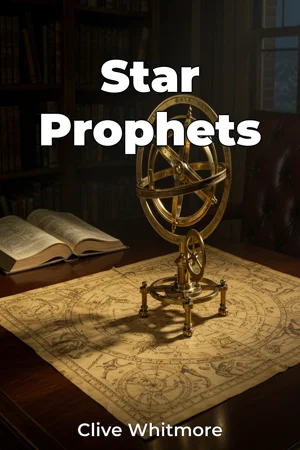
Have celestial predictions truly shaped the course of history, guiding the hands of kings and influencing the birth of religions? "Star Prophets" delves into the intertwined history of astrology, religious prophecy, and political decision-making, examining how ancient astrologers and their cosmic interpretations have exerted considerable influence on pivotal moments in human civilization. This book’s central argument is that, far from being a pseudoscience relegated to the fringes of society, astrology served as a vital intellectual framework for understanding the world, informing actions that resonate even today. "Star Prophets" explores three significant themes. First, it examines the development of astrological systems in ancient cultures, from Mesopotamia and Egypt to Greece and Rome, focusing on how these cultures integrated celestial observations into their religious and political structures. Second, the book analyzes specific historical events and religious prophecies that were ostensibly influenced by astrological predictions, exploring the purported role of astrologers in advising leaders and interpreting divine will. Examples include the birth of empires, the rise and fall of dynasties, and the formulation of sacred texts. Third, it investigates the long-term impact of astrological beliefs on the development of Western and Eastern thought, tracing the evolution of these ideas through the Middle Ages, the Renaissance, and into the modern era. The book draws upon a wide range of sources, including ancient texts, archaeological findings, and historical accounts, to reconstruct the worldviews of astrologers and their patrons. It addresses the challenges of interpreting ancient sources, acknowledging the potential for bias and misinterpretation, and emphasizing the importance of contextualizing astrological beliefs within their specific historical and cultural settings. "Star Prophets" will be structured in three parts. Part one introduces the core concepts of astrology as practiced in antiquity, detailing the methods, beliefs, and social roles of astrologers in different cultures. Part two examines case studies of historical events that were purportedly influenced by astrological predictions, analyzing the available evidence and offering nuanced interpretations of the astrologers’ role. Part three considers the lasting legacy of astrology, exploring its impact on art, literature, philosophy, and science, and examining the reasons for its enduring appeal. This book will prove valuable to readers interested in history, religion, and the history of science. It avoids sensationalism, aiming instead for a balanced and scholarly analysis of the historical evidence. "Star Prophets" connects to fields such as religious studies, political science, and the history of science, offering insights into the complex interplay between belief systems, power structures, and intellectual traditions. One potential area of controversy that the book addresses involves the tension between astrological determinism and human agency. By exploring how ancient societies grappled with this tension, "Star Prophets" offers a deeper understanding of the ethical and philosophical implications of astrological beliefs. The book's scope is limited to pre-modern astrology, focusing primarily on the ancient and medieval periods. While it acknowledges the existence of modern astrology, it does not attempt to analyze or evaluate its contemporary practices. "Star Prophets" is written in a clear and accessible style, designed to appeal to both general readers and academic specialists. It presents complex information in a way that is both informative and engaging, avoiding jargon and technical language whenever possible. By examining the historical role of astrology, this book seeks to illuminate the complex relationship between humanity and the cosmos, offering new perspectives on the forces that have shaped our civilization.
Have celestial predictions truly shaped the course of history, guiding the hands of kings and influencing the birth of religions? "Star Prophets" delves into the intertwined history of astrology, religious prophecy, and political decision-making, examining how ancient astrologers and their cosmic interpretations have exerted considerable influence on pivotal moments in human civilization. This book’s central argument is that, far from being a pseudoscience relegated to the fringes of society, astrology served as a vital intellectual framework for understanding the world, informing actions that resonate even today. "Star Prophets" explores three significant themes. First, it examines the development of astrological systems in ancient cultures, from Mesopotamia and Egypt to Greece and Rome, focusing on how these cultures integrated celestial observations into their religious and political structures. Second, the book analyzes specific historical events and religious prophecies that were ostensibly influenced by astrological predictions, exploring the purported role of astrologers in advising leaders and interpreting divine will. Examples include the birth of empires, the rise and fall of dynasties, and the formulation of sacred texts. Third, it investigates the long-term impact of astrological beliefs on the development of Western and Eastern thought, tracing the evolution of these ideas through the Middle Ages, the Renaissance, and into the modern era. The book draws upon a wide range of sources, including ancient texts, archaeological findings, and historical accounts, to reconstruct the worldviews of astrologers and their patrons. It addresses the challenges of interpreting ancient sources, acknowledging the potential for bias and misinterpretation, and emphasizing the importance of contextualizing astrological beliefs within their specific historical and cultural settings. "Star Prophets" will be structured in three parts. Part one introduces the core concepts of astrology as practiced in antiquity, detailing the methods, beliefs, and social roles of astrologers in different cultures. Part two examines case studies of historical events that were purportedly influenced by astrological predictions, analyzing the available evidence and offering nuanced interpretations of the astrologers’ role. Part three considers the lasting legacy of astrology, exploring its impact on art, literature, philosophy, and science, and examining the reasons for its enduring appeal. This book will prove valuable to readers interested in history, religion, and the history of science. It avoids sensationalism, aiming instead for a balanced and scholarly analysis of the historical evidence. "Star Prophets" connects to fields such as religious studies, political science, and the history of science, offering insights into the complex interplay between belief systems, power structures, and intellectual traditions. One potential area of controversy that the book addresses involves the tension between astrological determinism and human agency. By exploring how ancient societies grappled with this tension, "Star Prophets" offers a deeper understanding of the ethical and philosophical implications of astrological beliefs. The book's scope is limited to pre-modern astrology, focusing primarily on the ancient and medieval periods. While it acknowledges the existence of modern astrology, it does not attempt to analyze or evaluate its contemporary practices. "Star Prophets" is written in a clear and accessible style, designed to appeal to both general readers and academic specialists. It presents complex information in a way that is both informative and engaging, avoiding jargon and technical language whenever possible. By examining the historical role of astrology, this book seeks to illuminate the complex relationship between humanity and the cosmos, offering new perspectives on the forces that have shaped our civilization.
"Star Prophets" explores the profound influence of astrology, religious prophecy, and celestial predictions on historical events and belief systems. It argues that astrology was not merely a fringe practice but a critical framework for understanding the world, impacting political decision-making and religious thought in ancient cultures. The book delves into how astrologers advised leaders, interpreted divine will, and shaped events like the rise and fall of dynasties. The book presents three main themes: the development of astrological systems in ancient civilizations such as Mesopotamia and Egypt, case studies of historical events influenced by astrological predictions, and the long-term impact of astrological beliefs on Western and Eastern thought. Drawing upon ancient texts and archaeological findings, "Star Prophets" reconstructs the worldviews of astrologers and their patrons across time. The book is structured into three parts, starting with the core concepts of ancient astrology, followed by case studies of astrologically influenced events, and concluding with the enduring legacy of astrology on various fields. This book navigates the complex interplay between astrology and human agency, offering insights into the ethical and philosophical implications of these beliefs. By focusing on pre-modern astrology, "Star Prophets" provides a balanced and scholarly analysis of historical evidence, appealing to those interested in the history of science, religion, and the impact of belief systems on civilization.
Book Details
ISBN
9788235207197
Publisher
Publifye AS
Your Licenses
You don't own any licenses for this book
Purchase a license below to unlock this book and download the EPUB.
Purchase License
Select a tier to unlock this book
Need bulk licensing?
Contact us for enterprise agreements.