
About This Book
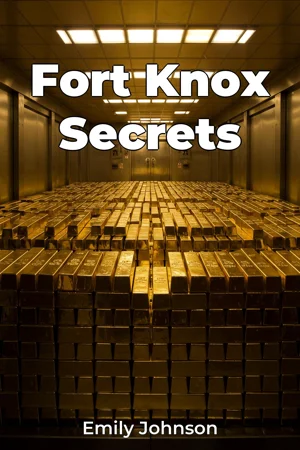
Since 1936, Fort Knox has captivated the world's imagination, shrouded in mystery as the purported central depository of United States gold reserves. But what truly lies behind those imposing walls, and how has its role evolved across decades of economic and geopolitical shifts? "Fort Knox Secrets" ventures beyond the myths to uncover the factual history, operational mechanics, and enduring significance of this iconic institution. This book delves into three core areas: the historical context of Fort Knox's establishment, the intricate details of its operational procedures, and its broader impact on U.S. and global finance. Understanding the origins of Fort Knox is crucial because it reflects the economic anxieties and strategic priorities of the pre-World War II era. Examining its internal functions provides insight into the logistical challenges of securing and managing vast quantities of gold. Finally, assessing its continuing relevance allows us to understand its symbolic and practical importance in modern monetary policy. The narrative begins in the 1930s, amid the Great Depression and growing international instability. President Franklin D. Roosevelt's decision to revalue gold and consolidate reserves led to the construction of Fort Knox, a move intended to safeguard the nation's wealth and project economic strength. The book details the early challenges of transferring gold from various locations to the newly built depository, establishing security protocols, and managing the logistics of storing and accounting for the massive influx of bullion. The central argument of "Fort Knox Secrets" is that while the fort's role as a primary gold storage facility remains its most visible function, its deeper significance lies in its symbolic representation of U.S. financial stability and its influence on monetary policy decisions. The book presents evidence from archival records, government documents, and interviews with experts in economics, history, and security. Detailed analysis of gold flows, security measures, and policy statements are also included. The book unfolds in three main parts. Part one explores the historical background, covering the economic conditions that led to its creation and the initial construction and operational setup. Part two dissects the internal workings of Fort Knox, detailing the security systems, auditing procedures, and the processes for receiving, storing, and transferring gold. Part three examines Fort Knox's evolving role in the U.S. and global financial landscape, analyzing its impact on monetary policy, its connection to international gold markets, and its continued importance as a symbol of economic security. "Fort Knox Secrets" connects to several interdisciplinary fields, including economic history, security studies, and political science. Its examination of gold storage and security protocols is relevant to security studies, while its analysis of Fort Knox's influence on monetary policy intersects with political science, particularly concerning government regulation and economic stability. The book is designed to appeal to a broad audience, including finance professionals, history enthusiasts, and anyone curious about the inner workings of one of the world's most secretive institutions. It adopts a factual, non-sensationalist writing style, presenting information in a clear and accessible manner while maintaining historical accuracy and analytical rigor. The scope of "Fort Knox Secrets" is primarily focused on the history, operations, and significance of Fort Knox itself. It does not delve into broader debates about the gold standard or alternative monetary systems, although it touches on these topics when they directly relate to the fort's role. The book addresses ongoing debates about the transparency of Fort Knox's holdings and the frequency of audits, offering insights based on available evidence and expert analysis. The book provides an objective, evidence-based account, separating fact from fiction and presenting a comprehensive picture of Fort Knox's place in U.S. financial history.
Since 1936, Fort Knox has captivated the world's imagination, shrouded in mystery as the purported central depository of United States gold reserves. But what truly lies behind those imposing walls, and how has its role evolved across decades of economic and geopolitical shifts? "Fort Knox Secrets" ventures beyond the myths to uncover the factual history, operational mechanics, and enduring significance of this iconic institution. This book delves into three core areas: the historical context of Fort Knox's establishment, the intricate details of its operational procedures, and its broader impact on U.S. and global finance. Understanding the origins of Fort Knox is crucial because it reflects the economic anxieties and strategic priorities of the pre-World War II era. Examining its internal functions provides insight into the logistical challenges of securing and managing vast quantities of gold. Finally, assessing its continuing relevance allows us to understand its symbolic and practical importance in modern monetary policy. The narrative begins in the 1930s, amid the Great Depression and growing international instability. President Franklin D. Roosevelt's decision to revalue gold and consolidate reserves led to the construction of Fort Knox, a move intended to safeguard the nation's wealth and project economic strength. The book details the early challenges of transferring gold from various locations to the newly built depository, establishing security protocols, and managing the logistics of storing and accounting for the massive influx of bullion. The central argument of "Fort Knox Secrets" is that while the fort's role as a primary gold storage facility remains its most visible function, its deeper significance lies in its symbolic representation of U.S. financial stability and its influence on monetary policy decisions. The book presents evidence from archival records, government documents, and interviews with experts in economics, history, and security. Detailed analysis of gold flows, security measures, and policy statements are also included. The book unfolds in three main parts. Part one explores the historical background, covering the economic conditions that led to its creation and the initial construction and operational setup. Part two dissects the internal workings of Fort Knox, detailing the security systems, auditing procedures, and the processes for receiving, storing, and transferring gold. Part three examines Fort Knox's evolving role in the U.S. and global financial landscape, analyzing its impact on monetary policy, its connection to international gold markets, and its continued importance as a symbol of economic security. "Fort Knox Secrets" connects to several interdisciplinary fields, including economic history, security studies, and political science. Its examination of gold storage and security protocols is relevant to security studies, while its analysis of Fort Knox's influence on monetary policy intersects with political science, particularly concerning government regulation and economic stability. The book is designed to appeal to a broad audience, including finance professionals, history enthusiasts, and anyone curious about the inner workings of one of the world's most secretive institutions. It adopts a factual, non-sensationalist writing style, presenting information in a clear and accessible manner while maintaining historical accuracy and analytical rigor. The scope of "Fort Knox Secrets" is primarily focused on the history, operations, and significance of Fort Knox itself. It does not delve into broader debates about the gold standard or alternative monetary systems, although it touches on these topics when they directly relate to the fort's role. The book addresses ongoing debates about the transparency of Fort Knox's holdings and the frequency of audits, offering insights based on available evidence and expert analysis. The book provides an objective, evidence-based account, separating fact from fiction and presenting a comprehensive picture of Fort Knox's place in U.S. financial history.
"Fort Knox Secrets" unveils the factual history and enduring significance of the iconic Fort Knox, moving beyond myths to explore its role in U.S. and global finance. Established during the Great Depression, the fort was intended to safeguard the nation's wealth. The book highlights the logistical challenges of transferring and securing vast quantities of gold. The book dissects the fort's operational procedures, security systems, and auditing processes, emphasizing its symbolic representation of U.S. financial stability. It examines how Fort Knox influences monetary policy decisions and its connection to international gold markets. Unfolding in three parts, the book starts with the historical background, follows with the internal workings, and concludes with its evolving role in the financial landscape. The book's value lies in its objective approach and interdisciplinary connections to economic history and security studies. By presenting evidence from archival records and expert interviews, "Fort Knox Secrets" offers a comprehensive understanding of the fort's place in U.S. history, appealing to finance professionals and history enthusiasts alike.
Book Details
ISBN
9788235207050
Publisher
Publifye AS
Your Licenses
You don't own any licenses for this book
Purchase a license below to unlock this book and download the EPUB.
Purchase License
Select a tier to unlock this book
Need bulk licensing?
Contact us for enterprise agreements.