
About This Book
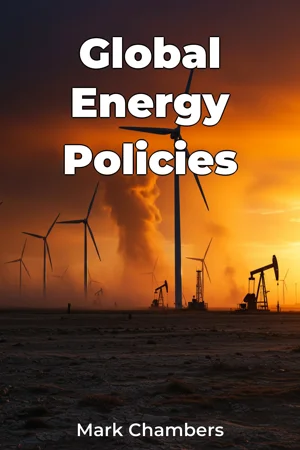
How do diverse nations navigate the complex challenges of energy production in a world grappling with climate change, geopolitical instability, and increasing demand? "Global Energy Policies" delves into this critical question, offering a comprehensive analysis of the strategies, successes, and failures of various countries in managing their energy resources and shaping their energy futures. This book explores three interconnected themes: energy security, environmental sustainability, and economic development. Energy security, the reliable and affordable availability of energy, is paramount for national stability and economic growth. Environmental sustainability requires minimizing the negative impacts of energy production and consumption on the planet. Economic development seeks to leverage energy resources to foster prosperity and improve quality of life. Understanding the interplay of these themes is crucial for crafting effective energy policies. The context for this analysis is rooted in the history of energy transitions, from the age of fossil fuels to the present era of renewable energy development. Readers will gain a solid understanding of basic energy concepts, including energy sources, conversion technologies, and consumption patterns, enabling them to appreciate the complexities of energy policy decisions. The central argument of "Global Energy Policies" is that there is no one-size-fits-all solution to energy management. Successful energy policies are tailored to a nation's unique circumstances, including its resource endowments, technological capabilities, political institutions, and social values. The book highlights the importance of adaptive and integrated policymaking that considers both short-term needs and long-term goals. The book is structured to provide a clear and logical progression of ideas. It begins with an introduction to the fundamental concepts of energy policy, including energy security, energy efficiency, and renewable energy. It then examines the specific energy policies of several key countries, representing a diverse range of geographic regions, economic systems, and energy resource profiles. Case studies will explore the successes, failures, and trade-offs encountered by these nations in their pursuit of sustainable energy futures. Finally, the book synthesizes the lessons learned from these case studies to offer practical recommendations for policymakers and stakeholders. The analysis presented in "Global Energy Policies" is supported by a wide range of evidence, including government reports, academic studies, industry data, and international statistics. The book draws on unique data sources, such as energy consumption surveys and policy implementation assessments, to provide a nuanced and data-driven perspective on energy policy effectiveness. "Global Energy Policies" connects to several other fields of study, including political science, economics, and environmental science. The book highlights the political dimensions of energy policy, examining the role of interest groups, political ideologies, and international relations in shaping energy decisions. The economic implications of energy policies, including their effects on economic growth, employment, and income distribution, are also explored. The book considers the environmental impacts of different energy sources and technologies, including climate change, air pollution, and water scarcity. What sets this book apart is its comparative approach. By analyzing the energy policies of multiple countries, it identifies common challenges and best practices. The book offers a framework for understanding the trade-offs and synergies between different energy policy objectives. The book adopts a professional and academic tone, presenting information in a clear, concise, and objective manner. It avoids jargon and technical terms, making it accessible to a broad audience. The target audience for "Global Energy Policies" includes students, researchers, policymakers, and anyone interested in understanding the complex issues surrounding energy policy. It provides valuable insights for those seeking to develop effective strategies for managing energy resources and promoting sustainable development. As a work of non-fiction in the 'Politics' and 'Environment' genres, the book aims to provide an objective and evidence-based analysis of energy policies, avoiding advocacy or bias. The scope of the book is global, covering a wide range of countries and energy policy areas. However, it is not exhaustive, and some regions and policy areas may receive less attention than others. The focus is on providing a broad overview of the key issues and trends in global energy policy. The information presented in "Global Energy Policies" can be applied in several practical ways. Policymakers can use the book's analysis to inform their energy policy decisions. Businesses can use the book's insights to understand the energy landscape and identify investment opportunities. Citizens can use the book's knowledge to advocate for more sustainable energy policies. The book addresses several ongoing debates and controversies in the field of energy policy, including the role of nuclear power, the effectiveness of carbon pricing, and the feasibility of transitioning to a 100% renewable energy system. It presents different perspectives on these issues, allowing readers to form their own informed opinions.
How do diverse nations navigate the complex challenges of energy production in a world grappling with climate change, geopolitical instability, and increasing demand? "Global Energy Policies" delves into this critical question, offering a comprehensive analysis of the strategies, successes, and failures of various countries in managing their energy resources and shaping their energy futures. This book explores three interconnected themes: energy security, environmental sustainability, and economic development. Energy security, the reliable and affordable availability of energy, is paramount for national stability and economic growth. Environmental sustainability requires minimizing the negative impacts of energy production and consumption on the planet. Economic development seeks to leverage energy resources to foster prosperity and improve quality of life. Understanding the interplay of these themes is crucial for crafting effective energy policies. The context for this analysis is rooted in the history of energy transitions, from the age of fossil fuels to the present era of renewable energy development. Readers will gain a solid understanding of basic energy concepts, including energy sources, conversion technologies, and consumption patterns, enabling them to appreciate the complexities of energy policy decisions. The central argument of "Global Energy Policies" is that there is no one-size-fits-all solution to energy management. Successful energy policies are tailored to a nation's unique circumstances, including its resource endowments, technological capabilities, political institutions, and social values. The book highlights the importance of adaptive and integrated policymaking that considers both short-term needs and long-term goals. The book is structured to provide a clear and logical progression of ideas. It begins with an introduction to the fundamental concepts of energy policy, including energy security, energy efficiency, and renewable energy. It then examines the specific energy policies of several key countries, representing a diverse range of geographic regions, economic systems, and energy resource profiles. Case studies will explore the successes, failures, and trade-offs encountered by these nations in their pursuit of sustainable energy futures. Finally, the book synthesizes the lessons learned from these case studies to offer practical recommendations for policymakers and stakeholders. The analysis presented in "Global Energy Policies" is supported by a wide range of evidence, including government reports, academic studies, industry data, and international statistics. The book draws on unique data sources, such as energy consumption surveys and policy implementation assessments, to provide a nuanced and data-driven perspective on energy policy effectiveness. "Global Energy Policies" connects to several other fields of study, including political science, economics, and environmental science. The book highlights the political dimensions of energy policy, examining the role of interest groups, political ideologies, and international relations in shaping energy decisions. The economic implications of energy policies, including their effects on economic growth, employment, and income distribution, are also explored. The book considers the environmental impacts of different energy sources and technologies, including climate change, air pollution, and water scarcity. What sets this book apart is its comparative approach. By analyzing the energy policies of multiple countries, it identifies common challenges and best practices. The book offers a framework for understanding the trade-offs and synergies between different energy policy objectives. The book adopts a professional and academic tone, presenting information in a clear, concise, and objective manner. It avoids jargon and technical terms, making it accessible to a broad audience. The target audience for "Global Energy Policies" includes students, researchers, policymakers, and anyone interested in understanding the complex issues surrounding energy policy. It provides valuable insights for those seeking to develop effective strategies for managing energy resources and promoting sustainable development. As a work of non-fiction in the 'Politics' and 'Environment' genres, the book aims to provide an objective and evidence-based analysis of energy policies, avoiding advocacy or bias. The scope of the book is global, covering a wide range of countries and energy policy areas. However, it is not exhaustive, and some regions and policy areas may receive less attention than others. The focus is on providing a broad overview of the key issues and trends in global energy policy. The information presented in "Global Energy Policies" can be applied in several practical ways. Policymakers can use the book's analysis to inform their energy policy decisions. Businesses can use the book's insights to understand the energy landscape and identify investment opportunities. Citizens can use the book's knowledge to advocate for more sustainable energy policies. The book addresses several ongoing debates and controversies in the field of energy policy, including the role of nuclear power, the effectiveness of carbon pricing, and the feasibility of transitioning to a 100% renewable energy system. It presents different perspectives on these issues, allowing readers to form their own informed opinions.
"Global Energy Policies" tackles the intricate web of energy production amid climate change, geopolitical tensions, and rising demand. It investigates how nations strategize to manage energy resources, balancing energy security, environmental sustainability, and economic development. The book emphasizes that effective energy policy must be tailored to each nation's unique circumstances. The book explores different energy transitions, from the dominance of fossil fuels to the rise of renewable energy. Readers will understand core concepts, such as energy sources and consumption patterns, to grasp the complexities of energy policy decisions. By analyzing various countries' energy policies, the book identifies common challenges and best practices, offering a framework for understanding trade-offs. Beginning with foundational concepts, the book progresses to examine specific energy policies of key countries, evaluating their successes and failures. It concludes by synthesizing lessons learned, providing practical recommendations for policymakers. The book's comparative approach and focus on adaptive policymaking make it a valuable resource for anyone seeking to understand and navigate the global energy landscape.
Book Details
ISBN
9788235206947
Publisher
Publifye AS
Your Licenses
You don't own any licenses for this book
Purchase a license below to unlock this book and download the EPUB.
Purchase License
Select a tier to unlock this book
Need bulk licensing?
Contact us for enterprise agreements.