
About This Book
Did Franklin Delano Roosevelt's bold decision to close the nation's banks in 1933 save the American economy, or did it merely postpone an inevitable collapse? "Bank Holiday Declared" delves into the complex history and far-reaching consequences of this pivotal moment in American economic history, a decision that continues to resonate in modern financial policy. This book grapples with three central themes: the anatomy of the banking crisis that gripped the United States in the early 1930s, the immediate impact and long-term effects of Roosevelt's "bank holiday," and the evolution of federal regulatory power over the nation's financial institutions. Understanding these themes is vital for comprehending not only the Great Depression but also the ongoing debates about government intervention in the economy. The economic landscape of the early 1930s was bleak. Years of speculative excess, coupled with agricultural distress and tightening monetary policy, created a perfect storm that led to widespread bank runs and failures. This book provides a detailed examination of the factors contributing to this crisis, setting the stage for Roosevelt’s drastic intervention. No prior knowledge of economics is required; the book explains complex financial concepts in accessible terms. The central argument of "Bank Holiday Declared" is that Roosevelt's bank holiday, while a necessary short-term measure to halt the escalating panic, fundamentally altered the relationship between the government and the financial sector, paving the way for unprecedented federal oversight that continues to shape our economy today. This argument is critical because it challenges simplistic narratives of the New Deal, prompting readers to consider the trade-offs between stability and individual economic liberty. The book unfolds in three parts. First, it introduces the pre-Depression financial system, highlighting its structural weaknesses. Second, it dissects the events leading up to the bank holiday, including the policy errors and political maneuvering that exacerbated the crisis. This section also analyzes the Emergency Banking Act and its immediate effects on depositors and financial institutions. Finally, the book examines the long-term implications of the bank holiday, including the creation of the Federal Deposit Insurance Corporation (FDIC) and the expansion of the Federal Reserve's regulatory powers. The conclusion explores the relevance of these historical events to contemporary debates about financial regulation and crisis management. To support these arguments, "Bank Holiday Declared" draws upon a wide range of primary sources, including government documents, personal letters from the Roosevelt administration, contemporary newspaper accounts, and the financial records of failing banks. In addition, the book incorporates insights from both quantitative economic analyses and qualitative historical research. This book connects to several other disciplines, including political science (examining the expansion of executive power), sociology (analyzing the impact of economic hardship on American society), and legal studies (exploring the constitutional implications of federal financial regulation). "Bank Holiday Declared" offers a fresh perspective by focusing not just on the economic consequences of the bank holiday but also on its profound political and social ramifications. It challenges conventional wisdom by exploring the unintended long-term consequences of what was initially presented as a temporary emergency measure. The tone is analytical and objective, avoiding partisan rhetoric and presenting a balanced assessment of Roosevelt's policies. It utilizes clear and precise language to reach a wide audience. This book is intended for general readers interested in American history, economics, and public policy, as well as students and scholars seeking a concise yet comprehensive analysis of the bank holiday. It will be valuable to anyone seeking to understand the historical roots of contemporary debates about financial regulation and government intervention in the economy. As a work of history, the book adheres to the genre's emphasis on factual accuracy, thorough research, and nuanced interpretation. It avoids speculative claims and grounds its analysis in verifiable evidence. While the book focuses primarily on the immediate impact and long-term consequences of the 1933 bank holiday, it does not attempt to provide a comprehensive history of the entire New Deal or the Great Depression. Its scope is deliberately limited to provide a more focused and in-depth analysis of this pivotal event. The lessons learned from the 1933 bank holiday remain relevant today. Understanding the causes and consequences of this event can inform contemporary debates about financial regulation, crisis management, and the role of government in the economy. The book also acknowledges the ongoing debates about the effectiveness and consequences of Roosevelt's policies, presenting different perspectives and encouraging readers to form their own informed opinions. It presents controversies surrounding the bank holiday, such as arguments from some economists that the closure exacerbated the crisis by further restricting credit, or that it set a precedent for excessive government control.
Did Franklin Delano Roosevelt's bold decision to close the nation's banks in 1933 save the American economy, or did it merely postpone an inevitable collapse? "Bank Holiday Declared" delves into the complex history and far-reaching consequences of this pivotal moment in American economic history, a decision that continues to resonate in modern financial policy. This book grapples with three central themes: the anatomy of the banking crisis that gripped the United States in the early 1930s, the immediate impact and long-term effects of Roosevelt's "bank holiday," and the evolution of federal regulatory power over the nation's financial institutions. Understanding these themes is vital for comprehending not only the Great Depression but also the ongoing debates about government intervention in the economy. The economic landscape of the early 1930s was bleak. Years of speculative excess, coupled with agricultural distress and tightening monetary policy, created a perfect storm that led to widespread bank runs and failures. This book provides a detailed examination of the factors contributing to this crisis, setting the stage for Roosevelt’s drastic intervention. No prior knowledge of economics is required; the book explains complex financial concepts in accessible terms. The central argument of "Bank Holiday Declared" is that Roosevelt's bank holiday, while a necessary short-term measure to halt the escalating panic, fundamentally altered the relationship between the government and the financial sector, paving the way for unprecedented federal oversight that continues to shape our economy today. This argument is critical because it challenges simplistic narratives of the New Deal, prompting readers to consider the trade-offs between stability and individual economic liberty. The book unfolds in three parts. First, it introduces the pre-Depression financial system, highlighting its structural weaknesses. Second, it dissects the events leading up to the bank holiday, including the policy errors and political maneuvering that exacerbated the crisis. This section also analyzes the Emergency Banking Act and its immediate effects on depositors and financial institutions. Finally, the book examines the long-term implications of the bank holiday, including the creation of the Federal Deposit Insurance Corporation (FDIC) and the expansion of the Federal Reserve's regulatory powers. The conclusion explores the relevance of these historical events to contemporary debates about financial regulation and crisis management. To support these arguments, "Bank Holiday Declared" draws upon a wide range of primary sources, including government documents, personal letters from the Roosevelt administration, contemporary newspaper accounts, and the financial records of failing banks. In addition, the book incorporates insights from both quantitative economic analyses and qualitative historical research. This book connects to several other disciplines, including political science (examining the expansion of executive power), sociology (analyzing the impact of economic hardship on American society), and legal studies (exploring the constitutional implications of federal financial regulation). "Bank Holiday Declared" offers a fresh perspective by focusing not just on the economic consequences of the bank holiday but also on its profound political and social ramifications. It challenges conventional wisdom by exploring the unintended long-term consequences of what was initially presented as a temporary emergency measure. The tone is analytical and objective, avoiding partisan rhetoric and presenting a balanced assessment of Roosevelt's policies. It utilizes clear and precise language to reach a wide audience. This book is intended for general readers interested in American history, economics, and public policy, as well as students and scholars seeking a concise yet comprehensive analysis of the bank holiday. It will be valuable to anyone seeking to understand the historical roots of contemporary debates about financial regulation and government intervention in the economy. As a work of history, the book adheres to the genre's emphasis on factual accuracy, thorough research, and nuanced interpretation. It avoids speculative claims and grounds its analysis in verifiable evidence. While the book focuses primarily on the immediate impact and long-term consequences of the 1933 bank holiday, it does not attempt to provide a comprehensive history of the entire New Deal or the Great Depression. Its scope is deliberately limited to provide a more focused and in-depth analysis of this pivotal event. The lessons learned from the 1933 bank holiday remain relevant today. Understanding the causes and consequences of this event can inform contemporary debates about financial regulation, crisis management, and the role of government in the economy. The book also acknowledges the ongoing debates about the effectiveness and consequences of Roosevelt's policies, presenting different perspectives and encouraging readers to form their own informed opinions. It presents controversies surrounding the bank holiday, such as arguments from some economists that the closure exacerbated the crisis by further restricting credit, or that it set a precedent for excessive government control.
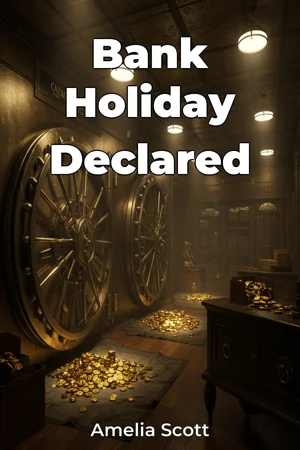
"Bank Holiday Declared" examines Franklin Delano Roosevelt's 1933 bank holiday and its lasting impact on the American economy. Delving into the Great Depression era, the book analyzes whether this unprecedented government intervention saved the economy or merely postponed its collapse. One intriguing aspect explored is how the crisis revealed structural weaknesses in the pre-Depression financial system. The book argues that while the bank holiday addressed the immediate banking crisis, it fundamentally reshaped the relationship between the government and the financial sector, leading to increased federal oversight. It traces the evolution of financial regulation, including the creation of the FDIC and the expansion of the Federal Reserve's powers. The book unfolds by first examining the pre-Depression financial system, then dissecting the events leading up to the bank holiday, and finally analyzing its long-term implications. This historical and economics-focused analysis challenges simplistic narratives of the New Deal, prompting readers to consider the trade-offs between economic stability and individual liberty. By drawing upon primary sources and balancing economic analysis with historical research, "Bank Holiday Declared" offers a fresh perspective on a pivotal moment in American economic history.
Book Details
ISBN
9788235206909
Publisher
Publifye AS
Your Licenses
You don't own any licenses for this book
Purchase a license below to unlock this book and download the EPUB.
Purchase License
Select a tier to unlock this book
Need bulk licensing?
Contact us for enterprise agreements.