
About This Book
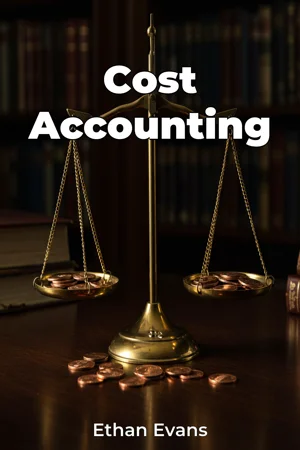
Are you losing profits due to inefficient cost management? This book, "Cost Accounting," provides a detailed examination of the tools and techniques necessary for businesses to gain control over their spending and significantly improve their financial performance. It delves into the intricacies of cost structures, budgeting methodologies, and expense tracking systems, offering a practical guide to implementing effective cost control strategies. Cost accounting is not merely an exercise in number crunching; it is a crucial function that informs strategic decision-making. This book emphasizes its significance by thoroughly examining two primary topics: understanding and managing cost behavior and designing and implementing effective budgeting and control systems. The ability to accurately analyze cost behavior – fixed, variable, and mixed costs – enables informed pricing strategies, product mix decisions, and operational improvements. Effective budgeting, encompassing master budgets, flexible budgets, and variance analysis, provides a roadmap for financial success and a mechanism for identifying and correcting deviations from the plan. While cost accounting principles are rooted in established economic and accounting theories, their application has evolved with technological advancements and changes in business environments. The book incorporates these changes and addresses modern costing methods like activity-based costing (ABC) and target costing. Readers should possess a basic understanding of financial accounting principles as a foundation. The central argument of "Cost Accounting" is that a robust cost accounting system is essential for any organization seeking to optimize profitability and maintain a competitive edge. This book demonstrates how to build and utilize such a system to support informed decision-making at all levels of the organization. The book unfolds in a structured manner. Initially, it introduces fundamental cost concepts and classifications. It then develops these ideas through detailed explorations of job order costing, process costing, activity-based costing, and standard costing systems. A significant portion is dedicated to budgeting, including preparation of operating budgets, financial budgets, and cash flow forecasts. The culminating sections focus on performance measurement, variance analysis, and cost control techniques. Practical applications are illustrated through case studies and real-world examples, demonstrating how companies successfully utilize cost accounting to improve efficiency and profitability. Evidence is presented through detailed examples, calculations, and case studies drawn from various industries. The book also refers to relevant accounting standards and best practices established by professional organizations like the Institute of Management Accountants (IMA). "Cost Accounting" draws connections to other fields such as operations management, strategic management, and economics. Operations management principles are crucial for understanding process efficiency and identifying cost reduction opportunities. Strategic management relies on cost information to make informed decisions about product positioning, market entry, and competitive advantage. Economic principles, such as supply and demand, influence cost behavior and pricing strategies. This book distinguishes itself through its emphasis on practical application and its integration of modern costing techniques. It avoids being overly theoretical, instead offering a pragmatic approach to cost management that can be immediately implemented by readers. The tone is professional and informative, yet accessible. Complex concepts are explained clearly and concisely, with numerous examples to illustrate key points. The target audience includes accounting students, management accountants, business managers, and anyone seeking a deeper understanding of cost management principles. It will be particularly valuable for individuals preparing for professional certifications such as the Certified Management Accountant (CMA). As a book on cost accounting, it adheres to the conventions of the genre by providing detailed explanations of costing methods, budgeting techniques, and variance analysis. It is a comprehensive guide that covers a wide range of topics relevant to cost management. The scope is broad, encompassing all major aspects of cost accounting. However, it intentionally limits its focus to internal reporting and decision-making, without delving into income tax implications. Readers can apply the information in this book to improve cost control, optimize resource allocation, and enhance profitability in their organizations. They can also use it to make more informed decisions about pricing, product mix, and capital investments. While cost accounting principles are generally accepted, there are ongoing debates about the relative merits of different costing methods, such as ABC versus traditional costing. The book addresses these debates and provides a balanced perspective on the strengths and weaknesses of each approach.
Are you losing profits due to inefficient cost management? This book, "Cost Accounting," provides a detailed examination of the tools and techniques necessary for businesses to gain control over their spending and significantly improve their financial performance. It delves into the intricacies of cost structures, budgeting methodologies, and expense tracking systems, offering a practical guide to implementing effective cost control strategies. Cost accounting is not merely an exercise in number crunching; it is a crucial function that informs strategic decision-making. This book emphasizes its significance by thoroughly examining two primary topics: understanding and managing cost behavior and designing and implementing effective budgeting and control systems. The ability to accurately analyze cost behavior – fixed, variable, and mixed costs – enables informed pricing strategies, product mix decisions, and operational improvements. Effective budgeting, encompassing master budgets, flexible budgets, and variance analysis, provides a roadmap for financial success and a mechanism for identifying and correcting deviations from the plan. While cost accounting principles are rooted in established economic and accounting theories, their application has evolved with technological advancements and changes in business environments. The book incorporates these changes and addresses modern costing methods like activity-based costing (ABC) and target costing. Readers should possess a basic understanding of financial accounting principles as a foundation. The central argument of "Cost Accounting" is that a robust cost accounting system is essential for any organization seeking to optimize profitability and maintain a competitive edge. This book demonstrates how to build and utilize such a system to support informed decision-making at all levels of the organization. The book unfolds in a structured manner. Initially, it introduces fundamental cost concepts and classifications. It then develops these ideas through detailed explorations of job order costing, process costing, activity-based costing, and standard costing systems. A significant portion is dedicated to budgeting, including preparation of operating budgets, financial budgets, and cash flow forecasts. The culminating sections focus on performance measurement, variance analysis, and cost control techniques. Practical applications are illustrated through case studies and real-world examples, demonstrating how companies successfully utilize cost accounting to improve efficiency and profitability. Evidence is presented through detailed examples, calculations, and case studies drawn from various industries. The book also refers to relevant accounting standards and best practices established by professional organizations like the Institute of Management Accountants (IMA). "Cost Accounting" draws connections to other fields such as operations management, strategic management, and economics. Operations management principles are crucial for understanding process efficiency and identifying cost reduction opportunities. Strategic management relies on cost information to make informed decisions about product positioning, market entry, and competitive advantage. Economic principles, such as supply and demand, influence cost behavior and pricing strategies. This book distinguishes itself through its emphasis on practical application and its integration of modern costing techniques. It avoids being overly theoretical, instead offering a pragmatic approach to cost management that can be immediately implemented by readers. The tone is professional and informative, yet accessible. Complex concepts are explained clearly and concisely, with numerous examples to illustrate key points. The target audience includes accounting students, management accountants, business managers, and anyone seeking a deeper understanding of cost management principles. It will be particularly valuable for individuals preparing for professional certifications such as the Certified Management Accountant (CMA). As a book on cost accounting, it adheres to the conventions of the genre by providing detailed explanations of costing methods, budgeting techniques, and variance analysis. It is a comprehensive guide that covers a wide range of topics relevant to cost management. The scope is broad, encompassing all major aspects of cost accounting. However, it intentionally limits its focus to internal reporting and decision-making, without delving into income tax implications. Readers can apply the information in this book to improve cost control, optimize resource allocation, and enhance profitability in their organizations. They can also use it to make more informed decisions about pricing, product mix, and capital investments. While cost accounting principles are generally accepted, there are ongoing debates about the relative merits of different costing methods, such as ABC versus traditional costing. The book addresses these debates and provides a balanced perspective on the strengths and weaknesses of each approach.
"Cost Accounting" offers a comprehensive guide to mastering cost management and optimizing financial performance. This book explores essential techniques for controlling expenses and making informed business decisions. Readers will uncover how understanding cost behavior – fixed, variable, and mixed costs – impacts pricing strategies and operational efficiency. Furthermore, the book emphasizes the importance of effective budgeting, including master budgets and variance analysis, as a roadmap for financial success. This resource stands out by blending established accounting theories with modern costing methods, such as Activity-Based Costing (ABC), to address evolving business environments. It guides readers through fundamental cost concepts, job order costing, process costing, and standard costing systems. A significant portion focuses on budgeting and performance measurement. Practical applications are illustrated with case studies, providing a pragmatic approach to cost management for immediate implementation. The book progresses systematically, starting with basic principles and advancing to detailed explorations of costing systems, budgeting, and performance analysis. It emphasizes the practical application of cost accounting to improve efficiency and profitability. Whether you're an accounting student, a business manager, or preparing for the CMA certification, this book provides the knowledge and tools needed to gain a competitive edge through effective cost management.
Book Details
ISBN
9788235206800
Publisher
Publifye AS
Your Licenses
You don't own any licenses for this book
Purchase a license below to unlock this book and download the EPUB.
Purchase License
Select a tier to unlock this book
Need bulk licensing?
Contact us for enterprise agreements.