
About This Book
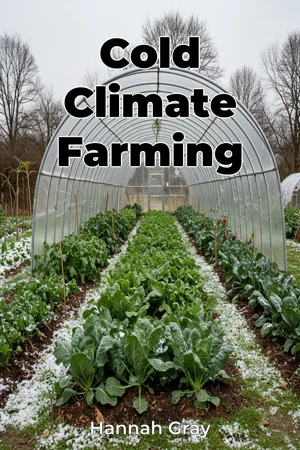
Can you successfully cultivate a thriving garden in regions where winter's icy grip lingers for much of the year? "Cold Climate Farming" provides a comprehensive exploration of the techniques and strategies necessary to achieve agricultural success in challenging, cold environments, focusing on extending growing seasons, selecting appropriate crops, and implementing protective measures to shield plants from harsh conditions. This book delves into the essential aspects of cold climate agriculture, addressing soil management, microclimate manipulation, and crop selection tailored for regions with short growing seasons and temperature extremes. Understanding these interconnected elements is critical for anyone seeking to establish a productive garden or farm in colder climates. This book argues that with careful planning, informed crop selection, and strategic application of protective measures, successful and sustainable food production is achievable even in the most challenging cold climates. This argument is vital because it empowers individuals and communities in these regions to enhance food security, reduce reliance on external food sources, and promote environmental sustainability. "Cold Climate Farming" begins by establishing a foundational understanding of cold climate characteristics, including the impact of latitude, altitude, and proximity to large bodies of water on growing seasons and temperature fluctuations. It explores the importance of soil health in cold regions, discussing techniques for improving soil drainage, warming soil temperatures, and enhancing nutrient availability through composting and cover cropping. The book progresses by examining various strategies for extending the growing season, such as using greenhouses, cold frames, and row covers to protect plants from frost and extend the harvest period. It provides detailed guidance on selecting crops that are well-suited to cold climates, considering factors like frost tolerance, time to maturity, and nutritional value. Furthermore, it delves into the manipulation of microclimates through windbreaks, reflective surfaces, and thermal mass to create more favorable growing conditions. Real-world examples and case studies will illustrate successful cold climate farming practices from various regions around the globe. The book will also incorporate research findings from agricultural studies and experimental farms, presenting data on crop yields, energy efficiency of protective structures, and the economic viability of cold climate farming operations. Information will be presented in a clear, fact-based manner, avoiding anecdotal claims. "Cold Climate Farming" connects to the fields of Earth Sciences Geography, examining how geographical factors influence regional climates and agricultural possibilities. It also overlaps with sustainable agriculture, promoting environmentally friendly practices that minimize resource consumption and enhance ecosystem health. A particularly unique aspect of this book is its emphasis on low-technology solutions for cold climate farming, making it accessible and practical for a wide range of readers, including hobby gardeners, small-scale farmers, and community organizations. The book avoids relying on expensive or complex technologies, instead focusing on readily available materials and techniques that can be implemented with limited resources. The intended audience includes gardeners, farmers, homesteaders, and anyone interested in sustainable food production in cold climates. This book offers a practical guide to overcoming the challenges of growing food in these regions. The scope of "Cold Climate Farming" encompasses a broad range of cold climate regions around the world, including temperate zones with cold winters and high-altitude areas with short growing seasons. It acknowledges that specific techniques may need to be adapted to local conditions and encourages readers to experiment and innovate to find what works best in their particular environment. While the book covers a diverse range of topics related to successful cold climate farming, it specifically avoids in-depth discussions of animal husbandry and focuses primarily on plant-based agriculture. The information presented in this book can be directly applied to improve food security, promote sustainable agriculture, and enhance community resilience in cold climate regions. By mastering the techniques outlined in "Cold Climate Farming", readers can transform their cold climate environments into productive and sustainable food-producing landscapes.
Can you successfully cultivate a thriving garden in regions where winter's icy grip lingers for much of the year? "Cold Climate Farming" provides a comprehensive exploration of the techniques and strategies necessary to achieve agricultural success in challenging, cold environments, focusing on extending growing seasons, selecting appropriate crops, and implementing protective measures to shield plants from harsh conditions. This book delves into the essential aspects of cold climate agriculture, addressing soil management, microclimate manipulation, and crop selection tailored for regions with short growing seasons and temperature extremes. Understanding these interconnected elements is critical for anyone seeking to establish a productive garden or farm in colder climates. This book argues that with careful planning, informed crop selection, and strategic application of protective measures, successful and sustainable food production is achievable even in the most challenging cold climates. This argument is vital because it empowers individuals and communities in these regions to enhance food security, reduce reliance on external food sources, and promote environmental sustainability. "Cold Climate Farming" begins by establishing a foundational understanding of cold climate characteristics, including the impact of latitude, altitude, and proximity to large bodies of water on growing seasons and temperature fluctuations. It explores the importance of soil health in cold regions, discussing techniques for improving soil drainage, warming soil temperatures, and enhancing nutrient availability through composting and cover cropping. The book progresses by examining various strategies for extending the growing season, such as using greenhouses, cold frames, and row covers to protect plants from frost and extend the harvest period. It provides detailed guidance on selecting crops that are well-suited to cold climates, considering factors like frost tolerance, time to maturity, and nutritional value. Furthermore, it delves into the manipulation of microclimates through windbreaks, reflective surfaces, and thermal mass to create more favorable growing conditions. Real-world examples and case studies will illustrate successful cold climate farming practices from various regions around the globe. The book will also incorporate research findings from agricultural studies and experimental farms, presenting data on crop yields, energy efficiency of protective structures, and the economic viability of cold climate farming operations. Information will be presented in a clear, fact-based manner, avoiding anecdotal claims. "Cold Climate Farming" connects to the fields of Earth Sciences Geography, examining how geographical factors influence regional climates and agricultural possibilities. It also overlaps with sustainable agriculture, promoting environmentally friendly practices that minimize resource consumption and enhance ecosystem health. A particularly unique aspect of this book is its emphasis on low-technology solutions for cold climate farming, making it accessible and practical for a wide range of readers, including hobby gardeners, small-scale farmers, and community organizations. The book avoids relying on expensive or complex technologies, instead focusing on readily available materials and techniques that can be implemented with limited resources. The intended audience includes gardeners, farmers, homesteaders, and anyone interested in sustainable food production in cold climates. This book offers a practical guide to overcoming the challenges of growing food in these regions. The scope of "Cold Climate Farming" encompasses a broad range of cold climate regions around the world, including temperate zones with cold winters and high-altitude areas with short growing seasons. It acknowledges that specific techniques may need to be adapted to local conditions and encourages readers to experiment and innovate to find what works best in their particular environment. While the book covers a diverse range of topics related to successful cold climate farming, it specifically avoids in-depth discussions of animal husbandry and focuses primarily on plant-based agriculture. The information presented in this book can be directly applied to improve food security, promote sustainable agriculture, and enhance community resilience in cold climate regions. By mastering the techniques outlined in "Cold Climate Farming", readers can transform their cold climate environments into productive and sustainable food-producing landscapes.
"Cold Climate Farming" offers a comprehensive guide to achieving successful and sustainable food production in regions with challenging, cold environments. It addresses the core elements of cold climate agriculture, such as strategic crop selection and extending growing seasons, which are crucial for food security in these areas. The book showcases how careful planning and protective structures can enable thriving gardens even where winter dominates. The book emphasizes practical, low-technology solutions, making it accessible to a wide audience from hobby gardeners to small-scale farmers. It explores soil management, microclimate manipulation, and crop choices tailored for short growing seasons and temperature extremes. Notably, it highlights the importance of understanding how geographical factors, as studied within Earth Sciences Geography, influence local climates and agricultural possibilities. "Cold Climate Farming" begins by establishing a foundational understanding of cold climate characteristics and progresses by examining various strategies for extending growing seasons. Real-world examples illustrate successful practices from various regions, and research findings present data on crop yields and the economic viability of cold climate farming. By focusing on readily available materials and techniques, the book empowers readers to transform cold environments into productive food-producing landscapes.
Book Details
ISBN
9788235206664
Publisher
Publifye AS
Your Licenses
You don't own any licenses for this book
Purchase a license below to unlock this book and download the EPUB.
Purchase License
Select a tier to unlock this book
Need bulk licensing?
Contact us for enterprise agreements.