
About This Book
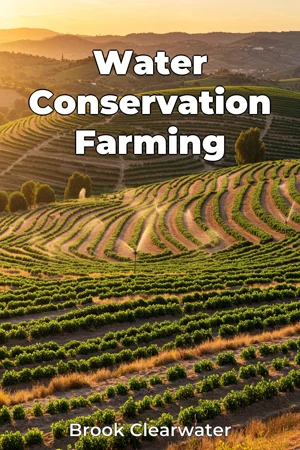
Can agriculture, the very source of our sustenance, become a champion of water conservation? This book, "Water Conservation Farming," delves into the urgent need for and practical methods of reducing water consumption in agricultural practices. It addresses the critical intersection of environmental sustainability, ensuring food security, and adapting to a changing climate. We explore how innovative farming techniques can simultaneously decrease water usage and maintain, or even improve, crop yields. This book centers around three core themes: understanding current water usage in agriculture, implementing efficient irrigation technologies, and promoting drought-resistant crop varieties coupled with soil health management. The significance of these themes lies in their potential to mitigate water scarcity, a growing global challenge that directly threatens food production and ecosystem stability. Recognizing water as a finite and precious resource, the book aims to equip farmers, policymakers, and environmental scientists with the knowledge and tools necessary to foster sustainable agricultural systems. Understanding the historical context of agricultural water use is essential. We examine the evolution of irrigation practices, from ancient methods to modern industrial approaches, highlighting the environmental consequences of unsustainable water management. The book provides a scientific backdrop, explaining the hydrological cycle, the impact of agriculture on groundwater resources, and the effects of climate change on water availability. Readers will gain an understanding of basic soil science principles and plant physiology to appreciate how these factors influence water requirements in crops. Our central argument is that a paradigm shift in agricultural practices is essential to achieving water security and environmental sustainability. By adopting water-efficient technologies, promoting drought-resistant crops, and implementing effective soil management strategies, we can significantly reduce the agricultural sector's water footprint without compromising food production. This argument is crucial because it challenges the conventional wisdom that increased agricultural output necessitates increased water consumption, offering a more sustainable and resilient path forward. The book is structured to systematically explore these themes. First, we introduce the global water crisis and its implications for agriculture. This section establishes the urgency and scope of the problem. Next, we dedicate chapters to efficient irrigation techniques, such as drip irrigation, micro-sprinklers, and deficit irrigation, detailing their implementation, cost-effectiveness, and water-saving potential. We investigate the role of drought-resistant crops, including genetic modification and traditional breeding methods, examining their adaptability and yield performance under water-stressed conditions. Another major section is focused on soil health, water retention practices, and reducing evaporation. Finally, we demonstrate the practical applications of these methods through case studies from diverse agricultural settings and climate zones. The evidence presented in this book is drawn from a wide range of sources, including peer-reviewed scientific literature, government reports, and field trials. We analyze data from experimental farms and commercial operations to demonstrate the effectiveness of water-saving technologies and practices. The book incorporates data visualization and statistical analysis to present findings in a clear and accessible manner. We also draw on interviews with farmers and agricultural experts to provide real-world perspectives and insights. The book connects to several other fields, including environmental science, economics, and public policy. This integration emphasizes the interconnectedness of water management, agricultural productivity, and environmental conservation. For example, we explore the economic incentives and policy frameworks needed to promote the adoption of water-efficient technologies. We analyze the environmental impacts of agricultural water use on aquatic ecosystems and biodiversity. A unique aspect of this book is its focus on integrating traditional knowledge with modern science. We recognize the valuable insights of indigenous farming communities who have developed sustainable water management practices over centuries. By combining these practices with innovative technologies, we offer a holistic and culturally sensitive approach to water conservation. The tone is professional and informative, aiming to provide a balanced and evidence-based analysis of the issues. While technically sound, the writing style is accessible to a broad audience, avoiding overly complex jargon. The target audience includes agricultural professionals, environmental scientists, policymakers, students, and anyone interested in sustainable agriculture and water conservation. This book would be valuable to them because it provides a practical and comprehensive guide to reducing water use in farming, empowering them to make informed decisions and contribute to a more sustainable future. As a work of environmental and earth sciences geography, the book adheres to the genre's emphasis on empirical research, data analysis, and real-world applications. The scope of the book is global, examining water conservation strategies in diverse agricultural systems around the world. However, we acknowledge that specific recommendations may need to be tailored to local conditions and resources. The book does not delve into the political aspects of water resource allocation. The information presented in this book can be applied in various ways. Farmers can use the guidelines to implement water-efficient irrigation techniques and select appropriate crop varieties. Policymakers can use the information to develop effective water management policies and regulations. Environmental organizations can use the findings to advocate for sustainable agricultural practices. The book addresses ongoing debates surrounding the role of genetically modified crops in water conservation and the effectiveness of different irrigation technologies. We present different viewpoints and perspectives, encouraging readers to critically evaluate the evidence and form their own informed opinions.
Can agriculture, the very source of our sustenance, become a champion of water conservation? This book, "Water Conservation Farming," delves into the urgent need for and practical methods of reducing water consumption in agricultural practices. It addresses the critical intersection of environmental sustainability, ensuring food security, and adapting to a changing climate. We explore how innovative farming techniques can simultaneously decrease water usage and maintain, or even improve, crop yields. This book centers around three core themes: understanding current water usage in agriculture, implementing efficient irrigation technologies, and promoting drought-resistant crop varieties coupled with soil health management. The significance of these themes lies in their potential to mitigate water scarcity, a growing global challenge that directly threatens food production and ecosystem stability. Recognizing water as a finite and precious resource, the book aims to equip farmers, policymakers, and environmental scientists with the knowledge and tools necessary to foster sustainable agricultural systems. Understanding the historical context of agricultural water use is essential. We examine the evolution of irrigation practices, from ancient methods to modern industrial approaches, highlighting the environmental consequences of unsustainable water management. The book provides a scientific backdrop, explaining the hydrological cycle, the impact of agriculture on groundwater resources, and the effects of climate change on water availability. Readers will gain an understanding of basic soil science principles and plant physiology to appreciate how these factors influence water requirements in crops. Our central argument is that a paradigm shift in agricultural practices is essential to achieving water security and environmental sustainability. By adopting water-efficient technologies, promoting drought-resistant crops, and implementing effective soil management strategies, we can significantly reduce the agricultural sector's water footprint without compromising food production. This argument is crucial because it challenges the conventional wisdom that increased agricultural output necessitates increased water consumption, offering a more sustainable and resilient path forward. The book is structured to systematically explore these themes. First, we introduce the global water crisis and its implications for agriculture. This section establishes the urgency and scope of the problem. Next, we dedicate chapters to efficient irrigation techniques, such as drip irrigation, micro-sprinklers, and deficit irrigation, detailing their implementation, cost-effectiveness, and water-saving potential. We investigate the role of drought-resistant crops, including genetic modification and traditional breeding methods, examining their adaptability and yield performance under water-stressed conditions. Another major section is focused on soil health, water retention practices, and reducing evaporation. Finally, we demonstrate the practical applications of these methods through case studies from diverse agricultural settings and climate zones. The evidence presented in this book is drawn from a wide range of sources, including peer-reviewed scientific literature, government reports, and field trials. We analyze data from experimental farms and commercial operations to demonstrate the effectiveness of water-saving technologies and practices. The book incorporates data visualization and statistical analysis to present findings in a clear and accessible manner. We also draw on interviews with farmers and agricultural experts to provide real-world perspectives and insights. The book connects to several other fields, including environmental science, economics, and public policy. This integration emphasizes the interconnectedness of water management, agricultural productivity, and environmental conservation. For example, we explore the economic incentives and policy frameworks needed to promote the adoption of water-efficient technologies. We analyze the environmental impacts of agricultural water use on aquatic ecosystems and biodiversity. A unique aspect of this book is its focus on integrating traditional knowledge with modern science. We recognize the valuable insights of indigenous farming communities who have developed sustainable water management practices over centuries. By combining these practices with innovative technologies, we offer a holistic and culturally sensitive approach to water conservation. The tone is professional and informative, aiming to provide a balanced and evidence-based analysis of the issues. While technically sound, the writing style is accessible to a broad audience, avoiding overly complex jargon. The target audience includes agricultural professionals, environmental scientists, policymakers, students, and anyone interested in sustainable agriculture and water conservation. This book would be valuable to them because it provides a practical and comprehensive guide to reducing water use in farming, empowering them to make informed decisions and contribute to a more sustainable future. As a work of environmental and earth sciences geography, the book adheres to the genre's emphasis on empirical research, data analysis, and real-world applications. The scope of the book is global, examining water conservation strategies in diverse agricultural systems around the world. However, we acknowledge that specific recommendations may need to be tailored to local conditions and resources. The book does not delve into the political aspects of water resource allocation. The information presented in this book can be applied in various ways. Farmers can use the guidelines to implement water-efficient irrigation techniques and select appropriate crop varieties. Policymakers can use the information to develop effective water management policies and regulations. Environmental organizations can use the findings to advocate for sustainable agricultural practices. The book addresses ongoing debates surrounding the role of genetically modified crops in water conservation and the effectiveness of different irrigation technologies. We present different viewpoints and perspectives, encouraging readers to critically evaluate the evidence and form their own informed opinions.
"Water Conservation Farming" addresses the critical need to reduce water consumption in agriculture amidst growing water scarcity and climate change concerns. It explores how innovative farming techniques can simultaneously decrease water usage and maintain, or even improve, crop yields. For instance, the book highlights how adopting efficient irrigation technologies, such as drip irrigation, can drastically reduce water waste compared to traditional flood irrigation methods. Furthermore, it emphasizes the importance of drought-resistant crops and effective soil health management in mitigating water scarcity, presenting a case for a paradigm shift in agricultural practices. The book systematically progresses from introducing the global water crisis to detailing efficient irrigation techniques, drought-resistant crops, and soil health practices. It uniquely integrates modern science with traditional knowledge from indigenous farming communities, offering a holistic approach to water conservation. By drawing on peer-reviewed studies, government reports, and real-world case studies, "Water Conservation Farming" equips farmers, policymakers, and environmental scientists with the knowledge and tools necessary to foster sustainable agricultural systems.
Book Details
ISBN
9788235206572
Publisher
Publifye AS
Your Licenses
You don't own any licenses for this book
Purchase a license below to unlock this book and download the EPUB.
Purchase License
Select a tier to unlock this book
Need bulk licensing?
Contact us for enterprise agreements.