
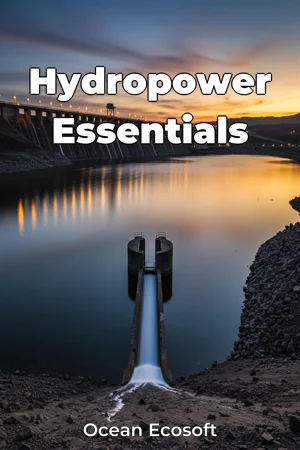
About This Book
Can the power of flowing water truly solve our global energy needs? "Hydropower Essentials" delves into the core principles and practical applications of water-driven power generation, providing a comprehensive understanding of this crucial renewable energy source. This book is essential because hydropower plays a pivotal role in the global energy landscape, offering a sustainable alternative to fossil fuels while simultaneously presenting unique environmental and technological challenges. We will explore the fundamental physics of hydropower, the engineering behind dam and turbine construction, and the ecological impact of these large-scale projects. The central argument of "Hydropower Essentials" is that while hydropower represents a mature and reliable renewable energy technology, its responsible and sustainable implementation requires a thorough understanding of its environmental consequences and a commitment to innovative engineering solutions. This argument is critical in an era defined by the urgent need to transition to cleaner energy sources without exacerbating existing environmental problems. This book unfolds systematically, beginning with an introduction to the basic principles of hydropower, including potential and kinetic energy conversion. We then explore: * **Hydropower Technologies:** A detailed examination of various hydropower technologies such as conventional dams, pumped storage, and run-of-river systems, analyzing their design, efficiency, and suitability for different geographical contexts. * **Environmental Impacts and Mitigation:** An in-depth analysis of the environmental consequences of hydropower, including impacts on aquatic ecosystems, water quality, and greenhouse gas emissions from reservoirs, coupled with strategies for mitigating these effects through careful planning and innovative technologies. * **The Future of Hydropower:** An exploration of emerging trends and innovations in the field, such as small-scale hydropower, advanced turbine designs, and the integration of hydropower with other renewable energy sources like solar and wind. The book supports its arguments with evidence drawn from a wide range of sources, including engineering reports, environmental impact assessments, scientific studies published in peer-reviewed journals, and case studies of hydropower projects from around the world. The book presents data on dam efficiency, reservoir greenhouse gas emissions, and the impact on fish populations. "Hydropower Essentials" connects to several other fields, most notably environmental science (examining the ecological impacts of dams and reservoirs), civil engineering (analyzing dam construction and design), and economics (evaluating the costs and benefits of hydropower projects). These cross-disciplinary connections provide a holistic understanding of hydropower's role in society. This book offers a unique perspective by integrating an environmental impact assessment with a technological overview of hydropower. It doesn't shy away from the controversies surrounding hydropower development, such as the displacement of communities and the alteration of river ecosystems. Instead, it addresses these issues head-on, offering balanced and informed perspectives. The tone is informative and objective, aiming to provide readers with a comprehensive and balanced view of hydropower. While presenting complex technical information, the writing style will remain accessible to a broad audience. The target audience includes students and researchers in energy-related fields, environmental scientists, engineers, policymakers, and anyone interested in learning more about renewable energy sources. This book would be valuable for those seeking a comprehensive and objective overview of hydropower technology and its environmental implications. As a non-fiction work in Technology and Environment, this book prioritizes accuracy, objectivity, and clarity. The book aims to follow the conventions of technical writing, with clear explanations, detailed diagrams, and supporting data. The book's scope is limited to the technology and environmental impacts of hydropower. It does not delve deeply into the political or social aspects of hydropower development, although these issues are touched upon where relevant. The information presented in "Hydropower Essentials" can be applied to real-world scenarios such as evaluating the feasibility of new hydropower projects, assessing the environmental impacts of existing dams, and developing policies to promote sustainable hydropower development. The book addresses controversies surrounding hydropower, such as the debate over dam removal and the impact of reservoirs on greenhouse gas emissions. It presents different perspectives on these issues, allowing readers to form their own informed opinions.
Can the power of flowing water truly solve our global energy needs? "Hydropower Essentials" delves into the core principles and practical applications of water-driven power generation, providing a comprehensive understanding of this crucial renewable energy source. This book is essential because hydropower plays a pivotal role in the global energy landscape, offering a sustainable alternative to fossil fuels while simultaneously presenting unique environmental and technological challenges. We will explore the fundamental physics of hydropower, the engineering behind dam and turbine construction, and the ecological impact of these large-scale projects. The central argument of "Hydropower Essentials" is that while hydropower represents a mature and reliable renewable energy technology, its responsible and sustainable implementation requires a thorough understanding of its environmental consequences and a commitment to innovative engineering solutions. This argument is critical in an era defined by the urgent need to transition to cleaner energy sources without exacerbating existing environmental problems. This book unfolds systematically, beginning with an introduction to the basic principles of hydropower, including potential and kinetic energy conversion. We then explore: * **Hydropower Technologies:** A detailed examination of various hydropower technologies such as conventional dams, pumped storage, and run-of-river systems, analyzing their design, efficiency, and suitability for different geographical contexts. * **Environmental Impacts and Mitigation:** An in-depth analysis of the environmental consequences of hydropower, including impacts on aquatic ecosystems, water quality, and greenhouse gas emissions from reservoirs, coupled with strategies for mitigating these effects through careful planning and innovative technologies. * **The Future of Hydropower:** An exploration of emerging trends and innovations in the field, such as small-scale hydropower, advanced turbine designs, and the integration of hydropower with other renewable energy sources like solar and wind. The book supports its arguments with evidence drawn from a wide range of sources, including engineering reports, environmental impact assessments, scientific studies published in peer-reviewed journals, and case studies of hydropower projects from around the world. The book presents data on dam efficiency, reservoir greenhouse gas emissions, and the impact on fish populations. "Hydropower Essentials" connects to several other fields, most notably environmental science (examining the ecological impacts of dams and reservoirs), civil engineering (analyzing dam construction and design), and economics (evaluating the costs and benefits of hydropower projects). These cross-disciplinary connections provide a holistic understanding of hydropower's role in society. This book offers a unique perspective by integrating an environmental impact assessment with a technological overview of hydropower. It doesn't shy away from the controversies surrounding hydropower development, such as the displacement of communities and the alteration of river ecosystems. Instead, it addresses these issues head-on, offering balanced and informed perspectives. The tone is informative and objective, aiming to provide readers with a comprehensive and balanced view of hydropower. While presenting complex technical information, the writing style will remain accessible to a broad audience. The target audience includes students and researchers in energy-related fields, environmental scientists, engineers, policymakers, and anyone interested in learning more about renewable energy sources. This book would be valuable for those seeking a comprehensive and objective overview of hydropower technology and its environmental implications. As a non-fiction work in Technology and Environment, this book prioritizes accuracy, objectivity, and clarity. The book aims to follow the conventions of technical writing, with clear explanations, detailed diagrams, and supporting data. The book's scope is limited to the technology and environmental impacts of hydropower. It does not delve deeply into the political or social aspects of hydropower development, although these issues are touched upon where relevant. The information presented in "Hydropower Essentials" can be applied to real-world scenarios such as evaluating the feasibility of new hydropower projects, assessing the environmental impacts of existing dams, and developing policies to promote sustainable hydropower development. The book addresses controversies surrounding hydropower, such as the debate over dam removal and the impact of reservoirs on greenhouse gas emissions. It presents different perspectives on these issues, allowing readers to form their own informed opinions.
"Hydropower Essentials" explores the multifaceted world of hydropower, a critical renewable energy source that balances sustainable development with environmental considerations. The book delves into the engineering aspects of dams and turbines and examines hydropower's role in the global energy landscape. While hydropower offers a cleaner alternative to fossil fuels, the text emphasizes the need for a comprehensive understanding of its environmental consequences, such as reservoir emissions, which can contribute to greenhouse gases, and the effects on aquatic ecosystems. The book systematically progresses from the basic principles of hydropower, including the conversion of potential and kinetic energy, to a detailed examination of various hydropower technologies like pumped storage and run-of-river systems. It uniquely integrates environmental impact assessments with technological overviews, addressing controversies like community displacement and ecosystem alteration head-on. By exploring emerging trends such as small-scale hydropower and advanced turbine designs, "Hydropower Essentials" provides a balanced view of hydropower's present and future, making it valuable for anyone interested in sustainable energy solutions.
Book Details
ISBN
9788235206565
Publisher
Publifye AS
Your Licenses
You don't own any licenses for this book
Purchase a license below to unlock this book and download the EPUB.
Purchase License
Select a tier to unlock this book
Need bulk licensing?
Contact us for enterprise agreements.