
About This Book
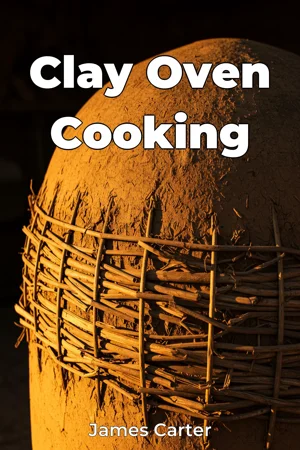
Have you ever wondered about the origins of some of the most fundamental culinary techniques? "Clay Oven Cooking" delves into the rich history and enduring significance of the clay oven, a cornerstone of baking traditions across cultures and continents. This book explores the evolution, construction, and enduring appeal of this ancient cooking method, revealing its vital role in shaping culinary practices and cultural identities. The primary focus of this book is threefold: the historical development of clay ovens, the science behind their unique cooking capabilities, and the diverse cultural traditions that have embraced them. These topics are important because the clay oven represents a pivotal moment in human history, marking a transition from rudimentary cooking methods to more sophisticated techniques that allowed for the creation of diverse breads, meats, and other dishes. Understanding the science behind its heat retention and distribution provides insights into how early civilizations maximized resources and developed efficient cooking systems. Exploring the cultural traditions tied to clay oven cooking reveals the oven's significance not just as a tool, but as a central element of community, ritual, and identity. Throughout history, the clay oven has manifested in various forms, from the tandoors of India to the beehive ovens of Europe. Its simple yet effective design, leveraging the thermal properties of clay, has allowed communities to bake consistently and efficiently for millennia. No prerequisites are necessary to enjoy this book; we assume a basic understanding of cooking and an interest in history and culture, providing clear explanations of any specialized concepts. "Clay Oven Cooking" argues that the clay oven is more than just a cooking appliance. It is a cultural artifact that has shaped the culinary landscape and fostered a sense of community for generations. Its enduring presence across diverse cultures speaks to its fundamental utility and adaptability, representing a universal expression of ingenuity and human connection through food. The book is structured to provide a progressive understanding of the clay oven. Initially, it introduces the historical context, tracing its origins and evolution across different regions. It will then move on to developing the science behind the oven, explaining the principles of heat transfer, insulation, and the chemical reactions that occur during baking. The book explores diverse regional variations in oven design and usage, focusing on specific examples like the Mediterranean, the Middle East, and South Asia. Finally, it examines the social and cultural significance of the clay oven, illustrating its role in festivals, communal gatherings, and family traditions. The evidence presented draws from archaeological findings, historical texts, ethnographic studies, and culinary research. We utilize firsthand accounts, historical recipes, and contemporary interviews with bakers and oven builders to provide a comprehensive picture of the clay oven’s impact. The book also connects to other fields, such as anthropology, material science, and environmental studies. Anthropology provides insights into the social and cultural contexts in which clay ovens are used. Material science explains the properties of clay and how they contribute to the oven's effectiveness. Environmental studies considers the sustainability of clay oven construction and the use of fuel. "Clay Oven Cooking" offers a comprehensive, interdisciplinary exploration of a fundamental culinary tool. The tone is informative and engaging, designed to appeal to a broad audience interested in culinary history, cultural traditions, and the science of cooking. The target audience includes home cooks, bakers, food historians, anthropologists, and anyone curious about the origins of cooking techniques. The value of this book lies in its ability to provide a deeper understanding of the cultural and historical significance of a device that is often taken for granted, as well as providing practical knowledge for those interested in building or using their own clay oven. As a work of non-fiction, the book adheres to principles of accuracy, objectivity, and thorough research. The scope of the book is intentionally broad, covering a global range of clay oven traditions, but it focuses primarily on cultures where the clay oven has played a particularly significant role. It does not delve deeply into the technical details of specific oven designs but rather provides an overview of the common principles and regional variations. The information in "Clay Oven Cooking" can be applied practically by readers interested in building their own clay oven, adapting traditional recipes for modern kitchens, or simply gaining a greater appreciation for the cultural significance of this ancient cooking method. While the use of clay ovens is generally considered sustainable due to the use of natural materials, the book also addresses potential environmental concerns related to fuel consumption and deforestation, sparking a conversation about responsible oven usage and fuel sourcing.
Have you ever wondered about the origins of some of the most fundamental culinary techniques? "Clay Oven Cooking" delves into the rich history and enduring significance of the clay oven, a cornerstone of baking traditions across cultures and continents. This book explores the evolution, construction, and enduring appeal of this ancient cooking method, revealing its vital role in shaping culinary practices and cultural identities. The primary focus of this book is threefold: the historical development of clay ovens, the science behind their unique cooking capabilities, and the diverse cultural traditions that have embraced them. These topics are important because the clay oven represents a pivotal moment in human history, marking a transition from rudimentary cooking methods to more sophisticated techniques that allowed for the creation of diverse breads, meats, and other dishes. Understanding the science behind its heat retention and distribution provides insights into how early civilizations maximized resources and developed efficient cooking systems. Exploring the cultural traditions tied to clay oven cooking reveals the oven's significance not just as a tool, but as a central element of community, ritual, and identity. Throughout history, the clay oven has manifested in various forms, from the tandoors of India to the beehive ovens of Europe. Its simple yet effective design, leveraging the thermal properties of clay, has allowed communities to bake consistently and efficiently for millennia. No prerequisites are necessary to enjoy this book; we assume a basic understanding of cooking and an interest in history and culture, providing clear explanations of any specialized concepts. "Clay Oven Cooking" argues that the clay oven is more than just a cooking appliance. It is a cultural artifact that has shaped the culinary landscape and fostered a sense of community for generations. Its enduring presence across diverse cultures speaks to its fundamental utility and adaptability, representing a universal expression of ingenuity and human connection through food. The book is structured to provide a progressive understanding of the clay oven. Initially, it introduces the historical context, tracing its origins and evolution across different regions. It will then move on to developing the science behind the oven, explaining the principles of heat transfer, insulation, and the chemical reactions that occur during baking. The book explores diverse regional variations in oven design and usage, focusing on specific examples like the Mediterranean, the Middle East, and South Asia. Finally, it examines the social and cultural significance of the clay oven, illustrating its role in festivals, communal gatherings, and family traditions. The evidence presented draws from archaeological findings, historical texts, ethnographic studies, and culinary research. We utilize firsthand accounts, historical recipes, and contemporary interviews with bakers and oven builders to provide a comprehensive picture of the clay oven’s impact. The book also connects to other fields, such as anthropology, material science, and environmental studies. Anthropology provides insights into the social and cultural contexts in which clay ovens are used. Material science explains the properties of clay and how they contribute to the oven's effectiveness. Environmental studies considers the sustainability of clay oven construction and the use of fuel. "Clay Oven Cooking" offers a comprehensive, interdisciplinary exploration of a fundamental culinary tool. The tone is informative and engaging, designed to appeal to a broad audience interested in culinary history, cultural traditions, and the science of cooking. The target audience includes home cooks, bakers, food historians, anthropologists, and anyone curious about the origins of cooking techniques. The value of this book lies in its ability to provide a deeper understanding of the cultural and historical significance of a device that is often taken for granted, as well as providing practical knowledge for those interested in building or using their own clay oven. As a work of non-fiction, the book adheres to principles of accuracy, objectivity, and thorough research. The scope of the book is intentionally broad, covering a global range of clay oven traditions, but it focuses primarily on cultures where the clay oven has played a particularly significant role. It does not delve deeply into the technical details of specific oven designs but rather provides an overview of the common principles and regional variations. The information in "Clay Oven Cooking" can be applied practically by readers interested in building their own clay oven, adapting traditional recipes for modern kitchens, or simply gaining a greater appreciation for the cultural significance of this ancient cooking method. While the use of clay ovens is generally considered sustainable due to the use of natural materials, the book also addresses potential environmental concerns related to fuel consumption and deforestation, sparking a conversation about responsible oven usage and fuel sourcing.
"Clay Oven Cooking" reveals the fascinating story of the clay oven, a cornerstone of baking traditions across cultures. This book explores the oven's evolution, construction, and cultural impact, highlighting its role in shaping culinary practices. Did you know that the clay oven, in forms like the Indian tandoor or European beehive oven, has been used for millennia due to its efficient heat retention? Or that its simple design leverages the thermal properties of clay for consistent baking? The book progresses from the historical context of clay ovens to the science behind their unique cooking capabilities. It examines diverse regional variations and delves into the social and cultural significance of the oven in festivals and family traditions. By drawing from archaeological findings, historical texts, and ethnographic studies, "Clay Oven Cooking" provides a comprehensive, interdisciplinary exploration of this fundamental culinary tool, making it invaluable for anyone interested in food history and cultural traditions.
Book Details
ISBN
9788235206503
Publisher
Publifye AS
Your Licenses
You don't own any licenses for this book
Purchase a license below to unlock this book and download the EPUB.
Purchase License
Select a tier to unlock this book
Need bulk licensing?
Contact us for enterprise agreements.