
About This Book
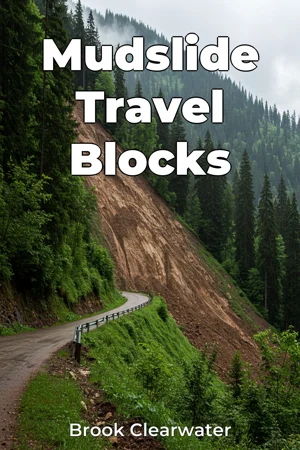
How often do we consider the hidden forces that render roads impassable, isolating communities and disrupting vital supply chains long after the rain has stopped? "Mudslide Travel Blocks" delves into the intricate relationship between rain-soaked slopes and the destruction of roads and paths, exploring the Earth science behind these devastating events, their geographical distribution, and their profound environmental impact. This book examines the critical role of understanding these phenomena for effective disaster preparedness and resilient infrastructure development. Our exploration centers on three main topics: the geological factors contributing to slope instability, the hydrological triggers that initiate mudslides, and the engineering solutions necessary to mitigate their impact on transportation networks. The significance of these topics lies in their direct relevance to public safety, economic stability, and environmental conservation. Ignoring these factors results in increased vulnerability to natural disasters, escalating repair costs, and long-term ecological damage. The book's context rests on decades of research in soil mechanics, hydrology, and geomorphology, coupled with the increasing urgency of addressing climate change impacts. While a basic understanding of geological processes and hydrological cycles is beneficial, the book is designed to be accessible to a broad audience, including policymakers, engineers, environmental scientists, and concerned citizens. The central argument of "Mudslide Travel Blocks" is that a comprehensive, interdisciplinary approach is essential for predicting, preventing, and managing the risks associated with mudslide-induced travel disruptions. This argument underscores the need to move beyond reactive measures and adopt proactive strategies based on scientific understanding and informed planning. The book unfolds in a structured progression. First, an introduction clarifies fundamental concepts such as soil composition, slope stability analysis, and rainfall intensity-duration relationships. Subsequently, the book develops its argument across three major sections. One section examines the geological foundations, detailing how different rock types, soil structures, and topographic features influence slope stability. A second section analyzes the hydrological processes, focusing on the role of rainfall infiltration, groundwater dynamics, and surface runoff in triggering mudslides. The third section focuses on mitigation strategies, evaluating the effectiveness of various engineering techniques, land-use planning policies, and early warning systems. The book culminates by presenting a framework for integrated risk management, emphasizing the importance of collaboration between scientists, engineers, policymakers, and communities. The evidence presented relies on a combination of field studies, laboratory experiments, remote sensing data, and numerical modeling. Case studies from diverse geographical regions, encompassing varying climatic and geological conditions, illustrate the principles discussed and demonstrate the effectiveness of different mitigation approaches. The book also draws upon unique datasets, including high-resolution topographic surveys and detailed records of mudslide events, to provide empirical support for its claims. "Mudslide Travel Blocks" bridges several disciplines, connecting Earth sciences with civil engineering, environmental policy, and disaster management. This interdisciplinary approach allows for a more holistic understanding of the problem and facilitates the development of more effective solutions. The book distinguishes itself by adopting a systems-thinking approach, recognizing that mudslides are not isolated events but rather complex phenomena influenced by a multitude of interacting factors. This perspective emphasizes the need for integrated solutions that address both the immediate causes and the underlying drivers of slope instability. The tone is both informative and pragmatic, aiming to equip readers with the knowledge and tools necessary to address the challenges posed by mudslide-induced travel disruptions. The writing style is clear, concise, and accessible, avoiding jargon and technical complexities where possible. The target audience includes civil engineers responsible for road design and maintenance, environmental scientists involved in risk assessment and mitigation planning, policymakers tasked with developing land-use regulations and disaster preparedness strategies, and concerned citizens living in areas prone to mudslides. This book is valuable to them because it provides a comprehensive understanding of the problem, practical guidance on mitigation strategies, and a framework for effective risk management. As a work in Earth sciences and geography, the book adheres to the genre's conventions by presenting data-driven analyses, incorporating visual aids such as maps and diagrams, and providing clear explanations of scientific concepts. Addressing environmental concerns, the book aligns with similar non-fiction expectations by objectively examining the interactions between natural processes and human activities and offering sustainable solutions. The scope of the book is limited to the analysis of mudslide-induced travel disruptions, focusing primarily on roads and paths. While other types of landslides and their impacts on other infrastructure systems are acknowledged, they are not the primary focus. The information presented can be applied practically by readers in several ways. Engineers can use the book's guidance on slope stabilization techniques to design more resilient roads. Environmental scientists can utilize the book's risk assessment framework to identify vulnerable areas and prioritize mitigation efforts. Policymakers can draw upon the book's recommendations for land-use planning and early warning systems to reduce the risk of future disasters. The book addresses ongoing debates in the field, such as the relative importance of natural and human factors in triggering mudslides and the cost-effectiveness of different mitigation strategies. By presenting a balanced assessment of these controversies, the book aims to foster informed discussion and guide decision-making.
How often do we consider the hidden forces that render roads impassable, isolating communities and disrupting vital supply chains long after the rain has stopped? "Mudslide Travel Blocks" delves into the intricate relationship between rain-soaked slopes and the destruction of roads and paths, exploring the Earth science behind these devastating events, their geographical distribution, and their profound environmental impact. This book examines the critical role of understanding these phenomena for effective disaster preparedness and resilient infrastructure development. Our exploration centers on three main topics: the geological factors contributing to slope instability, the hydrological triggers that initiate mudslides, and the engineering solutions necessary to mitigate their impact on transportation networks. The significance of these topics lies in their direct relevance to public safety, economic stability, and environmental conservation. Ignoring these factors results in increased vulnerability to natural disasters, escalating repair costs, and long-term ecological damage. The book's context rests on decades of research in soil mechanics, hydrology, and geomorphology, coupled with the increasing urgency of addressing climate change impacts. While a basic understanding of geological processes and hydrological cycles is beneficial, the book is designed to be accessible to a broad audience, including policymakers, engineers, environmental scientists, and concerned citizens. The central argument of "Mudslide Travel Blocks" is that a comprehensive, interdisciplinary approach is essential for predicting, preventing, and managing the risks associated with mudslide-induced travel disruptions. This argument underscores the need to move beyond reactive measures and adopt proactive strategies based on scientific understanding and informed planning. The book unfolds in a structured progression. First, an introduction clarifies fundamental concepts such as soil composition, slope stability analysis, and rainfall intensity-duration relationships. Subsequently, the book develops its argument across three major sections. One section examines the geological foundations, detailing how different rock types, soil structures, and topographic features influence slope stability. A second section analyzes the hydrological processes, focusing on the role of rainfall infiltration, groundwater dynamics, and surface runoff in triggering mudslides. The third section focuses on mitigation strategies, evaluating the effectiveness of various engineering techniques, land-use planning policies, and early warning systems. The book culminates by presenting a framework for integrated risk management, emphasizing the importance of collaboration between scientists, engineers, policymakers, and communities. The evidence presented relies on a combination of field studies, laboratory experiments, remote sensing data, and numerical modeling. Case studies from diverse geographical regions, encompassing varying climatic and geological conditions, illustrate the principles discussed and demonstrate the effectiveness of different mitigation approaches. The book also draws upon unique datasets, including high-resolution topographic surveys and detailed records of mudslide events, to provide empirical support for its claims. "Mudslide Travel Blocks" bridges several disciplines, connecting Earth sciences with civil engineering, environmental policy, and disaster management. This interdisciplinary approach allows for a more holistic understanding of the problem and facilitates the development of more effective solutions. The book distinguishes itself by adopting a systems-thinking approach, recognizing that mudslides are not isolated events but rather complex phenomena influenced by a multitude of interacting factors. This perspective emphasizes the need for integrated solutions that address both the immediate causes and the underlying drivers of slope instability. The tone is both informative and pragmatic, aiming to equip readers with the knowledge and tools necessary to address the challenges posed by mudslide-induced travel disruptions. The writing style is clear, concise, and accessible, avoiding jargon and technical complexities where possible. The target audience includes civil engineers responsible for road design and maintenance, environmental scientists involved in risk assessment and mitigation planning, policymakers tasked with developing land-use regulations and disaster preparedness strategies, and concerned citizens living in areas prone to mudslides. This book is valuable to them because it provides a comprehensive understanding of the problem, practical guidance on mitigation strategies, and a framework for effective risk management. As a work in Earth sciences and geography, the book adheres to the genre's conventions by presenting data-driven analyses, incorporating visual aids such as maps and diagrams, and providing clear explanations of scientific concepts. Addressing environmental concerns, the book aligns with similar non-fiction expectations by objectively examining the interactions between natural processes and human activities and offering sustainable solutions. The scope of the book is limited to the analysis of mudslide-induced travel disruptions, focusing primarily on roads and paths. While other types of landslides and their impacts on other infrastructure systems are acknowledged, they are not the primary focus. The information presented can be applied practically by readers in several ways. Engineers can use the book's guidance on slope stabilization techniques to design more resilient roads. Environmental scientists can utilize the book's risk assessment framework to identify vulnerable areas and prioritize mitigation efforts. Policymakers can draw upon the book's recommendations for land-use planning and early warning systems to reduce the risk of future disasters. The book addresses ongoing debates in the field, such as the relative importance of natural and human factors in triggering mudslides and the cost-effectiveness of different mitigation strategies. By presenting a balanced assessment of these controversies, the book aims to foster informed discussion and guide decision-making.
"Mudslide Travel Blocks" explores the science behind mudslides and their devastating impact on transportation networks. It examines how geological factors, such as soil composition, and hydrological processes, like rainfall infiltration, contribute to slope instability, leading to travel disruptions. The book uniquely bridges Earth sciences, civil engineering, and environmental policy, providing a holistic understanding of these complex phenomena. The book emphasizes the necessity of proactive strategies for disaster preparedness and resilient infrastructure development, highlighting the importance of understanding rainfall intensity-duration relationships. Case studies from various geographical regions illustrate the effectiveness of different mitigation approaches. It progresses from fundamental concepts to geological foundations, hydrological processes, and mitigation strategies, culminating in a framework for integrated risk management. This valuable resource presents data-driven analyses and practical guidance for engineers, environmental scientists, policymakers, and concerned citizens, offering insights into engineering solutions, land-use planning, and risk management. It addresses ongoing debates, such as the relative importance of natural and human factors in triggering mudslides, fostering informed discussion and guiding decision-making.
Book Details
ISBN
9788235206404
Publisher
Publifye AS
Your Licenses
You don't own any licenses for this book
Purchase a license below to unlock this book and download the EPUB.
Purchase License
Select a tier to unlock this book
Need bulk licensing?
Contact us for enterprise agreements.