
About This Book
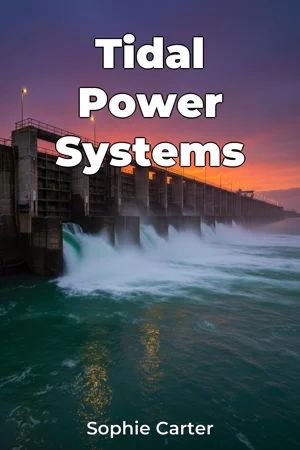
Can the rhythmic power of ocean tides offer a reliable solution to the escalating global energy crisis? "Tidal Power Systems" delves into the technological advancements and environmental considerations surrounding the generation of renewable electricity from tidal energy. This book explores the viability of harnessing this predictable and abundant resource, examining the engineering principles, ecological impacts, and economic factors that determine the success and sustainability of tidal power. The core of this book is structured around three interconnected concepts: firstly, the fundamental physics of tides and their potential for energy conversion; secondly, engineering designs and challenges associated with tidal power technologies, including tidal stream generators, barrage systems, and tidal lagoons; and thirdly, the environmental and economic implications of implementing tidal power on a large scale. These topics are important because they address critical questions surrounding the feasibility of tidal power as a significant contributor to global renewable energy portfolios. We begin by establishing a historical perspective, tracing the evolution of tidal power concepts from early watermills to contemporary megaprojects. Basic knowledge of fluid dynamics, electrical engineering, and environmental science will provide a solid foundation for understanding the complexities involved. Our central thesis posits that while tidal power presents a compelling alternative to fossil fuels, its widespread adoption hinges on overcoming technological hurdles, mitigating environmental impacts, and achieving economic competitiveness. We argue that a holistic approach, integrating engineering innovation with ecological sensitivity and economic pragmatism, is essential for realizing the full potential of tidal energy. The book unfolds in a structured manner, beginning with an introduction to tidal phenomena, explaining the gravitational influences of the moon and sun and how these forces create predictable tidal cycles. Subsequently, we examine the intricacies of various tidal power technologies, scrutinizing their design principles, operational characteristics, and performance metrics. Specific chapters are dedicated to analyzing the environmental impacts of tidal power plants, focusing on issues such as habitat disruption, fish migration, and sediment transport. The book culminates with an assessment of the economic viability of tidal power, considering factors such as capital costs, operating expenses, and energy market dynamics. We explore real-world case studies, drawing lessons from both successful implementations and past failures. Throughout the book, arguments are substantiated with data from scientific studies, engineering reports, and economic analyses. We incorporate information obtained directly from operational tidal power facilities and utilize computational models to simulate the performance of different tidal power systems under varying environmental conditions. This study acknowledges the interdisciplinary nature of tidal power development, drawing connections to fields such as oceanography, marine biology, economics, and public policy. These connections are crucial for fostering a comprehensive understanding of the challenges and opportunities associated with this technology. What sets this book apart is its comprehensive analysis of both established and emerging tidal power technologies, coupled with a rigorous evaluation of their environmental and economic implications. The writing style is intended to be accessible to a broad audience, blending technical rigor with clear and concise explanations. The book is aimed at engineers, environmental scientists, policymakers, and anyone interested in renewable energy technologies. It provides valuable insights for professionals working in the energy sector, researchers exploring marine renewable energy, and students studying related fields. As a work of non-fiction, this book adheres to the principles of accuracy, objectivity, and transparency. We acknowledge that the scope of this investigation is limited to tidal power technologies and does not extend to other forms of ocean energy, such as wave power or ocean thermal energy conversion (OTEC). The information presented can be applied in diverse practical contexts, from designing more efficient tidal turbines to developing effective environmental mitigation strategies and formulating sound energy policies. We will address the ongoing debates regarding the environmental sustainability of large-scale tidal power projects, presenting different perspectives and evaluating the evidence supporting each viewpoint.
Can the rhythmic power of ocean tides offer a reliable solution to the escalating global energy crisis? "Tidal Power Systems" delves into the technological advancements and environmental considerations surrounding the generation of renewable electricity from tidal energy. This book explores the viability of harnessing this predictable and abundant resource, examining the engineering principles, ecological impacts, and economic factors that determine the success and sustainability of tidal power. The core of this book is structured around three interconnected concepts: firstly, the fundamental physics of tides and their potential for energy conversion; secondly, engineering designs and challenges associated with tidal power technologies, including tidal stream generators, barrage systems, and tidal lagoons; and thirdly, the environmental and economic implications of implementing tidal power on a large scale. These topics are important because they address critical questions surrounding the feasibility of tidal power as a significant contributor to global renewable energy portfolios. We begin by establishing a historical perspective, tracing the evolution of tidal power concepts from early watermills to contemporary megaprojects. Basic knowledge of fluid dynamics, electrical engineering, and environmental science will provide a solid foundation for understanding the complexities involved. Our central thesis posits that while tidal power presents a compelling alternative to fossil fuels, its widespread adoption hinges on overcoming technological hurdles, mitigating environmental impacts, and achieving economic competitiveness. We argue that a holistic approach, integrating engineering innovation with ecological sensitivity and economic pragmatism, is essential for realizing the full potential of tidal energy. The book unfolds in a structured manner, beginning with an introduction to tidal phenomena, explaining the gravitational influences of the moon and sun and how these forces create predictable tidal cycles. Subsequently, we examine the intricacies of various tidal power technologies, scrutinizing their design principles, operational characteristics, and performance metrics. Specific chapters are dedicated to analyzing the environmental impacts of tidal power plants, focusing on issues such as habitat disruption, fish migration, and sediment transport. The book culminates with an assessment of the economic viability of tidal power, considering factors such as capital costs, operating expenses, and energy market dynamics. We explore real-world case studies, drawing lessons from both successful implementations and past failures. Throughout the book, arguments are substantiated with data from scientific studies, engineering reports, and economic analyses. We incorporate information obtained directly from operational tidal power facilities and utilize computational models to simulate the performance of different tidal power systems under varying environmental conditions. This study acknowledges the interdisciplinary nature of tidal power development, drawing connections to fields such as oceanography, marine biology, economics, and public policy. These connections are crucial for fostering a comprehensive understanding of the challenges and opportunities associated with this technology. What sets this book apart is its comprehensive analysis of both established and emerging tidal power technologies, coupled with a rigorous evaluation of their environmental and economic implications. The writing style is intended to be accessible to a broad audience, blending technical rigor with clear and concise explanations. The book is aimed at engineers, environmental scientists, policymakers, and anyone interested in renewable energy technologies. It provides valuable insights for professionals working in the energy sector, researchers exploring marine renewable energy, and students studying related fields. As a work of non-fiction, this book adheres to the principles of accuracy, objectivity, and transparency. We acknowledge that the scope of this investigation is limited to tidal power technologies and does not extend to other forms of ocean energy, such as wave power or ocean thermal energy conversion (OTEC). The information presented can be applied in diverse practical contexts, from designing more efficient tidal turbines to developing effective environmental mitigation strategies and formulating sound energy policies. We will address the ongoing debates regarding the environmental sustainability of large-scale tidal power projects, presenting different perspectives and evaluating the evidence supporting each viewpoint.
"Tidal Power Systems" explores the potential of tidal energy as a reliable renewable resource amidst growing global energy demands. It looks at how to harness the predictable power of tides through technologies like tidal stream generators and barrage systems. The book highlights the crucial balance between engineering innovation, ecological sensitivity, and economic practicality needed for successful tidal energy implementation. Readers will discover that tidal power, while promising, faces challenges in minimizing environmental impact and achieving cost-effectiveness compared to traditional energy sources. The book thoroughly examines the physics of tides, engineering designs, and the environmental and economic implications of tidal power. Beginning with a historical overview, it progresses to detailed analyses of various tidal power technologies and their performance, substantiated by scientific data and real-world case studies. Specific attention is given to environmental considerations such as habitat disruption and the economic factors influencing the viability of tidal power projects.
Book Details
ISBN
9788235205780
Publisher
Publifye AS
Your Licenses
You don't own any licenses for this book
Purchase a license below to unlock this book and download the EPUB.
Purchase License
Select a tier to unlock this book
Need bulk licensing?
Contact us for enterprise agreements.