
About This Book
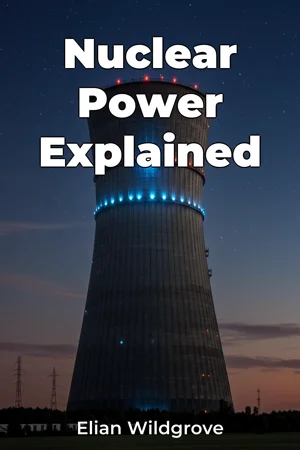
Can a single technology answer the world’s increasing energy demands while simultaneously combating climate change? "Nuclear Power Explained" delves into the multifaceted world of nuclear energy, examining its scientific underpinnings, its global impact, and its potential role in a sustainable future. This book navigates the complex landscape surrounding nuclear power, offering readers a comprehensive understanding of a technology that remains both promising and contentious. This exploration centers on three main areas: the fundamental principles of nuclear fission and reactor design, the historical development and global deployment of nuclear power plants, and the environmental and socio-economic consequences associated with nuclear energy production. Understanding these topics is crucial in an era grappling with energy security, climate change, and the need for reliable and low-carbon energy sources. The book assumes a basic understanding of scientific concepts but presents information in an accessible manner, making it suitable for a broad audience. The central argument of "Nuclear Power Explained" is that nuclear energy, despite its inherent risks and challenges, remains a vital component of a diversified energy portfolio necessary to meet global energy needs and mitigate the effects of climate change. This argument is particularly relevant today, as nations worldwide grapple with transitioning away from fossil fuels and securing reliable energy sources. The book begins by introducing the basic physics of nuclear reactions, explaining how nuclear fission generates heat, which is then used to produce electricity. It then transitions into the engineering aspects of nuclear reactor design, detailing the different types of reactors in operation globally and their respective advantages and disadvantages. A significant portion of the book is dedicated to the history of nuclear power, tracing its origins from scientific discovery to its widespread deployment as a commercial energy source. It examines the factors that have shaped the nuclear industry, including technological advancements, political influences, and public perceptions. A detailed analysis of the environmental impact of nuclear power, including waste disposal and the risk of accidents, follows. The book concludes by evaluating the future prospects of nuclear energy, considering advancements in reactor technology, the potential role of nuclear fusion, and the policy and economic factors that will shape its development. To support its arguments, "Nuclear Power Explained" draws upon a wide range of sources, including scientific literature, government reports, industry data, and academic research. It presents case studies of different countries' experiences with nuclear power, highlighting both successes and failures. The book also incorporates data visualizations to illustrate key trends and statistics, such as the growth of nuclear capacity, the cost of nuclear energy, and the environmental impact of nuclear power plants. The analysis extends beyond the purely technical aspects of nuclear power, connecting it to broader issues of energy policy, economics, and international relations. The economic viability of different energy sources are compared, considering not only the direct costs of electricity production but also the external costs associated with environmental impacts and public health. Finally, the book addresses the ethical considerations surrounding nuclear power, including the responsibility for managing nuclear waste and the potential for nuclear technology to be misused. "Nuclear Power Explained" offers a balanced and objective assessment of nuclear energy, acknowledging both its potential benefits and its inherent risks. It avoids sensationalism and instead seeks to provide readers with the information they need to form their own informed opinions about this complex and important technology. This book targets a broad audience, including students, policymakers, energy professionals, and anyone interested in learning more about nuclear power. It is particularly valuable for those seeking a comprehensive and unbiased overview of the subject. In line with the conventions of science and technology non-fiction, the writing style is clear, concise, and accessible. Complex concepts are explained in a straightforward manner, with technical jargon kept to a minimum. The scope of the book is intentionally broad, covering the major aspects of nuclear energy from its scientific foundations to its global impact. However, it does not delve into highly specialized topics, such as advanced reactor designs or specific regulatory frameworks. The information presented in "Nuclear Power Explained" can be applied in a variety of practical ways. For example, students can use it as a reference for research projects, policymakers can use it to inform energy policy decisions, and energy professionals can use it to gain a deeper understanding of the nuclear industry. The book also addresses the ongoing debates and controversies surrounding nuclear power, such as the safety of nuclear reactors, the disposal of nuclear waste, and the potential for nuclear proliferation. It presents different perspectives on these issues and encourages readers to critically evaluate the evidence.
Can a single technology answer the world’s increasing energy demands while simultaneously combating climate change? "Nuclear Power Explained" delves into the multifaceted world of nuclear energy, examining its scientific underpinnings, its global impact, and its potential role in a sustainable future. This book navigates the complex landscape surrounding nuclear power, offering readers a comprehensive understanding of a technology that remains both promising and contentious. This exploration centers on three main areas: the fundamental principles of nuclear fission and reactor design, the historical development and global deployment of nuclear power plants, and the environmental and socio-economic consequences associated with nuclear energy production. Understanding these topics is crucial in an era grappling with energy security, climate change, and the need for reliable and low-carbon energy sources. The book assumes a basic understanding of scientific concepts but presents information in an accessible manner, making it suitable for a broad audience. The central argument of "Nuclear Power Explained" is that nuclear energy, despite its inherent risks and challenges, remains a vital component of a diversified energy portfolio necessary to meet global energy needs and mitigate the effects of climate change. This argument is particularly relevant today, as nations worldwide grapple with transitioning away from fossil fuels and securing reliable energy sources. The book begins by introducing the basic physics of nuclear reactions, explaining how nuclear fission generates heat, which is then used to produce electricity. It then transitions into the engineering aspects of nuclear reactor design, detailing the different types of reactors in operation globally and their respective advantages and disadvantages. A significant portion of the book is dedicated to the history of nuclear power, tracing its origins from scientific discovery to its widespread deployment as a commercial energy source. It examines the factors that have shaped the nuclear industry, including technological advancements, political influences, and public perceptions. A detailed analysis of the environmental impact of nuclear power, including waste disposal and the risk of accidents, follows. The book concludes by evaluating the future prospects of nuclear energy, considering advancements in reactor technology, the potential role of nuclear fusion, and the policy and economic factors that will shape its development. To support its arguments, "Nuclear Power Explained" draws upon a wide range of sources, including scientific literature, government reports, industry data, and academic research. It presents case studies of different countries' experiences with nuclear power, highlighting both successes and failures. The book also incorporates data visualizations to illustrate key trends and statistics, such as the growth of nuclear capacity, the cost of nuclear energy, and the environmental impact of nuclear power plants. The analysis extends beyond the purely technical aspects of nuclear power, connecting it to broader issues of energy policy, economics, and international relations. The economic viability of different energy sources are compared, considering not only the direct costs of electricity production but also the external costs associated with environmental impacts and public health. Finally, the book addresses the ethical considerations surrounding nuclear power, including the responsibility for managing nuclear waste and the potential for nuclear technology to be misused. "Nuclear Power Explained" offers a balanced and objective assessment of nuclear energy, acknowledging both its potential benefits and its inherent risks. It avoids sensationalism and instead seeks to provide readers with the information they need to form their own informed opinions about this complex and important technology. This book targets a broad audience, including students, policymakers, energy professionals, and anyone interested in learning more about nuclear power. It is particularly valuable for those seeking a comprehensive and unbiased overview of the subject. In line with the conventions of science and technology non-fiction, the writing style is clear, concise, and accessible. Complex concepts are explained in a straightforward manner, with technical jargon kept to a minimum. The scope of the book is intentionally broad, covering the major aspects of nuclear energy from its scientific foundations to its global impact. However, it does not delve into highly specialized topics, such as advanced reactor designs or specific regulatory frameworks. The information presented in "Nuclear Power Explained" can be applied in a variety of practical ways. For example, students can use it as a reference for research projects, policymakers can use it to inform energy policy decisions, and energy professionals can use it to gain a deeper understanding of the nuclear industry. The book also addresses the ongoing debates and controversies surrounding nuclear power, such as the safety of nuclear reactors, the disposal of nuclear waste, and the potential for nuclear proliferation. It presents different perspectives on these issues and encourages readers to critically evaluate the evidence.
"Nuclear Power Explained" offers a comprehensive look at nuclear energy, a technology viewed as both a solution to increasing energy demands and a contributor to climate change. The book examines the science behind nuclear fission and reactor design, the history and global deployment of nuclear power, and the environmental and socio-economic impacts. It's a crucial examination, especially given the need for reliable, low-carbon energy sources and greater energy security. Did you know that nuclear power is a low-carbon energy source, yet the safe disposal of nuclear waste remains a major challenge? The book progresses logically, beginning with the physics of nuclear reactions and moving to engineering aspects of reactor design. It then traces the history of nuclear power, analyzing its environmental impact and future prospects. "Nuclear Power Explained" uses scientific literature, government reports, and industry data to support its arguments, even incorporating case studies and data visualizations. It's a valuable resource for students, policymakers, and energy professionals seeking an unbiased look at this complex technology.
Book Details
ISBN
9788235205759
Publisher
Publifye AS
Your Licenses
You don't own any licenses for this book
Purchase a license below to unlock this book and download the EPUB.
Purchase License
Select a tier to unlock this book
Need bulk licensing?
Contact us for enterprise agreements.