
About This Book
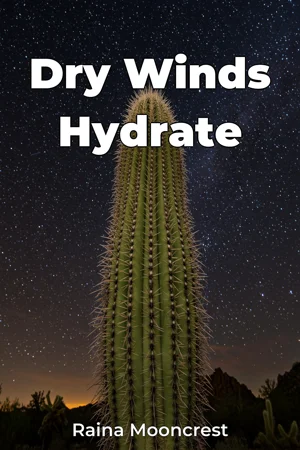
Can arid landscapes offer more than bleak expanses of sand and rock? "Dry Winds Hydrate" delves into the surprising potential of desert environments to provide life-sustaining water through unconventional means: the extraction of moisture from cacti and the harvesting of dew. This book explores the scientific basis, practical techniques, and ecological implications of these often-overlooked resources. The central argument of "Dry Winds Hydrate" is that cacti and dew represent viable and sustainable water sources for arid regions, offering potential solutions to water scarcity challenges. This is not to say deserts will become lush, but prudent management of these resources can significantly improve resilience. This argument is vital because conventional water sources are becoming increasingly stressed due to climate change and population growth, making alternative strategies crucial for the survival of both human and natural communities. The narrative begins by establishing the context of global water scarcity and the unique challenges faced by desert ecosystems. It provides a background on cactus physiology, focusing on water storage mechanisms, and details the atmospheric processes that lead to dew formation. No prior expertise is needed, only a desire to learn. The book is structured into three primary sections. First, it investigates the diverse methods for extracting water from various cacti species, analyzing their efficiency, environmental impact, and scalability. Ethnobotanical research and chemical analysis form the pillars. Second, it examines the principles of dew harvesting, covering the design and construction of dew-collecting devices, the influence of environmental factors on dew yield, and the integration of dew harvesting into water management strategies. Fluid dynamics inform the discussions related to dew capture. Third, the book analyzes data gathered using geographic information systems (GIS) to perform site suitability analysis and assess potential yields. The evidence presented throughout "Dry Winds Hydrate" is drawn from a combination of scientific literature, field research, and case studies from around the world. It features data from experiments on cactus water extraction techniques, analyzes the performance of different dew-collecting systems, and incorporates indigenous knowledge on traditional water management practices. "Dry Winds Hydrate" connects to several disciplines, including botany, atmospheric science, and environmental engineering. The botanical aspects focus on understanding the physiological adaptations of cacti to arid environments. Atmospheric science helps explain the mechanisms of dew formation and its relationship to climate patterns. Environmental engineering provides the knowledge to design and implement sustainable water harvesting systems. This book takes a novel approach by combining scientific analysis with practical application, providing a comprehensive guide to utilizing cacti and dew as water resources. It also emphasizes the importance of integrating traditional knowledge with modern technology to achieve sustainable water management in arid regions. The writing style is accessible, and the tone remains educational. The intended audience includes students and researchers in environmental science, botany, and water resource management, as well as practitioners working in arid land development and sustainability. This book provides professionals with the knowledge and tools to develop and implement effective water harvesting strategies. As a work of non-fiction within nature, earth sciences, and geography, "Dry Winds Hydrate" adheres to standards of accuracy, objectivity, and evidence-based argumentation. It presents a balanced perspective, acknowledging both the potential benefits and limitations of the proposed water harvesting techniques. The scope of "Dry Winds Hydrate" is limited to the extraction of water from cacti and the harvesting of dew in desert environments. It does not cover other alternative water sources, such as rainwater harvesting or groundwater recharge, in detail. The information in "Dry Winds Hydrate" can be applied in a variety of practical settings, including household water supply, agricultural irrigation, and ecological restoration. The book provides guidelines on how to select appropriate cactus species for water extraction, design efficient dew-collecting systems, and integrate these techniques into existing water management plans. While the potential of cacti and dew as water sources is gaining recognition, there are ongoing debates about the sustainability of large-scale cactus water extraction and the environmental impact of dew harvesting infrastructure. "Dry Winds Hydrate" addresses these debates, presenting different perspectives and offering recommendations for responsible and sustainable implementation.
Can arid landscapes offer more than bleak expanses of sand and rock? "Dry Winds Hydrate" delves into the surprising potential of desert environments to provide life-sustaining water through unconventional means: the extraction of moisture from cacti and the harvesting of dew. This book explores the scientific basis, practical techniques, and ecological implications of these often-overlooked resources. The central argument of "Dry Winds Hydrate" is that cacti and dew represent viable and sustainable water sources for arid regions, offering potential solutions to water scarcity challenges. This is not to say deserts will become lush, but prudent management of these resources can significantly improve resilience. This argument is vital because conventional water sources are becoming increasingly stressed due to climate change and population growth, making alternative strategies crucial for the survival of both human and natural communities. The narrative begins by establishing the context of global water scarcity and the unique challenges faced by desert ecosystems. It provides a background on cactus physiology, focusing on water storage mechanisms, and details the atmospheric processes that lead to dew formation. No prior expertise is needed, only a desire to learn. The book is structured into three primary sections. First, it investigates the diverse methods for extracting water from various cacti species, analyzing their efficiency, environmental impact, and scalability. Ethnobotanical research and chemical analysis form the pillars. Second, it examines the principles of dew harvesting, covering the design and construction of dew-collecting devices, the influence of environmental factors on dew yield, and the integration of dew harvesting into water management strategies. Fluid dynamics inform the discussions related to dew capture. Third, the book analyzes data gathered using geographic information systems (GIS) to perform site suitability analysis and assess potential yields. The evidence presented throughout "Dry Winds Hydrate" is drawn from a combination of scientific literature, field research, and case studies from around the world. It features data from experiments on cactus water extraction techniques, analyzes the performance of different dew-collecting systems, and incorporates indigenous knowledge on traditional water management practices. "Dry Winds Hydrate" connects to several disciplines, including botany, atmospheric science, and environmental engineering. The botanical aspects focus on understanding the physiological adaptations of cacti to arid environments. Atmospheric science helps explain the mechanisms of dew formation and its relationship to climate patterns. Environmental engineering provides the knowledge to design and implement sustainable water harvesting systems. This book takes a novel approach by combining scientific analysis with practical application, providing a comprehensive guide to utilizing cacti and dew as water resources. It also emphasizes the importance of integrating traditional knowledge with modern technology to achieve sustainable water management in arid regions. The writing style is accessible, and the tone remains educational. The intended audience includes students and researchers in environmental science, botany, and water resource management, as well as practitioners working in arid land development and sustainability. This book provides professionals with the knowledge and tools to develop and implement effective water harvesting strategies. As a work of non-fiction within nature, earth sciences, and geography, "Dry Winds Hydrate" adheres to standards of accuracy, objectivity, and evidence-based argumentation. It presents a balanced perspective, acknowledging both the potential benefits and limitations of the proposed water harvesting techniques. The scope of "Dry Winds Hydrate" is limited to the extraction of water from cacti and the harvesting of dew in desert environments. It does not cover other alternative water sources, such as rainwater harvesting or groundwater recharge, in detail. The information in "Dry Winds Hydrate" can be applied in a variety of practical settings, including household water supply, agricultural irrigation, and ecological restoration. The book provides guidelines on how to select appropriate cactus species for water extraction, design efficient dew-collecting systems, and integrate these techniques into existing water management plans. While the potential of cacti and dew as water sources is gaining recognition, there are ongoing debates about the sustainability of large-scale cactus water extraction and the environmental impact of dew harvesting infrastructure. "Dry Winds Hydrate" addresses these debates, presenting different perspectives and offering recommendations for responsible and sustainable implementation.
"Dry Winds Hydrate" explores innovative solutions to water scarcity in arid regions by examining unconventional water sources: cacti and dew. It argues that these resources, often overlooked, can be viable for sustainable water management, especially as climate change strains traditional sources. The book delves into how cacti store water, acting as natural reservoirs in the desert, and how atmospheric conditions create dew. The book presents a three-part exploration. First, it investigates different methods of extracting water from cacti species, evaluating their efficiency and impact. Second, it covers the principles of dew harvesting, from designing collectors to understanding environmental influences. Finally, using geographic information systems (GIS), the book analyzes site suitability and potential yields, providing a practical approach to implementation. Combining scientific analysis with real-world applications, "Dry Winds Hydrate" provides a comprehensive guide for utilizing these resources, from botanical water extraction to atmospheric moisture capture. It blends scientific literature, field research, and traditional knowledge to offer a balanced perspective on the potential and limitations of these water-harvesting techniques.
Book Details
ISBN
9788235205681
Publisher
Publifye AS
Your Licenses
You don't own any licenses for this book
Purchase a license below to unlock this book and download the EPUB.
Purchase License
Select a tier to unlock this book
Need bulk licensing?
Contact us for enterprise agreements.