
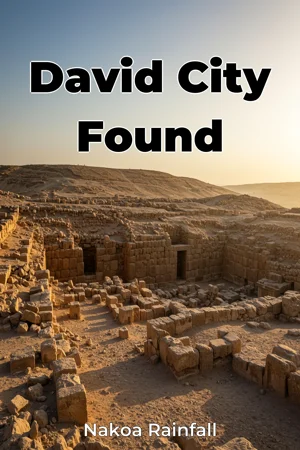
About This Book
Did the glorious city of David, as described in the Bible, truly exist, or is it merely a collection of legends? "David City Found" delves into the archaeological excavations in Jerusalem, presenting compelling evidence that supports the historical accuracy of biblical accounts. This book explores the remarkable discoveries that illuminate the era of King David and Solomon and their lasting impact. The central argument of "David City Found" is that archaeological findings provide verifiable corroboration of the biblical narrative concerning the establishment and expansion of Jerusalem as the capital of the ancient Israelite kingdom. This validation is crucial because it addresses ongoing debates regarding the Bible’s reliability as a historical source and offers tangible evidence for understanding a pivotal period in history. This book examines three primary areas. First, it investigates the archaeological discoveries within the City of David itself, the original urban settlement of Jerusalem. Second, it analyzes specific artifacts and structures discovered during excavations, such as monumental buildings, fortifications, and water systems, connecting these findings directly to events and descriptions within the biblical text. Third, it addresses common criticisms and alternative interpretations of the archaeological record, presenting counterarguments based on a careful reevaluation of the available data. The book unfolds systematically, beginning with an introduction to the historical and biblical context of King David's reign, setting the stage for understanding the significance of Jerusalem. Subsequent chapters detail the major archaeological excavations, presenting findings related to fortifications, residential areas, and public structures dating back to the Iron Age II period, which corresponds to the time of David and Solomon. The concluding sections synthesize the evidence, offering a balanced perspective on the relationship between archaeological findings and the biblical narrative, while also discussing the implications of these findings for future research and public understanding. "David City Found" draws upon a wealth of empirical evidence gathered from decades of archaeological fieldwork in Jerusalem. It references excavation reports, architectural surveys, ceramic typologies, and epigraphic analyses. The book also integrates insights from ancient Near Eastern studies, biblical scholarship, and historical geography to provide a comprehensive understanding of the subject matter. This exploration connects to several other disciplines. It intersects with biblical studies by providing tangible evidence that can inform interpretations of biblical texts. It relates to ancient Near Eastern history by situating Jerusalem within the broader context of the region's political and cultural landscape. It also has connections to the field of archaeology, demonstrating how archaeological methods can be used to investigate and validate historical claims. What sets "David City Found" apart is its direct approach to synthesizing archaeological data with biblical texts without relying on conjecture. The book strives to present a balanced perspective, acknowledging both the strengths and limitations of the archaeological evidence and promoting an informed discussion about the historical accuracy of the Bible. Written in an accessible yet scholarly style, "David City Found" is aimed at a broad audience, including students of biblical studies, archaeology enthusiasts, readers interested in the history of Jerusalem, and anyone seeking a better understanding of the relationship between the Bible and the archaeological record. The book adheres to the conventions of both Biblical Studies and History genres, providing detailed footnotes, maps, illustrations, and a comprehensive bibliography to facilitate further research. The scope of "David City Found" is intentionally focused on the archaeological evidence directly related to the City of David during the Iron Age II period. While acknowledging the broader history of Jerusalem, the book deliberately limits its scope to provide an in-depth examination of a specific time and place. The findings presented in this book have real-world implications for how we understand the historical context of the Bible and the origins of Jerusalem. They invite a reevaluation of long-held assumptions and provide tangible evidence that can inform public discourse and promote a more nuanced understanding of the past. It addresses controversies surrounding the interpretation of archaeological evidence in relation to biblical accounts. It engages with different perspectives and proposes a pathway to reconcile apparent contradictions through critical analysis and interdisciplinary collaboration.
Did the glorious city of David, as described in the Bible, truly exist, or is it merely a collection of legends? "David City Found" delves into the archaeological excavations in Jerusalem, presenting compelling evidence that supports the historical accuracy of biblical accounts. This book explores the remarkable discoveries that illuminate the era of King David and Solomon and their lasting impact. The central argument of "David City Found" is that archaeological findings provide verifiable corroboration of the biblical narrative concerning the establishment and expansion of Jerusalem as the capital of the ancient Israelite kingdom. This validation is crucial because it addresses ongoing debates regarding the Bible’s reliability as a historical source and offers tangible evidence for understanding a pivotal period in history. This book examines three primary areas. First, it investigates the archaeological discoveries within the City of David itself, the original urban settlement of Jerusalem. Second, it analyzes specific artifacts and structures discovered during excavations, such as monumental buildings, fortifications, and water systems, connecting these findings directly to events and descriptions within the biblical text. Third, it addresses common criticisms and alternative interpretations of the archaeological record, presenting counterarguments based on a careful reevaluation of the available data. The book unfolds systematically, beginning with an introduction to the historical and biblical context of King David's reign, setting the stage for understanding the significance of Jerusalem. Subsequent chapters detail the major archaeological excavations, presenting findings related to fortifications, residential areas, and public structures dating back to the Iron Age II period, which corresponds to the time of David and Solomon. The concluding sections synthesize the evidence, offering a balanced perspective on the relationship between archaeological findings and the biblical narrative, while also discussing the implications of these findings for future research and public understanding. "David City Found" draws upon a wealth of empirical evidence gathered from decades of archaeological fieldwork in Jerusalem. It references excavation reports, architectural surveys, ceramic typologies, and epigraphic analyses. The book also integrates insights from ancient Near Eastern studies, biblical scholarship, and historical geography to provide a comprehensive understanding of the subject matter. This exploration connects to several other disciplines. It intersects with biblical studies by providing tangible evidence that can inform interpretations of biblical texts. It relates to ancient Near Eastern history by situating Jerusalem within the broader context of the region's political and cultural landscape. It also has connections to the field of archaeology, demonstrating how archaeological methods can be used to investigate and validate historical claims. What sets "David City Found" apart is its direct approach to synthesizing archaeological data with biblical texts without relying on conjecture. The book strives to present a balanced perspective, acknowledging both the strengths and limitations of the archaeological evidence and promoting an informed discussion about the historical accuracy of the Bible. Written in an accessible yet scholarly style, "David City Found" is aimed at a broad audience, including students of biblical studies, archaeology enthusiasts, readers interested in the history of Jerusalem, and anyone seeking a better understanding of the relationship between the Bible and the archaeological record. The book adheres to the conventions of both Biblical Studies and History genres, providing detailed footnotes, maps, illustrations, and a comprehensive bibliography to facilitate further research. The scope of "David City Found" is intentionally focused on the archaeological evidence directly related to the City of David during the Iron Age II period. While acknowledging the broader history of Jerusalem, the book deliberately limits its scope to provide an in-depth examination of a specific time and place. The findings presented in this book have real-world implications for how we understand the historical context of the Bible and the origins of Jerusalem. They invite a reevaluation of long-held assumptions and provide tangible evidence that can inform public discourse and promote a more nuanced understanding of the past. It addresses controversies surrounding the interpretation of archaeological evidence in relation to biblical accounts. It engages with different perspectives and proposes a pathway to reconcile apparent contradictions through critical analysis and interdisciplinary collaboration.
"David City Found" explores the fascinating question of whether the City of David, as depicted in the Bible, was a historical reality. Through meticulous examination of Jerusalem archaeology, the book presents compelling evidence supporting the biblical accounts of King David and Solomon's era. It delves into archaeological discoveries within the City of David, analyzing artifacts and structures like fortifications and water systems, to correlate findings with biblical narratives. The book argues that archaeological findings offer verifiable support for Jerusalem's establishment as the ancient Israelite kingdom's capital. It addresses debates about the Bible's historical reliability by presenting tangible evidence from the Iron Age II Jerusalem. "David City Found" synthesizes archaeological data with biblical texts, offering a balanced perspective while acknowledging the strengths and limitations of archaeological evidence. One surprising find discussed is the presence of monumental buildings, suggesting a sophisticated urban center during King David's reign. Beginning with the historical and biblical context of King David's reign, the book progresses through major archaeological excavations, detailing findings related to residential areas and public structures. It concludes by synthesizing the evidence, discussing implications for future research and public understanding, making it valuable for biblical studies and history enthusiasts alike.
Book Details
ISBN
9788235205667
Publisher
Publifye AS
Your Licenses
You don't own any licenses for this book
Purchase a license below to unlock this book and download the EPUB.
Purchase License
Select a tier to unlock this book
Need bulk licensing?
Contact us for enterprise agreements.