
About This Book
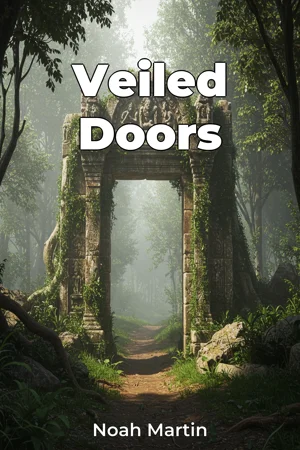
Are there places where the veil between worlds thins, granting access to spiritual realms or forbidden knowledge? "Veiled Doors" delves into the pervasive myths surrounding hidden gateways, spiritual portals, and access points to divine or forbidden realms, separating fact from fiction through rigorous examination of historical accounts, religious texts, and anthropological studies. This book addresses the key concepts of liminal spaces, sacred sites, and altered states of consciousness as potential catalysts for experiencing these purported gateways. Understanding these concepts is vital because they represent humanity's enduring fascination with the unknown and our attempts to connect with something beyond the mundane. These investigations are important for understanding our own spiritual seeking as a species. The historical context is crucial. Throughout history, cultures across the globe have identified specific locations – caves, mountains, temples – as holding special significance, often believing them to be conduits to other realms. Similarly, many religious traditions incorporate rituals and practices designed to induce altered states of consciousness, viewed as pathways to divine encounters. A basic understanding of comparative religion, folklore, and early concepts of cosmology helps the reader contextualize the diverse claims explored in this book. The central argument is that while literal, physical gateways to other realms are unsubstantiated by empirical evidence, the human experience of transcendence and spiritual connection is a real and powerful phenomenon often projected onto specific places and practices. This distinction is critical because it allows us to appreciate the depth of human spirituality without falling into pseudoscientific beliefs. The book unfolds in three major parts. First, it introduces the core concepts of liminality, sacred geography, and altered states, examining their psychological and cultural significance. Second, it explores specific examples of purported gateways across different cultures and time periods, analyzing the associated myths, rituals, and beliefs. Case studies include ancient Egyptian temple complexes, Himalayan pilgrimage routes, and accounts of shamanic journeys. Third, the book critically evaluates the evidence for and against the existence of physical gateways, considering alternative explanations for reported experiences, such as psychological projection, cultural conditioning, and neurological phenomena. The evidence presented draws from a range of sources, including archaeological findings, ethnographic studies, religious texts, and psychological research. Unique data sources include analyses of pilgrimage narratives and comparative studies of altered state experiences across different traditions. "Veiled Doors" connects to several related fields, including psychology (specifically the psychology of religion and altered states of consciousness), anthropology (focusing on cultural beliefs and rituals), and religious studies (examining the historical and theological context of gateway myths). These connections provide a multi-faceted perspective on the phenomenon of purported doorways, enriching its analysis. The book offers a unique perspective by approaching the topic with both scholarly rigor and an appreciation for the human yearning for spiritual connection. It avoids both dogmatic skepticism and uncritical acceptance, presenting a balanced and nuanced exploration of the subject. The tone is academic and objective, prioritizing clarity and accuracy. The writing style is accessible to a general audience while maintaining scholarly standards. The target audience includes readers interested in spirituality, religion, mythology, and the psychology of belief. The book will be valuable to those seeking a deeper understanding of the human experience of the sacred and the psychological underpinnings of spiritual beliefs. As a work of non-fiction within the genres of spirituality and religion, "Veiled Doors" adheres to the conventions of presenting verifiable information, citing sources, and maintaining a neutral and respectful tone when discussing different belief systems. The scope of the book is limited to exploring the myths and beliefs surrounding physical gateways to other realms. It does not delve into broader metaphysical questions about the nature of reality or the existence of God. While "Veiled Doors" does not offer instructions on how to find or access these purported gateways, it provides readers with a framework for critically evaluating spiritual claims and for understanding the psychological and cultural factors that shape our experiences of the sacred. The book touches upon the ongoing debate between religious belief and scientific skepticism, offering a perspective that acknowledges the validity of both approaches. It also examines the appropriation of indigenous spiritual practices by contemporary New Age movements, addressing the ethical considerations involved.
Are there places where the veil between worlds thins, granting access to spiritual realms or forbidden knowledge? "Veiled Doors" delves into the pervasive myths surrounding hidden gateways, spiritual portals, and access points to divine or forbidden realms, separating fact from fiction through rigorous examination of historical accounts, religious texts, and anthropological studies. This book addresses the key concepts of liminal spaces, sacred sites, and altered states of consciousness as potential catalysts for experiencing these purported gateways. Understanding these concepts is vital because they represent humanity's enduring fascination with the unknown and our attempts to connect with something beyond the mundane. These investigations are important for understanding our own spiritual seeking as a species. The historical context is crucial. Throughout history, cultures across the globe have identified specific locations – caves, mountains, temples – as holding special significance, often believing them to be conduits to other realms. Similarly, many religious traditions incorporate rituals and practices designed to induce altered states of consciousness, viewed as pathways to divine encounters. A basic understanding of comparative religion, folklore, and early concepts of cosmology helps the reader contextualize the diverse claims explored in this book. The central argument is that while literal, physical gateways to other realms are unsubstantiated by empirical evidence, the human experience of transcendence and spiritual connection is a real and powerful phenomenon often projected onto specific places and practices. This distinction is critical because it allows us to appreciate the depth of human spirituality without falling into pseudoscientific beliefs. The book unfolds in three major parts. First, it introduces the core concepts of liminality, sacred geography, and altered states, examining their psychological and cultural significance. Second, it explores specific examples of purported gateways across different cultures and time periods, analyzing the associated myths, rituals, and beliefs. Case studies include ancient Egyptian temple complexes, Himalayan pilgrimage routes, and accounts of shamanic journeys. Third, the book critically evaluates the evidence for and against the existence of physical gateways, considering alternative explanations for reported experiences, such as psychological projection, cultural conditioning, and neurological phenomena. The evidence presented draws from a range of sources, including archaeological findings, ethnographic studies, religious texts, and psychological research. Unique data sources include analyses of pilgrimage narratives and comparative studies of altered state experiences across different traditions. "Veiled Doors" connects to several related fields, including psychology (specifically the psychology of religion and altered states of consciousness), anthropology (focusing on cultural beliefs and rituals), and religious studies (examining the historical and theological context of gateway myths). These connections provide a multi-faceted perspective on the phenomenon of purported doorways, enriching its analysis. The book offers a unique perspective by approaching the topic with both scholarly rigor and an appreciation for the human yearning for spiritual connection. It avoids both dogmatic skepticism and uncritical acceptance, presenting a balanced and nuanced exploration of the subject. The tone is academic and objective, prioritizing clarity and accuracy. The writing style is accessible to a general audience while maintaining scholarly standards. The target audience includes readers interested in spirituality, religion, mythology, and the psychology of belief. The book will be valuable to those seeking a deeper understanding of the human experience of the sacred and the psychological underpinnings of spiritual beliefs. As a work of non-fiction within the genres of spirituality and religion, "Veiled Doors" adheres to the conventions of presenting verifiable information, citing sources, and maintaining a neutral and respectful tone when discussing different belief systems. The scope of the book is limited to exploring the myths and beliefs surrounding physical gateways to other realms. It does not delve into broader metaphysical questions about the nature of reality or the existence of God. While "Veiled Doors" does not offer instructions on how to find or access these purported gateways, it provides readers with a framework for critically evaluating spiritual claims and for understanding the psychological and cultural factors that shape our experiences of the sacred. The book touches upon the ongoing debate between religious belief and scientific skepticism, offering a perspective that acknowledges the validity of both approaches. It also examines the appropriation of indigenous spiritual practices by contemporary New Age movements, addressing the ethical considerations involved.
"Veiled Doors" explores humanity's enduring fascination with spiritual portals and hidden gateways to other realms. Examining historical accounts, religious texts, and anthropological studies, the book investigates myths surrounding access points to divine or forbidden knowledge. It highlights how cultures worldwide have designated specific locations, such as caves and temples, as sacred sites believed to be conduits to different spiritual realms. The book also delves into rituals designed to induce altered states of consciousness, viewed as pathways to spiritual connection and religious experience. The book unfolds in three parts, beginning with an introduction to liminal spaces, sacred geography, and altered states, then explores examples of purported gateways across cultures, including ancient Egyptian temple complexes and Himalayan pilgrimage routes. Finally, it critically evaluates evidence for and against physical gateways, considering psychological, cultural, and neurological explanations. While empirical evidence for physical gateways remains unsubstantiated, the book emphasizes the real and powerful nature of human transcendence and spiritual seeking, offering a balanced perspective suitable for those interested in spirituality and religion.
Book Details
ISBN
9788235205612
Publisher
Publifye AS
Your Licenses
You don't own any licenses for this book
Purchase a license below to unlock this book and download the EPUB.
Purchase License
Select a tier to unlock this book
Need bulk licensing?
Contact us for enterprise agreements.