
About This Book
Have you ever wondered what lies beneath the ocean's surface, beyond the reach of sunlight and modern exploration? "Ocean Legends" delves into the captivating realm of oceanic myths and enduring mysteries, separating fact from fiction and exploring the historical and geographical contexts that birthed these legends. This book is significant because it addresses humanity's deep-seated fascination with the unknown depths of our planet and how these narratives have shaped our understanding of marine environments. We begin by examining how ancient mariners and coastal communities formulated explanations for the unpredictable and often perilous nature of the sea. This includes establishing a robust understanding of early seafaring technologies, rudimentary cartography, and the prevailing worldview during key periods of maritime exploration. Readers will gain knowledge of the interplay between genuine environmental phenomena – such as unusual wave patterns, bioluminescence, and deep-sea creatures – and their transformation into legendary sea monsters and mythical realms. The central argument of "Ocean Legends" posits that oceanic myths, while often dismissed as mere fantasy, serve as invaluable cultural records, reflecting past societies' fears, aspirations, and attempts to grapple with the vastness and power of the ocean. We aim to demonstrate that by analyzing these narratives through a multidisciplinary lens, encompassing history, geography, and marine science, we can glean insights into historical maritime practices and the evolving relationship humans have with the marine world. The book unfolds in three distinct sections: First, we introduce the key recurring themes found in oceanic folklore across various cultures, such as the existence of gigantic marine creatures (e.g., krakens, sea serpents), the allure of submerged cities (e.g., Atlantis, Ys), and the concept of supernatural guardians of the sea. Second, we trace the historical development of these legends, examining their origins in specific geographical locations and exploring how they were transmitted and transformed through oral traditions and written texts. This section utilizes historical accounts, mariners' logs, maps, and early scientific reports. Third, we critically evaluate the scientific plausibility of these legends, employing modern oceanographic and biological data to assess whether there is any evidence to support the potential existence of the phenomena described. We consider geological events, like underwater volcanic activity for example, and their contributions to myth making. The evidence presented in the book draws upon a diverse array of sources, including archaeological findings from coastal settlements, historical shipping records, ethnographic studies of seafaring communities, early scientific illustrations, and underwater acoustic surveys. We make interdisciplinary connections between history, Earth sciences (geology, oceanography), and geography, demonstrating how each field contributes to a more complete understanding of oceanic legends. The study of early maps, historical trade routes, and the documentation of previously undiscovered marine species are vital to our analysis. "Ocean Legends" offers a unique perspective by integrating historical analysis with scientific inquiry, offering a balanced and nuanced assessment of the stories that have shaped humanity's relationship with the sea. It avoids sensationalism, and instead emphasizes objective analysis and critical thinking. This book is intended for anyone with an interest in maritime history, folklore, marine science, or cultural geography. It appeals to both general readers seeking an engaging exploration of oceanic mysteries and students or researchers looking for a fact-based perspective on the intersection of myth and reality. This non-fiction work adheres to the conventions of historical and scientific writing, emphasizing accuracy, objectivity, and thorough documentation. The scope of "Ocean Legends" is intentionally broad, encompassing a global range of oceanic myths and legends. However, it concentrates on examples from Western and European sources due to the availability of documented historical records and scientific data. The information presented in this book has real-world applications for understanding cultural attitudes towards the ocean and informing contemporary marine conservation efforts. We discuss the potential influence these legends may have on how we perceive and engage with present day ecological issues. Although this work presents fact-based investigations into oceanic lore, it is important to note that not all enigmas have definitive answers. The book acknowledges areas of ongoing debate, such as the true nature of unexplained sounds recorded in the ocean depths and the potential for undiscovered marine species. We explore and recognize these controversies as part of the continuing mystery and wonder of the ocean.
Have you ever wondered what lies beneath the ocean's surface, beyond the reach of sunlight and modern exploration? "Ocean Legends" delves into the captivating realm of oceanic myths and enduring mysteries, separating fact from fiction and exploring the historical and geographical contexts that birthed these legends. This book is significant because it addresses humanity's deep-seated fascination with the unknown depths of our planet and how these narratives have shaped our understanding of marine environments. We begin by examining how ancient mariners and coastal communities formulated explanations for the unpredictable and often perilous nature of the sea. This includes establishing a robust understanding of early seafaring technologies, rudimentary cartography, and the prevailing worldview during key periods of maritime exploration. Readers will gain knowledge of the interplay between genuine environmental phenomena – such as unusual wave patterns, bioluminescence, and deep-sea creatures – and their transformation into legendary sea monsters and mythical realms. The central argument of "Ocean Legends" posits that oceanic myths, while often dismissed as mere fantasy, serve as invaluable cultural records, reflecting past societies' fears, aspirations, and attempts to grapple with the vastness and power of the ocean. We aim to demonstrate that by analyzing these narratives through a multidisciplinary lens, encompassing history, geography, and marine science, we can glean insights into historical maritime practices and the evolving relationship humans have with the marine world. The book unfolds in three distinct sections: First, we introduce the key recurring themes found in oceanic folklore across various cultures, such as the existence of gigantic marine creatures (e.g., krakens, sea serpents), the allure of submerged cities (e.g., Atlantis, Ys), and the concept of supernatural guardians of the sea. Second, we trace the historical development of these legends, examining their origins in specific geographical locations and exploring how they were transmitted and transformed through oral traditions and written texts. This section utilizes historical accounts, mariners' logs, maps, and early scientific reports. Third, we critically evaluate the scientific plausibility of these legends, employing modern oceanographic and biological data to assess whether there is any evidence to support the potential existence of the phenomena described. We consider geological events, like underwater volcanic activity for example, and their contributions to myth making. The evidence presented in the book draws upon a diverse array of sources, including archaeological findings from coastal settlements, historical shipping records, ethnographic studies of seafaring communities, early scientific illustrations, and underwater acoustic surveys. We make interdisciplinary connections between history, Earth sciences (geology, oceanography), and geography, demonstrating how each field contributes to a more complete understanding of oceanic legends. The study of early maps, historical trade routes, and the documentation of previously undiscovered marine species are vital to our analysis. "Ocean Legends" offers a unique perspective by integrating historical analysis with scientific inquiry, offering a balanced and nuanced assessment of the stories that have shaped humanity's relationship with the sea. It avoids sensationalism, and instead emphasizes objective analysis and critical thinking. This book is intended for anyone with an interest in maritime history, folklore, marine science, or cultural geography. It appeals to both general readers seeking an engaging exploration of oceanic mysteries and students or researchers looking for a fact-based perspective on the intersection of myth and reality. This non-fiction work adheres to the conventions of historical and scientific writing, emphasizing accuracy, objectivity, and thorough documentation. The scope of "Ocean Legends" is intentionally broad, encompassing a global range of oceanic myths and legends. However, it concentrates on examples from Western and European sources due to the availability of documented historical records and scientific data. The information presented in this book has real-world applications for understanding cultural attitudes towards the ocean and informing contemporary marine conservation efforts. We discuss the potential influence these legends may have on how we perceive and engage with present day ecological issues. Although this work presents fact-based investigations into oceanic lore, it is important to note that not all enigmas have definitive answers. The book acknowledges areas of ongoing debate, such as the true nature of unexplained sounds recorded in the ocean depths and the potential for undiscovered marine species. We explore and recognize these controversies as part of the continuing mystery and wonder of the ocean.
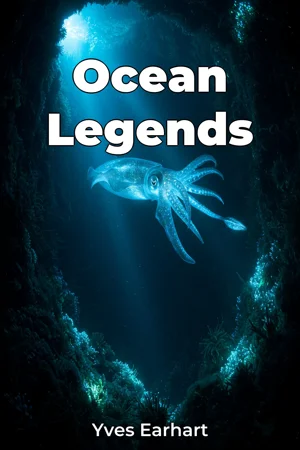
"Ocean Legends" explores the captivating world of oceanic myths, blending maritime history, folklore, and marine science to understand how these stories reflect humanity's relationship with the sea. The book examines enduring legends like krakens and submerged cities, analyzing their origins in historical accounts and geographical contexts. Readers will discover how genuine environmental phenomena, such as bioluminescence, may have fueled the creation of sea monster myths. The book uniquely integrates historical analysis with scientific inquiry, presenting a balanced assessment of these tales. It progresses across three sections: introducing recurring themes in oceanic folklore, tracing the historical development of legends through mariners' logs and maps, and critically evaluating their scientific plausibility using modern oceanographic data. By examining early seafaring technologies and rudimentary cartography, "Ocean Legends" reveals how these narratives served as cultural records, reflecting past societies' fears and aspirations. Through a multidisciplinary approach, the book connects history, Earth sciences, and geography to provide a comprehensive understanding of oceanic legends. It emphasizes objective analysis and critical thinking, offering valuable insights into humanity's evolving relationship with the marine world and its impact on cultural geography and marine conservation.
Book Details
ISBN
9788235205506
Publisher
Publifye AS
Your Licenses
You don't own any licenses for this book
Purchase a license below to unlock this book and download the EPUB.
Purchase License
Select a tier to unlock this book
Need bulk licensing?
Contact us for enterprise agreements.