
About This Book
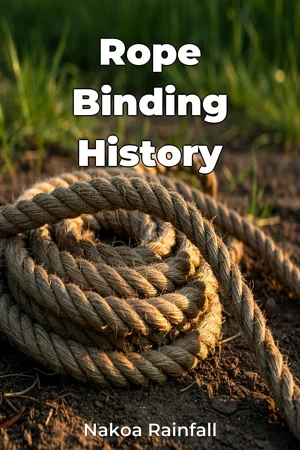
How has a simple twist of fiber shaped civilizations, facilitated global trade, and enabled technological advancements across millennia? "Rope Binding History" delves into the unexpectedly profound story of rope and cordage, tracing its evolution and impact on diverse human endeavors, focusing particularly on construction, shipping, and agriculture, and analyzing various fiber twisting techniques across vastly different cultures. This book is essential reading for anyone interested in the history of technology, material culture, or the ingenuity of human innovation. At its core, the book examines three critical areas where rope played a pivotal role: construction, showcasing how rope-based systems enabled the movement of massive stones for monumental architecture; shipping, analyzing the development of rigging and its impact on maritime exploration and trade; and agriculture, exploring how rope technologies facilitated irrigation, harvesting, and animal management. These areas are significant because they represent fundamental pillars of societal development. Without reliable methods of lifting, securing, and transporting materials and goods, the trajectory of human progress would have been fundamentally altered. Understanding this history requires a grasp of basic material science, particularly the properties of different fibers (e.g., hemp, flax, sisal, cotton, and synthetics) and how twisting them affects their tensile strength and durability. The book elucidates how the availability of specific fibers in different regions influenced the development of local twisting techniques. The central argument posited in "Rope Binding History" is that the seemingly simple technology of rope making is a crucial driver in human development, often overlooked in broader historical narratives. This argument is important because it challenges the traditional focus on more "advanced" technologies, demonstrating how a fundamental tool can have widespread and lasting impacts. The book unfolds in a structured manner. First, it introduces the fundamentals of fiber properties and twisting techniques, exploring the physics behind rope strength. Second, it dedicates sections to each of the three main areas: construction, shipping, and agriculture, examining case studies from various cultures (e.g., ancient Egypt, the Roman Empire, medieval Europe, pre-Columbian Americas, and various Asian cultures). Each case study analyzes the specific types of rope used, the methods of production, and the impact on the respective industry. Finally, the book culminates in a discussion of the legacy of rope technology, including its modern applications and ongoing innovations. The evidence presented is drawn from archaeological findings, historical texts (including ship logs, agricultural manuals, and construction records), ethnographic studies of traditional rope-making practices, and material analysis of surviving rope artifacts. Unique data sources include detailed illustrations and descriptions from historical encyclopedias of technology, as well as analyses of rope samples from museum collections. "Rope Binding History" connects to several other fields. Firstly, to anthropology, by examining the cultural significance of rope-making and its role in shaping social structures. Secondly, to engineering, through the analysis of rope strength and its application in structural design. And thirdly, to environmental studies as the choice of different fibers and the scale of rope production had ecological consequences. These interdisciplinary connections enrich the book's argument by highlighting the multifaceted nature of rope technology. A unique aspect of this book is its comparative approach, contrasting rope-making techniques across different cultures and time periods to reveal common threads and regional variations, challenging the assumption that technological development follows a linear path. The book is written in a factual and accessible manner, avoiding jargon and technical language where possible, to appeal to a broad audience. The tone is informative and respectful of the diverse cultures and traditions explored. The target audience includes history enthusiasts, students of technology and engineering, maritime historians, anthropologists, and anyone interested in the history of everyday objects. The book is valuable to them because it provides a comprehensive and engaging account of a previously underappreciated technology, shedding light on its far-reaching influence. As a work of historical technology, "Rope Binding History" adheres to the genre's emphasis on accuracy, thorough research, and clear presentation of evidence. It also incorporates elements of material culture studies, analyzing the social and cultural meanings associated with rope and its production. The book's scope is intentionally broad, covering a wide range of cultures and time periods. However, it does not delve into the specific details of modern rope-making machinery or the chemical properties of synthetic fibers, focusing instead on the historical development of traditional techniques. The information in this book can be applied practically by readers interested in historical reenactments, traditional crafts, or sustainable technologies. It also provides valuable insights for engineers and designers seeking inspiration from historical solutions. While the fundamental principles of rope-making are well-established, there are ongoing debates about the precise dating of certain techniques and the extent of cultural exchange in rope technology. This book addresses these debates by presenting different perspectives and critically evaluating the available evidence.
How has a simple twist of fiber shaped civilizations, facilitated global trade, and enabled technological advancements across millennia? "Rope Binding History" delves into the unexpectedly profound story of rope and cordage, tracing its evolution and impact on diverse human endeavors, focusing particularly on construction, shipping, and agriculture, and analyzing various fiber twisting techniques across vastly different cultures. This book is essential reading for anyone interested in the history of technology, material culture, or the ingenuity of human innovation. At its core, the book examines three critical areas where rope played a pivotal role: construction, showcasing how rope-based systems enabled the movement of massive stones for monumental architecture; shipping, analyzing the development of rigging and its impact on maritime exploration and trade; and agriculture, exploring how rope technologies facilitated irrigation, harvesting, and animal management. These areas are significant because they represent fundamental pillars of societal development. Without reliable methods of lifting, securing, and transporting materials and goods, the trajectory of human progress would have been fundamentally altered. Understanding this history requires a grasp of basic material science, particularly the properties of different fibers (e.g., hemp, flax, sisal, cotton, and synthetics) and how twisting them affects their tensile strength and durability. The book elucidates how the availability of specific fibers in different regions influenced the development of local twisting techniques. The central argument posited in "Rope Binding History" is that the seemingly simple technology of rope making is a crucial driver in human development, often overlooked in broader historical narratives. This argument is important because it challenges the traditional focus on more "advanced" technologies, demonstrating how a fundamental tool can have widespread and lasting impacts. The book unfolds in a structured manner. First, it introduces the fundamentals of fiber properties and twisting techniques, exploring the physics behind rope strength. Second, it dedicates sections to each of the three main areas: construction, shipping, and agriculture, examining case studies from various cultures (e.g., ancient Egypt, the Roman Empire, medieval Europe, pre-Columbian Americas, and various Asian cultures). Each case study analyzes the specific types of rope used, the methods of production, and the impact on the respective industry. Finally, the book culminates in a discussion of the legacy of rope technology, including its modern applications and ongoing innovations. The evidence presented is drawn from archaeological findings, historical texts (including ship logs, agricultural manuals, and construction records), ethnographic studies of traditional rope-making practices, and material analysis of surviving rope artifacts. Unique data sources include detailed illustrations and descriptions from historical encyclopedias of technology, as well as analyses of rope samples from museum collections. "Rope Binding History" connects to several other fields. Firstly, to anthropology, by examining the cultural significance of rope-making and its role in shaping social structures. Secondly, to engineering, through the analysis of rope strength and its application in structural design. And thirdly, to environmental studies as the choice of different fibers and the scale of rope production had ecological consequences. These interdisciplinary connections enrich the book's argument by highlighting the multifaceted nature of rope technology. A unique aspect of this book is its comparative approach, contrasting rope-making techniques across different cultures and time periods to reveal common threads and regional variations, challenging the assumption that technological development follows a linear path. The book is written in a factual and accessible manner, avoiding jargon and technical language where possible, to appeal to a broad audience. The tone is informative and respectful of the diverse cultures and traditions explored. The target audience includes history enthusiasts, students of technology and engineering, maritime historians, anthropologists, and anyone interested in the history of everyday objects. The book is valuable to them because it provides a comprehensive and engaging account of a previously underappreciated technology, shedding light on its far-reaching influence. As a work of historical technology, "Rope Binding History" adheres to the genre's emphasis on accuracy, thorough research, and clear presentation of evidence. It also incorporates elements of material culture studies, analyzing the social and cultural meanings associated with rope and its production. The book's scope is intentionally broad, covering a wide range of cultures and time periods. However, it does not delve into the specific details of modern rope-making machinery or the chemical properties of synthetic fibers, focusing instead on the historical development of traditional techniques. The information in this book can be applied practically by readers interested in historical reenactments, traditional crafts, or sustainable technologies. It also provides valuable insights for engineers and designers seeking inspiration from historical solutions. While the fundamental principles of rope-making are well-established, there are ongoing debates about the precise dating of certain techniques and the extent of cultural exchange in rope technology. This book addresses these debates by presenting different perspectives and critically evaluating the available evidence.
"Rope Binding History" explores the surprisingly significant role of rope and cordage in shaping human civilization. This book examines how the seemingly simple technology of fiber twisting has been instrumental in construction, shipping, and agriculture across diverse cultures and millennia. For instance, rope-based systems were crucial for moving massive stones in ancient architecture, and the development of rigging enabled extensive maritime exploration and trade. The book highlights the properties of different fibers like hemp, flax, and cotton and their impact on rope's tensile strength and durability. It argues that rope making, often overlooked, is a key driver in human development. Unfolding chapter by chapter, the book first introduces fiber properties, then delves into case studies from ancient Egypt to pre-Columbian Americas, analyzing rope types, production methods, and their impact on various industries. By contrasting rope-making techniques across cultures and time, "Rope Binding History" challenges the linear view of technological advancement. It's a valuable read for those interested in history, technology, and material culture, offering a comprehensive account of an underappreciated technology and its lasting legacy.
Book Details
ISBN
9788235205476
Publisher
Publifye AS
Your Licenses
You don't own any licenses for this book
Purchase a license below to unlock this book and download the EPUB.
Purchase License
Select a tier to unlock this book
Need bulk licensing?
Contact us for enterprise agreements.