
About This Book
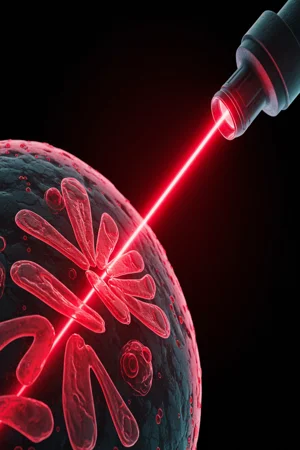
Can light truly be a weapon against disease? "Photodynamic Therapy Uses" delves into the fascinating world of light-based treatments, exploring how photodynamic therapy (PDT) harnesses the power of light, photosensitizers, and oxygen to combat a range of medical conditions. This book is essential reading for anyone seeking a comprehensive understanding of this innovative therapeutic approach, its underlying mechanisms, and its diverse applications. We will examine the fundamental principles of PDT. This involves detailed explorations into how photosensitizers, when exposed to specific wavelengths of light, generate reactive oxygen species that selectively destroy targeted cells. Understanding the photochemical and photobiological processes is key to harnessing PDT’s therapeutic potential. Woven throughout, we emphasize the significance of PDT as a minimally invasive treatment option with the potential to reduce side effects compared to traditional therapies. This book provides a historical context for the development of PDT, tracing its origins from early observations of phototoxicity to its modern applications in medicine. We will also address the evolving social context of cancer treatment and the growing demand for less invasive options. Readers will gain an appreciation for the scientific advancements that have made PDT a viable therapeutic modality. The central argument of "Photodynamic Therapy Uses" is that PDT represents a powerful and versatile treatment modality with the potential to revolutionize the management of various diseases, particularly in oncology and dermatology. This argument is important because it highlights the need for continued research and development in PDT to expand its applications and improve its efficacy. The book is structured to provide a thorough and accessible overview of PDT. It begins with an introduction to the basic principles of photochemistry and photobiology. It then progresses through the key components of PDT: photosensitizers, light sources, and oxygen. Subsequent chapters delve into specific applications of PDT in various medical fields, including cancer treatment, dermatology, and infectious diseases. The book culminates with a discussion of future directions and challenges in PDT research and development. The information presented is supported by extensive scientific evidence and clinical trial data. We draw upon a wide range of sources, including peer-reviewed publications, clinical guidelines, and expert opinions. We critically evaluate the available evidence to provide a balanced and objective assessment of the benefits and limitations of PDT. The book’s examination of PDT has connections to several other fields, including chemistry (photosensitizer design), physics (light source technology), and biology (cellular and molecular mechanisms of action). Recognizing these interdisciplinary connections underscores the complexity and the potential of PDT. This book distinguishes itself by providing a comprehensive and up-to-date overview of PDT, encompassing both the scientific principles and the practical applications. We offer a balanced perspective, acknowledging the limitations of PDT while emphasizing its potential benefits. The overall tone of the book is academic, yet accessible. We strive to present complex scientific concepts in a clear and concise manner, avoiding jargon and technical terms where possible. The intended audience includes medical professionals (oncologists, dermatologists, surgeons), researchers in the fields of photobiology and photochemistry, and students interested in learning about PDT. It will equip readers with a solid understanding of PDT, enabling them to critically evaluate its potential applications in their respective fields. As a work of medical science, this book adheres to the genre's conventions of accuracy, objectivity, and evidence-based reporting. It includes detailed references to support the claims made and avoids making unsubstantiated claims. The scope of the book is broad, covering the major applications of PDT in medicine. However, we acknowledge that it is not possible to cover every aspect of PDT in detail. We focus on the most well-established applications and highlight areas where further research is needed. The information in this book can be applied in various practical ways. Medical professionals can use it to inform their treatment decisions and educate patients about PDT. Researchers can use it to identify areas for further investigation and develop new and improved PDT protocols. The book addresses some of the ongoing debates in the field of PDT, such as the optimal choice of photosensitizers, the best light sources, and the most effective treatment protocols for different diseases. We present different perspectives on these issues and encourage readers to critically evaluate the evidence.
Can light truly be a weapon against disease? "Photodynamic Therapy Uses" delves into the fascinating world of light-based treatments, exploring how photodynamic therapy (PDT) harnesses the power of light, photosensitizers, and oxygen to combat a range of medical conditions. This book is essential reading for anyone seeking a comprehensive understanding of this innovative therapeutic approach, its underlying mechanisms, and its diverse applications. We will examine the fundamental principles of PDT. This involves detailed explorations into how photosensitizers, when exposed to specific wavelengths of light, generate reactive oxygen species that selectively destroy targeted cells. Understanding the photochemical and photobiological processes is key to harnessing PDT’s therapeutic potential. Woven throughout, we emphasize the significance of PDT as a minimally invasive treatment option with the potential to reduce side effects compared to traditional therapies. This book provides a historical context for the development of PDT, tracing its origins from early observations of phototoxicity to its modern applications in medicine. We will also address the evolving social context of cancer treatment and the growing demand for less invasive options. Readers will gain an appreciation for the scientific advancements that have made PDT a viable therapeutic modality. The central argument of "Photodynamic Therapy Uses" is that PDT represents a powerful and versatile treatment modality with the potential to revolutionize the management of various diseases, particularly in oncology and dermatology. This argument is important because it highlights the need for continued research and development in PDT to expand its applications and improve its efficacy. The book is structured to provide a thorough and accessible overview of PDT. It begins with an introduction to the basic principles of photochemistry and photobiology. It then progresses through the key components of PDT: photosensitizers, light sources, and oxygen. Subsequent chapters delve into specific applications of PDT in various medical fields, including cancer treatment, dermatology, and infectious diseases. The book culminates with a discussion of future directions and challenges in PDT research and development. The information presented is supported by extensive scientific evidence and clinical trial data. We draw upon a wide range of sources, including peer-reviewed publications, clinical guidelines, and expert opinions. We critically evaluate the available evidence to provide a balanced and objective assessment of the benefits and limitations of PDT. The book’s examination of PDT has connections to several other fields, including chemistry (photosensitizer design), physics (light source technology), and biology (cellular and molecular mechanisms of action). Recognizing these interdisciplinary connections underscores the complexity and the potential of PDT. This book distinguishes itself by providing a comprehensive and up-to-date overview of PDT, encompassing both the scientific principles and the practical applications. We offer a balanced perspective, acknowledging the limitations of PDT while emphasizing its potential benefits. The overall tone of the book is academic, yet accessible. We strive to present complex scientific concepts in a clear and concise manner, avoiding jargon and technical terms where possible. The intended audience includes medical professionals (oncologists, dermatologists, surgeons), researchers in the fields of photobiology and photochemistry, and students interested in learning about PDT. It will equip readers with a solid understanding of PDT, enabling them to critically evaluate its potential applications in their respective fields. As a work of medical science, this book adheres to the genre's conventions of accuracy, objectivity, and evidence-based reporting. It includes detailed references to support the claims made and avoids making unsubstantiated claims. The scope of the book is broad, covering the major applications of PDT in medicine. However, we acknowledge that it is not possible to cover every aspect of PDT in detail. We focus on the most well-established applications and highlight areas where further research is needed. The information in this book can be applied in various practical ways. Medical professionals can use it to inform their treatment decisions and educate patients about PDT. Researchers can use it to identify areas for further investigation and develop new and improved PDT protocols. The book addresses some of the ongoing debates in the field of PDT, such as the optimal choice of photosensitizers, the best light sources, and the most effective treatment protocols for different diseases. We present different perspectives on these issues and encourage readers to critically evaluate the evidence.
"Photodynamic Therapy Uses" explores the innovative medical science of photodynamic therapy (PDT), a light-based treatment utilizing photosensitizers and light sources to target and destroy diseased cells. This minimally invasive treatment holds promise in oncology and dermatology, offering a potentially less harmful alternative for conditions like cancer. PDT leverages photochemistry and photobiology, where specific light wavelengths activate photosensitizers to produce reactive oxygen species, selectively eliminating targeted cells. The book begins with the basics of photochemistry and photobiology, then progresses through the key components of PDT. It details applications in areas like cancer treatment and dermatology. PDT's potential lies in its precision, minimizing damage to surrounding healthy tissue compared to traditional methods. The book emphasizes the need for ongoing research to fully realize PDT's potential. "Photodynamic Therapy Uses" provides a comprehensive and balanced overview of PDT, acknowledging both its benefits and limitations. It serves as a valuable resource for medical professionals, researchers, and students seeking a deeper understanding of this evolving field.
Book Details
ISBN
9788235205421
Publisher
Publifye AS
Your Licenses
You don't own any licenses for this book
Purchase a license below to unlock this book and download the EPUB.
Purchase License
Select a tier to unlock this book
Need bulk licensing?
Contact us for enterprise agreements.