
About This Book
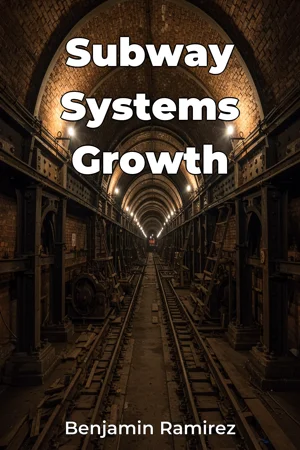
Have you ever considered the intricate engineering marvel that lies beneath our feet, a network of tunnels facilitating the ceaseless flow of urban life? "Subway Systems Growth" delves into the captivating history and architectural evolution of underground transit networks in major cities around the globe, beginning in the 1800s. This book examines not only the engineering feats involved but also the profound social, economic, and urban planning implications of these subterranean arteries. We explore three primary themes: the pioneering spirit of early subway construction, the technological advancements that shaped their expansion, and the impact these systems had in reshaping urban landscapes. Understanding the history of subway systems is vitally important because they represent a crucial intersection of technological innovation, urban development, and societal needs. Subway lines significantly influence population distribution, economic activity, and the overall quality of life in urban centers. The book provides a historical backdrop, touching upon the social conditions and industrial revolutions that fostered the need for and the possibility of underground transit. No prior technical expertise is required; the narrative is crafted to be accessible to anyone with an interest in urban history, architecture, or engineering. The central argument of "Subway Systems Growth" is that the development of underground transit is not merely a story of engineering progress, but a reflection of a city’s response to evolving societal needs. Analyzing the growth patterns of these systems reveals insights into the changing priorities, economic conditions, and social structures of the cities they serve. The book is structured to provide a comprehensive understanding of this evolution. Initially, it introduces the foundational concepts of underground railway design and construction. This introduction is followed by detailed case studies of several major cities, examining the individual challenges and solutions encountered in each. The book then shifts towards exploring the impact of technological advancements like tunnel boring machines and advanced signaling systems. Finally, it culminates in an analysis of the future of subway systems, considering sustainability, accessibility, and integration with other forms of transport. The narratives and arguments presented are supported by extensive archival research, including engineering reports, historical maps, and demographic data. Oral histories from engineers, city planners, and everyday commuters offer unique perspectives. "Subway Systems Growth" connects to several fields, including urban planning, civil engineering, and economic history. By examining the architectural design of stations and tunnels, the book provides insights into the aesthetic and functional considerations that shaped these spaces. The growth patterns of subway systems correlate with economic trends, making the book relevant to economists studying urban development. Sociologists will gain perspective on how these systems influenced social interactions and community formation. A unique aspect of this book is its focus on the human element. Beyond technical specifications and construction timelines, it narrates the stories of the individuals who designed, built, and used these systems. This contextualization provides a richer understanding of the cultural significance of subways. The tone is factual and informative, adopting an accessible writing style that presents complex information in a clear and engaging manner. Technical jargon is minimized or explained. The target audience includes students and researchers in urban studies, architectural history, and civil engineering as well as anyone with a general interest in the history of cities and transportation. "Subway Systems Growth" offers valuable insights into the evolution of urban environments. Adhering to the conventions of architectural and historical writing, the book is filled with visual aids such as photographs, maps, and diagrams, which enhances the reader's understanding of intricate concepts. The scope is intentionally broad, covering subway systems across different continents to highlight common trends and unique regional adaptations. However, the depth of analysis varies depending on the availability of historical data. The information in this book can be applied by urban planners and policy makers seeking to understand the long-term impacts of infrastructure investments. By studying successful and unsuccessful subway projects, planners can make more informed decisions about future transit development. While the benefits of subway systems are widely acknowledged, there are debates over their cost-effectiveness and environmental impact. "Subway Systems Growth" addresses these controversies by presenting diverse perspectives and data, allowing the reader to form their own informed opinions.
Have you ever considered the intricate engineering marvel that lies beneath our feet, a network of tunnels facilitating the ceaseless flow of urban life? "Subway Systems Growth" delves into the captivating history and architectural evolution of underground transit networks in major cities around the globe, beginning in the 1800s. This book examines not only the engineering feats involved but also the profound social, economic, and urban planning implications of these subterranean arteries. We explore three primary themes: the pioneering spirit of early subway construction, the technological advancements that shaped their expansion, and the impact these systems had in reshaping urban landscapes. Understanding the history of subway systems is vitally important because they represent a crucial intersection of technological innovation, urban development, and societal needs. Subway lines significantly influence population distribution, economic activity, and the overall quality of life in urban centers. The book provides a historical backdrop, touching upon the social conditions and industrial revolutions that fostered the need for and the possibility of underground transit. No prior technical expertise is required; the narrative is crafted to be accessible to anyone with an interest in urban history, architecture, or engineering. The central argument of "Subway Systems Growth" is that the development of underground transit is not merely a story of engineering progress, but a reflection of a city’s response to evolving societal needs. Analyzing the growth patterns of these systems reveals insights into the changing priorities, economic conditions, and social structures of the cities they serve. The book is structured to provide a comprehensive understanding of this evolution. Initially, it introduces the foundational concepts of underground railway design and construction. This introduction is followed by detailed case studies of several major cities, examining the individual challenges and solutions encountered in each. The book then shifts towards exploring the impact of technological advancements like tunnel boring machines and advanced signaling systems. Finally, it culminates in an analysis of the future of subway systems, considering sustainability, accessibility, and integration with other forms of transport. The narratives and arguments presented are supported by extensive archival research, including engineering reports, historical maps, and demographic data. Oral histories from engineers, city planners, and everyday commuters offer unique perspectives. "Subway Systems Growth" connects to several fields, including urban planning, civil engineering, and economic history. By examining the architectural design of stations and tunnels, the book provides insights into the aesthetic and functional considerations that shaped these spaces. The growth patterns of subway systems correlate with economic trends, making the book relevant to economists studying urban development. Sociologists will gain perspective on how these systems influenced social interactions and community formation. A unique aspect of this book is its focus on the human element. Beyond technical specifications and construction timelines, it narrates the stories of the individuals who designed, built, and used these systems. This contextualization provides a richer understanding of the cultural significance of subways. The tone is factual and informative, adopting an accessible writing style that presents complex information in a clear and engaging manner. Technical jargon is minimized or explained. The target audience includes students and researchers in urban studies, architectural history, and civil engineering as well as anyone with a general interest in the history of cities and transportation. "Subway Systems Growth" offers valuable insights into the evolution of urban environments. Adhering to the conventions of architectural and historical writing, the book is filled with visual aids such as photographs, maps, and diagrams, which enhances the reader's understanding of intricate concepts. The scope is intentionally broad, covering subway systems across different continents to highlight common trends and unique regional adaptations. However, the depth of analysis varies depending on the availability of historical data. The information in this book can be applied by urban planners and policy makers seeking to understand the long-term impacts of infrastructure investments. By studying successful and unsuccessful subway projects, planners can make more informed decisions about future transit development. While the benefits of subway systems are widely acknowledged, there are debates over their cost-effectiveness and environmental impact. "Subway Systems Growth" addresses these controversies by presenting diverse perspectives and data, allowing the reader to form their own informed opinions.
"Subway Systems Growth" explores the fascinating architectural and historical evolution of subway systems as vital "subterranean arteries" shaping urban landscapes. The book reveals how these underground railways, starting in the 1800s, have been instrumental in urban development and have had a profound impact on society and the economy. Delving beyond mere engineering, the book highlights how subway systems reflect a city's response to evolving societal needs. It offers insights into the pioneering spirit of early construction while also emphasizing the technological advancements that fueled expansion. The book examines subway construction through detailed case studies of major cities, showcasing the unique challenges and solutions encountered. Readers will discover how technological advancements, such as tunnel boring machines, revolutionized urban transit. By incorporating archival research, engineering reports, and even oral histories, "Subway Systems Growth" connects urban planning, civil engineering, and economic history. The book uniquely focuses on the human element, narrating the stories of those who designed, built, and used these systems. The book progresses logically, beginning with foundational concepts and moving through historical case studies and technological impacts. It concludes with an analysis of the future, considering sustainability and accessibility. The approach is designed to be accessible to all, regardless of technical expertise, making it a valuable resource for anyone interested in urban history, architecture, or engineering.
Book Details
ISBN
9788235205384
Publisher
Publifye AS
Your Licenses
You don't own any licenses for this book
Purchase a license below to unlock this book and download the EPUB.
Purchase License
Select a tier to unlock this book
Need bulk licensing?
Contact us for enterprise agreements.