
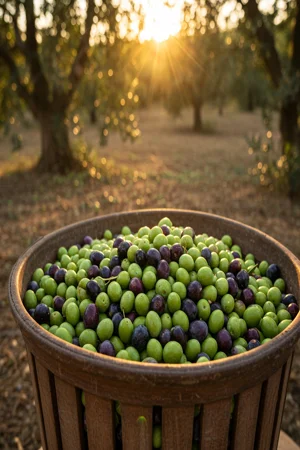
About This Book
Have you ever considered the journey of the olive, from the ancient groves of the Mediterranean to the bottle of oil on your table? "Olive Oil Production" delves into the rich history and intricate processes behind this culinary staple, exploring its cultural significance and modern production techniques. This book aims to provide a comprehensive understanding of olive oil, tracing its evolution from antiquity to the present day. We begin by examining the historical context of olive cultivation in the Mediterranean, a region where the olive tree is deeply intertwined with culture, cuisine, and economy. Understanding this history is crucial for appreciating the modern industry and the diverse varieties of olives and oils produced today. We will also explore the science behind olive oil production. This includes the biology of the olive fruit, the chemistry of oil extraction, and the factors that influence the quality and flavor of the final product. Therefore, the central argument of "Olive Oil Production" is that a thorough understanding of both the historical context and the scientific principles underlying olive oil production is essential for appreciating its complexities and ensuring quality. The book is structured into three main sections. First, we introduce the history of olive cultivation and oil production, from ancient presses to traditional methods. This section lays the groundwork for understanding the cultural significance of olive oil and the evolution of production techniques. Second, we delve into modern extraction technologies, exploring the various methods used to produce olive oil on a commercial scale, including continuous extraction systems and cold-pressing techniques. This section examines the advantages and disadvantages of each method, as well as their impact on oil quality and yield. Third, the book examines regional olive varieties and their unique characteristics, including flavor profiles, oil content, and suitability for different applications. We explore the specific growing conditions and production practices that contribute to the distinctive qualities of olive oils from various regions. The evidence presented in this book draws on archaeological records, historical texts, scientific studies, and industry data. We analyze the chemical composition of different olive oil varieties using spectroscopic data and chromatographic techniques. Furthermore, we incorporate insights from fields such as botany, chemistry, history, and agricultural engineering. For instance, we examine the botanical characteristics of different olive cultivars to understand their oil content and flavor profiles. Historical texts and archaeological findings shed light on the evolution of olive oil production techniques over time. Engineering principles inform our discussion of modern extraction technologies and their efficiency. "Olive Oil Production" connects to broader areas of study, including culinary arts, nutrition science, and agricultural economics. The book provides valuable insights into the role of olive oil in Mediterranean cuisine, its health benefits, and its impact on local economies. The tone of this book is informative, and accessible to a wide audience, blending scholarly research with practical advice. The target audience includes food enthusiasts, culinary professionals, nutritionists, historians, and anyone interested in learning more about the production and history of olive oil. This book will appeal to readers seeking a comprehensive and scientifically grounded understanding of olive oil, from its origins to modern production techniques. In line with the conventions of non-fiction writing, "Olive Oil Production" emphasizes accuracy, clarity, and objectivity. The book includes detailed references to sources, ensuring that all claims are supported by evidence. The scope of this book is primarily focused on Mediterranean olive oil production, although we will briefly touch on olive cultivation in other regions. We aim to provide a comprehensive overview without delving into highly specialized or technical aspects. The practical applications of the information in this book are numerous. Readers will gain a deeper understanding of how to select high-quality olive oils, appreciate the nuances of different regional varieties, and incorporate olive oil into their cooking in a more informed way. While "Olive Oil Production" aims to present a balanced perspective, it acknowledges that there are ongoing debates surrounding the health benefits of olive oil and the environmental impact of different production methods. We will explore these controversies, presenting different viewpoints and evidence-based analyses.
Have you ever considered the journey of the olive, from the ancient groves of the Mediterranean to the bottle of oil on your table? "Olive Oil Production" delves into the rich history and intricate processes behind this culinary staple, exploring its cultural significance and modern production techniques. This book aims to provide a comprehensive understanding of olive oil, tracing its evolution from antiquity to the present day. We begin by examining the historical context of olive cultivation in the Mediterranean, a region where the olive tree is deeply intertwined with culture, cuisine, and economy. Understanding this history is crucial for appreciating the modern industry and the diverse varieties of olives and oils produced today. We will also explore the science behind olive oil production. This includes the biology of the olive fruit, the chemistry of oil extraction, and the factors that influence the quality and flavor of the final product. Therefore, the central argument of "Olive Oil Production" is that a thorough understanding of both the historical context and the scientific principles underlying olive oil production is essential for appreciating its complexities and ensuring quality. The book is structured into three main sections. First, we introduce the history of olive cultivation and oil production, from ancient presses to traditional methods. This section lays the groundwork for understanding the cultural significance of olive oil and the evolution of production techniques. Second, we delve into modern extraction technologies, exploring the various methods used to produce olive oil on a commercial scale, including continuous extraction systems and cold-pressing techniques. This section examines the advantages and disadvantages of each method, as well as their impact on oil quality and yield. Third, the book examines regional olive varieties and their unique characteristics, including flavor profiles, oil content, and suitability for different applications. We explore the specific growing conditions and production practices that contribute to the distinctive qualities of olive oils from various regions. The evidence presented in this book draws on archaeological records, historical texts, scientific studies, and industry data. We analyze the chemical composition of different olive oil varieties using spectroscopic data and chromatographic techniques. Furthermore, we incorporate insights from fields such as botany, chemistry, history, and agricultural engineering. For instance, we examine the botanical characteristics of different olive cultivars to understand their oil content and flavor profiles. Historical texts and archaeological findings shed light on the evolution of olive oil production techniques over time. Engineering principles inform our discussion of modern extraction technologies and their efficiency. "Olive Oil Production" connects to broader areas of study, including culinary arts, nutrition science, and agricultural economics. The book provides valuable insights into the role of olive oil in Mediterranean cuisine, its health benefits, and its impact on local economies. The tone of this book is informative, and accessible to a wide audience, blending scholarly research with practical advice. The target audience includes food enthusiasts, culinary professionals, nutritionists, historians, and anyone interested in learning more about the production and history of olive oil. This book will appeal to readers seeking a comprehensive and scientifically grounded understanding of olive oil, from its origins to modern production techniques. In line with the conventions of non-fiction writing, "Olive Oil Production" emphasizes accuracy, clarity, and objectivity. The book includes detailed references to sources, ensuring that all claims are supported by evidence. The scope of this book is primarily focused on Mediterranean olive oil production, although we will briefly touch on olive cultivation in other regions. We aim to provide a comprehensive overview without delving into highly specialized or technical aspects. The practical applications of the information in this book are numerous. Readers will gain a deeper understanding of how to select high-quality olive oils, appreciate the nuances of different regional varieties, and incorporate olive oil into their cooking in a more informed way. While "Olive Oil Production" aims to present a balanced perspective, it acknowledges that there are ongoing debates surrounding the health benefits of olive oil and the environmental impact of different production methods. We will explore these controversies, presenting different viewpoints and evidence-based analyses.
"Olive Oil Production" explores the multifaceted world of olive oil, from its ancient roots in the Mediterranean to modern production. It examines the cultural significance interwoven with olive cultivation, a practice deeply embedded in the region's history, cuisine, and economy. Did you know that archaeological evidence suggests olive oil production dates back thousands of years, highlighting its enduring importance? The book also delves into the scientific aspects, such as the biology of the olive fruit and the chemistry of oil extraction, which greatly influence the quality and flavor of the final product. The book progresses systematically, beginning with the history of olive cultivation and oil production, from ancient presses to traditional methods. It then explores modern extraction technologies, comparing continuous extraction systems and cold-pressing techniques. Finally, it examines regional olive varieties and their unique characteristics. Understanding these regional differences helps appreciate the diverse flavor profiles and oil content that make each variety unique. Readers gain insights into selecting high-quality olive oils, appreciating regional nuances, and using olive oil in cooking with greater understanding.
Book Details
ISBN
9788235205339
Publisher
Publifye AS
Your Licenses
You don't own any licenses for this book
Purchase a license below to unlock this book and download the EPUB.
Purchase License
Select a tier to unlock this book
Need bulk licensing?
Contact us for enterprise agreements.