
About This Book
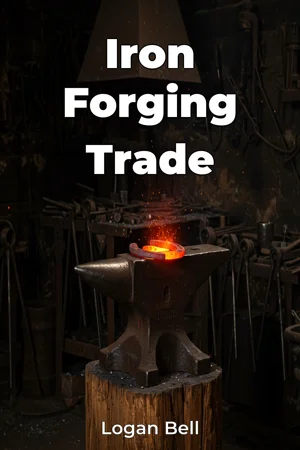
How did the iron that shaped our past truly take shape? "Iron Forging Trade" delves into the intricate world of blacksmithing, transporting readers to the heart of historical villages to examine the time-honored techniques and familial structures that defined this essential craft. This book explores three main areas: the evolution of blacksmithing techniques across different historical periods, the pivotal role of family workshops as centers of both production and knowledge transmission, and the social and economic impact of blacksmithing on village life. Blacksmithing, often relegated to the background in historical accounts, represents a crucial intersection of technological advancement, economic stability, and community development. By understanding the nuances of iron forging, we gain insights into the daily lives, technological capabilities, and economic systems of past societies. This book will argue that blacksmithing was not merely a trade but a cornerstone of community resilience and innovation, deeply intertwined with the social fabric of historical villages. This argument is vital because it challenges conventional narratives that often overlook the contributions of skilled trades to historical progress and societal well-being. The book begins by establishing a historical context, tracing the development of ironworking from its early beginnings to the pre-industrial era, highlighting key technological innovations and regional variations. It then transitions into an examination of family workshops, analyzing their structure, dynamics, and methods of training. This section will explore how skills were passed down through generations, the division of labor within families, and the economic strategies employed by these workshops. Real-world examples, drawn from meticulous research of historical records, archaeological findings, and surviving artifacts, bring these workshops to life. The final section considers the broader impact on village life, investigating the blacksmith's role in agriculture, construction, warfare, and everyday life. It explores how blacksmiths contributed to the local economy, influenced social hierarchies, and fostered community identity. The evidence presented in this book relies on a diverse range of sources, including account books, inventories, guild records, archaeological finds of blacksmithing tools and workshops, and surviving examples of ironwork. Furthermore, the book utilizes a multidisciplinary approach, drawing connections between history, anthropology, archaeology, and materials science to provide a comprehensive understanding of the blacksmithing trade. The book's exploration of skill transmission within families connects to educational studies and the sociology of work. The analysis of blacksmithing's economic impact relates to economic history and development studies, illustrating the role of small-scale industries in fostering economic growth. The investigation of blacksmithing techniques links to material culture studies and engineering history, showcasing the ingenuity and adaptability of craftspeople. "Iron Forging Trade" aims to provide a scholarly yet accessible account, suitable for both academic researchers and general readers interested in history, crafts, and technology. This book will offer a unique perspective by focusing on the everyday experiences of blacksmiths and their families, moving beyond a purely technological analysis to explore the social and cultural dimensions of this trade. While the book focuses primarily on blacksmithing in European and early American villages, it acknowledges the global diversity of ironworking traditions and encourages future research in other regions. This book does not delve into high-level artistry such as sword making but rather focuses on the essential ironwork needed by the common person in their daily lives. Readers interested in historical reenactment, living history, or metalworking will find practical insights into traditional techniques and workshop practices. The book's exploration of family dynamics and skill transmission offers valuable lessons for contemporary discussions of vocational training and entrepreneurship. The history of blacksmithing is not without its controversies, including debates over the origins of ironworking technology and the social status of blacksmiths in different societies. This book seeks to present a balanced and nuanced perspective on these issues, acknowledging the complexities and uncertainties inherent in historical research. "Iron Forging Trade" provides a comprehensive, richly detailed portrait of a vital trade, illuminating its enduring legacy and its continued relevance for understanding the past.
How did the iron that shaped our past truly take shape? "Iron Forging Trade" delves into the intricate world of blacksmithing, transporting readers to the heart of historical villages to examine the time-honored techniques and familial structures that defined this essential craft. This book explores three main areas: the evolution of blacksmithing techniques across different historical periods, the pivotal role of family workshops as centers of both production and knowledge transmission, and the social and economic impact of blacksmithing on village life. Blacksmithing, often relegated to the background in historical accounts, represents a crucial intersection of technological advancement, economic stability, and community development. By understanding the nuances of iron forging, we gain insights into the daily lives, technological capabilities, and economic systems of past societies. This book will argue that blacksmithing was not merely a trade but a cornerstone of community resilience and innovation, deeply intertwined with the social fabric of historical villages. This argument is vital because it challenges conventional narratives that often overlook the contributions of skilled trades to historical progress and societal well-being. The book begins by establishing a historical context, tracing the development of ironworking from its early beginnings to the pre-industrial era, highlighting key technological innovations and regional variations. It then transitions into an examination of family workshops, analyzing their structure, dynamics, and methods of training. This section will explore how skills were passed down through generations, the division of labor within families, and the economic strategies employed by these workshops. Real-world examples, drawn from meticulous research of historical records, archaeological findings, and surviving artifacts, bring these workshops to life. The final section considers the broader impact on village life, investigating the blacksmith's role in agriculture, construction, warfare, and everyday life. It explores how blacksmiths contributed to the local economy, influenced social hierarchies, and fostered community identity. The evidence presented in this book relies on a diverse range of sources, including account books, inventories, guild records, archaeological finds of blacksmithing tools and workshops, and surviving examples of ironwork. Furthermore, the book utilizes a multidisciplinary approach, drawing connections between history, anthropology, archaeology, and materials science to provide a comprehensive understanding of the blacksmithing trade. The book's exploration of skill transmission within families connects to educational studies and the sociology of work. The analysis of blacksmithing's economic impact relates to economic history and development studies, illustrating the role of small-scale industries in fostering economic growth. The investigation of blacksmithing techniques links to material culture studies and engineering history, showcasing the ingenuity and adaptability of craftspeople. "Iron Forging Trade" aims to provide a scholarly yet accessible account, suitable for both academic researchers and general readers interested in history, crafts, and technology. This book will offer a unique perspective by focusing on the everyday experiences of blacksmiths and their families, moving beyond a purely technological analysis to explore the social and cultural dimensions of this trade. While the book focuses primarily on blacksmithing in European and early American villages, it acknowledges the global diversity of ironworking traditions and encourages future research in other regions. This book does not delve into high-level artistry such as sword making but rather focuses on the essential ironwork needed by the common person in their daily lives. Readers interested in historical reenactment, living history, or metalworking will find practical insights into traditional techniques and workshop practices. The book's exploration of family dynamics and skill transmission offers valuable lessons for contemporary discussions of vocational training and entrepreneurship. The history of blacksmithing is not without its controversies, including debates over the origins of ironworking technology and the social status of blacksmiths in different societies. This book seeks to present a balanced and nuanced perspective on these issues, acknowledging the complexities and uncertainties inherent in historical research. "Iron Forging Trade" provides a comprehensive, richly detailed portrait of a vital trade, illuminating its enduring legacy and its continued relevance for understanding the past.
"Iron Forging Trade" explores the world of blacksmithing, revealing its importance to historical village life. This book examines how iron forging techniques evolved, the role of family workshops, and the trade's overall impact on society. Blacksmiths were not just metalworkers; they were essential to their communities, crafting everything from tools to hardware. Interestingly, the transmission of skills often occurred within families, with knowledge passed down through generations. The book highlights how blacksmithing underpinned technological advancement and economic stability in pre-industrial communities. It begins by tracing ironworking's historical development, then examines family workshops, using historical records and archaeological findings to illustrate their dynamics. The final section broadens the scope to consider the blacksmith's impact on agriculture, construction, and daily life, revealing how blacksmiths fostered community identity and contributed to the local economy.
Book Details
ISBN
9788235205292
Publisher
Publifye AS
Your Licenses
You don't own any licenses for this book
Purchase a license below to unlock this book and download the EPUB.
Purchase License
Select a tier to unlock this book
Need bulk licensing?
Contact us for enterprise agreements.