
About This Book
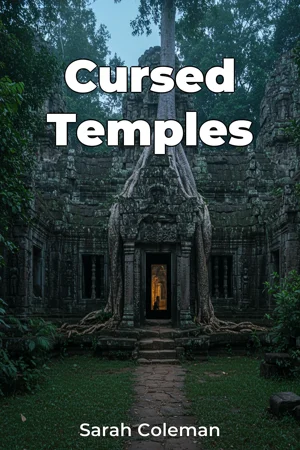
Are ancient curses real, or are they simply the echoes of misfortune resonating through the halls of abandoned temples? "Cursed Temples" delves into the enigmatic world of sacred sites believed to be afflicted by divine retribution, exploring the history, religious beliefs, and cultural contexts that have shaped these enduring myths. This book examines the intricate relationship between perceived curses, the abandonment of holy places, and the narratives of divine punishment that surround them. These topics are important because they reveal profound insights into human psychology, the power of belief systems, and the complex reasons behind the rise and fall of civilizations. This exploration necessitates an understanding of ancient religious practices, historical events (such as plagues, wars, and environmental disasters), and the social structures that were intertwined with temple life. It also requires familiarity with foundational concepts in comparative religion and mythology. Our central argument is that the concept of "cursed temples" is not solely rooted in supernatural belief, but also reflects a confluence of historical realities, social anxieties, and the human tendency to seek explanations for inexplicable events. The "curses" themselves often function as cautionary tales, preserving cultural memory and reinforcing societal norms. "Cursed Temples" unfolds in three major parts. First, we introduce the concept of temple curses through a variety of case studies, ranging from ancient Egypt and Greece to Mesoamerica and Southeast Asia. Each example serves to illustrate the common threads and cultural variations in the belief of divine retribution. Second, we analyze the historical and social factors that often underlie the perception of a temple as "cursed." This includes examining the role of disease outbreaks, political instability, and environmental degradation in leading to the abandonment of sacred sites. This section also analyses the rise of competitive religious systems and their impact on older temple sites. Third, the book examines the enduring power of these myths. We explore how the narratives of cursed temples have been perpetuated through folklore, literature, and popular culture, influencing our understanding of the past. The evidence presented in "Cursed Temples" draws upon archaeological records, ancient texts (including religious scriptures, historical accounts, and inscriptions), and ethnographic studies of contemporary cultures that maintain similar beliefs. We also utilize data from climate science and epidemiology to understand the environmental and health-related factors that may have contributed to the demise of certain temples. The study of cursed temples intersects with diverse fields, including archaeology (for uncovering physical evidence of temple life and abandonment), anthropology (for understanding cultural beliefs and practices), and history (for contextualizing the events that led to the downfall of temples and the rise of curse narratives). These connections enhance our understanding of the multifaceted nature of the topic. "Cursed Temples" offers a unique perspective by approaching the subject through a multidisciplinary lens. This approach allows for investigation into the cultural, historical, and environmental factors that contribute to the perception of temples as cursed. Written in a clear and accessible style that blends historical analysis with cultural interpretation, this book is intended for a broad audience interested in history, religion, mythology, and archaeology. This book would be valuable to readers seeking a greater understanding of human belief systems, cultural heritage, and the enduring power of myth. As a work of non-fiction within the genres of history and religion, "Cursed Temples" adheres to the principles of accuracy, objectivity, and thorough research. While the book aims to provide a comprehensive overview of the topic, its scope is intentionally limited to temples and excludes other types of sacred sites, such as natural landscapes. Readers can apply the insights gained from "Cursed Temples" to better understand the role of belief systems in shaping human behavior. It's a reminder that the narratives we create about the past can have a profound impact on the present, influencing our choices and shaping our understanding of the world. The book engages with ongoing debates surrounding the interpretation of archaeological evidence and the validity of religious beliefs. By presenting multiple perspectives and encouraging critical thinking, "Cursed Temples" contributes to a nuanced understanding of these complex issues.
Are ancient curses real, or are they simply the echoes of misfortune resonating through the halls of abandoned temples? "Cursed Temples" delves into the enigmatic world of sacred sites believed to be afflicted by divine retribution, exploring the history, religious beliefs, and cultural contexts that have shaped these enduring myths. This book examines the intricate relationship between perceived curses, the abandonment of holy places, and the narratives of divine punishment that surround them. These topics are important because they reveal profound insights into human psychology, the power of belief systems, and the complex reasons behind the rise and fall of civilizations. This exploration necessitates an understanding of ancient religious practices, historical events (such as plagues, wars, and environmental disasters), and the social structures that were intertwined with temple life. It also requires familiarity with foundational concepts in comparative religion and mythology. Our central argument is that the concept of "cursed temples" is not solely rooted in supernatural belief, but also reflects a confluence of historical realities, social anxieties, and the human tendency to seek explanations for inexplicable events. The "curses" themselves often function as cautionary tales, preserving cultural memory and reinforcing societal norms. "Cursed Temples" unfolds in three major parts. First, we introduce the concept of temple curses through a variety of case studies, ranging from ancient Egypt and Greece to Mesoamerica and Southeast Asia. Each example serves to illustrate the common threads and cultural variations in the belief of divine retribution. Second, we analyze the historical and social factors that often underlie the perception of a temple as "cursed." This includes examining the role of disease outbreaks, political instability, and environmental degradation in leading to the abandonment of sacred sites. This section also analyses the rise of competitive religious systems and their impact on older temple sites. Third, the book examines the enduring power of these myths. We explore how the narratives of cursed temples have been perpetuated through folklore, literature, and popular culture, influencing our understanding of the past. The evidence presented in "Cursed Temples" draws upon archaeological records, ancient texts (including religious scriptures, historical accounts, and inscriptions), and ethnographic studies of contemporary cultures that maintain similar beliefs. We also utilize data from climate science and epidemiology to understand the environmental and health-related factors that may have contributed to the demise of certain temples. The study of cursed temples intersects with diverse fields, including archaeology (for uncovering physical evidence of temple life and abandonment), anthropology (for understanding cultural beliefs and practices), and history (for contextualizing the events that led to the downfall of temples and the rise of curse narratives). These connections enhance our understanding of the multifaceted nature of the topic. "Cursed Temples" offers a unique perspective by approaching the subject through a multidisciplinary lens. This approach allows for investigation into the cultural, historical, and environmental factors that contribute to the perception of temples as cursed. Written in a clear and accessible style that blends historical analysis with cultural interpretation, this book is intended for a broad audience interested in history, religion, mythology, and archaeology. This book would be valuable to readers seeking a greater understanding of human belief systems, cultural heritage, and the enduring power of myth. As a work of non-fiction within the genres of history and religion, "Cursed Temples" adheres to the principles of accuracy, objectivity, and thorough research. While the book aims to provide a comprehensive overview of the topic, its scope is intentionally limited to temples and excludes other types of sacred sites, such as natural landscapes. Readers can apply the insights gained from "Cursed Temples" to better understand the role of belief systems in shaping human behavior. It's a reminder that the narratives we create about the past can have a profound impact on the present, influencing our choices and shaping our understanding of the world. The book engages with ongoing debates surrounding the interpretation of archaeological evidence and the validity of religious beliefs. By presenting multiple perspectives and encouraging critical thinking, "Cursed Temples" contributes to a nuanced understanding of these complex issues.
"Cursed Temples" explores the captivating phenomenon of sacred sites believed to be afflicted by divine retribution. It delves into the historical, religious, and cultural factors that contribute to the enduring myths surrounding these places. The book argues that the idea of cursed temples isn't just about supernatural beliefs; it reflects a blend of historical realities, social anxieties, and humanity's search for explanations. For example, plagues or political instability often led to a temple's abandonment, later giving rise to stories of a curse. The study of cursed temples reveals profound insights into human psychology and the power of belief. The narratives of divine punishment serve as cautionary tales, preserving cultural memory. The book examines case studies from ancient Egypt, Greece, Mesoamerica, and Southeast Asia. "Cursed Temples" analyzes historical and social factors underlying the perception of a temple as cursed. Finally, it explores how these myths persist through folklore, literature, and popular culture. This book's unique value lies in its multidisciplinary approach, blending archaeology, anthropology, and history. It provides a clear, accessible account of how cultural heritage and religious beliefs shape our understanding of the past and present. By drawing on archaeological records, ancient texts, and ethnographic studies, "Cursed Temples" offers a nuanced understanding of these issues.
Book Details
ISBN
9788235205285
Publisher
Publifye AS
Your Licenses
You don't own any licenses for this book
Purchase a license below to unlock this book and download the EPUB.
Purchase License
Select a tier to unlock this book
Need bulk licensing?
Contact us for enterprise agreements.