
About This Book
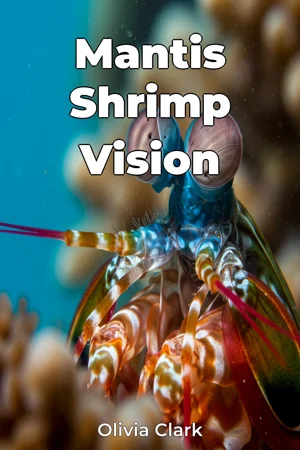
What if the world you see is only a fraction of reality? This book, "Mantis Shrimp Vision," delves into the captivating sensory world of mantis shrimp, organisms possessing visual systems far surpassing human capabilities. We will explore the biological mechanisms, evolutionary advantages, and scientific implications of their unique vision. Our exploration begins by establishing a foundational understanding of color vision. This includes a review of the human visual system, outlining the trichromatic theory and its limitations. Necessary background in optics, photopigments, and neuronal processing is provided to ensure accessibility for readers with diverse scientific backgrounds. This lays the groundwork for understanding the anatomical and physiological complexities that grant mantis shrimp their remarkable color perception. The core argument of this book is that mantis shrimp vision represents a pinnacle of visual system evolution, offering insights into unexplored possibilities for visual information processing. While humans perceive color through three types of photoreceptors, most mantis shrimp possess twelve, potentially enabling vastly more complex color discrimination. However, the functional significance of this system and whether it translates directly into superior color perception remains a topic of ongoing scientific debate. The book is structured to progressively build the reader's understanding. Initially, we introduce the diversity of mantis shrimp species and their ecological niches, highlighting the environmental pressures that might have driven the evolution of their complex visual systems. We then delve into the anatomy of the mantis shrimp eye, focusing on the unique midband region containing the multiple photoreceptor types. Subsequent chapters will explore the physiological mechanisms of color processing in mantis shrimp, drawing on electrophysiological recordings, microspectrophotometry, and behavioral experiments. A chapter is dedicated to the polarized light vision in mantis shrimps and its possible use. The culmination of these investigations considers the potential neural processing underlying their vision. The evidence presented in this book is drawn from a variety of sources, including original research publications, field observations, and laboratory experiments. We will analyze data obtained through cutting-edge techniques in microscopy, molecular biology, and behavioral analysis. A significant portion of the research covered involves collaborative studies across multiple universities and research institutions, providing a comprehensive and multi-faceted perspective. "Mantis Shrimp Vision" also identifies interdisciplinary connections that enhance the book's argument. First, the principles of evolutionary biology are crucial for understanding the development and adaptation of the mantis shrimp visual system. Second, the field of neuroscience provides insights into the neural mechanisms of color processing in the brain. Third, materials science is relevant, as the unique properties of the mantis shrimp's eye structures can inspire novel optical designs and technologies. This book distinguishes itself through its emphasis on a holistic approach to understanding mantis shrimp vision. Rather than focusing solely on the physiological aspects, it integrates ecological, behavioral, and evolutionary perspectives to provide a comprehensive analysis. The book's tone balances scientific rigor with accessibility, aiming to engage both experts and non-experts alike. The target audience includes students and researchers in biology, neuroscience, and related fields, as well as anyone interested in the wonders of the natural world. This book offers a valuable resource for those seeking a deeper understanding of vision, sensory ecology, and evolutionary adaptation. This book focuses primarily on the biological and physiological aspects of mantis shrimp vision, with limited coverage of the detailed mathematical modeling of color perception. While we acknowledge the importance of such models, our emphasis is on providing a foundational understanding of the underlying biological mechanisms. The implications of this research extend beyond the realm of basic science. Understanding the principles of mantis shrimp vision could inspire the development of novel imaging technologies, improved color displays, and advanced sensors for detecting polarized light. Furthermore, it highlights the potential for undiscovered sensory capabilities in other organisms, urging us to reconsider our anthropocentric view of the natural world. While the extraordinary color vision of mantis shrimp is generally accepted, debates persist concerning the exact functional role and the neural mechanisms underlying their system. This book explores these ongoing discussions, presenting different viewpoints and highlighting areas where further research is needed. By addressing these controversies, we aim to provide a balanced and nuanced understanding of the current state of knowledge in this fascinating field.
What if the world you see is only a fraction of reality? This book, "Mantis Shrimp Vision," delves into the captivating sensory world of mantis shrimp, organisms possessing visual systems far surpassing human capabilities. We will explore the biological mechanisms, evolutionary advantages, and scientific implications of their unique vision. Our exploration begins by establishing a foundational understanding of color vision. This includes a review of the human visual system, outlining the trichromatic theory and its limitations. Necessary background in optics, photopigments, and neuronal processing is provided to ensure accessibility for readers with diverse scientific backgrounds. This lays the groundwork for understanding the anatomical and physiological complexities that grant mantis shrimp their remarkable color perception. The core argument of this book is that mantis shrimp vision represents a pinnacle of visual system evolution, offering insights into unexplored possibilities for visual information processing. While humans perceive color through three types of photoreceptors, most mantis shrimp possess twelve, potentially enabling vastly more complex color discrimination. However, the functional significance of this system and whether it translates directly into superior color perception remains a topic of ongoing scientific debate. The book is structured to progressively build the reader's understanding. Initially, we introduce the diversity of mantis shrimp species and their ecological niches, highlighting the environmental pressures that might have driven the evolution of their complex visual systems. We then delve into the anatomy of the mantis shrimp eye, focusing on the unique midband region containing the multiple photoreceptor types. Subsequent chapters will explore the physiological mechanisms of color processing in mantis shrimp, drawing on electrophysiological recordings, microspectrophotometry, and behavioral experiments. A chapter is dedicated to the polarized light vision in mantis shrimps and its possible use. The culmination of these investigations considers the potential neural processing underlying their vision. The evidence presented in this book is drawn from a variety of sources, including original research publications, field observations, and laboratory experiments. We will analyze data obtained through cutting-edge techniques in microscopy, molecular biology, and behavioral analysis. A significant portion of the research covered involves collaborative studies across multiple universities and research institutions, providing a comprehensive and multi-faceted perspective. "Mantis Shrimp Vision" also identifies interdisciplinary connections that enhance the book's argument. First, the principles of evolutionary biology are crucial for understanding the development and adaptation of the mantis shrimp visual system. Second, the field of neuroscience provides insights into the neural mechanisms of color processing in the brain. Third, materials science is relevant, as the unique properties of the mantis shrimp's eye structures can inspire novel optical designs and technologies. This book distinguishes itself through its emphasis on a holistic approach to understanding mantis shrimp vision. Rather than focusing solely on the physiological aspects, it integrates ecological, behavioral, and evolutionary perspectives to provide a comprehensive analysis. The book's tone balances scientific rigor with accessibility, aiming to engage both experts and non-experts alike. The target audience includes students and researchers in biology, neuroscience, and related fields, as well as anyone interested in the wonders of the natural world. This book offers a valuable resource for those seeking a deeper understanding of vision, sensory ecology, and evolutionary adaptation. This book focuses primarily on the biological and physiological aspects of mantis shrimp vision, with limited coverage of the detailed mathematical modeling of color perception. While we acknowledge the importance of such models, our emphasis is on providing a foundational understanding of the underlying biological mechanisms. The implications of this research extend beyond the realm of basic science. Understanding the principles of mantis shrimp vision could inspire the development of novel imaging technologies, improved color displays, and advanced sensors for detecting polarized light. Furthermore, it highlights the potential for undiscovered sensory capabilities in other organisms, urging us to reconsider our anthropocentric view of the natural world. While the extraordinary color vision of mantis shrimp is generally accepted, debates persist concerning the exact functional role and the neural mechanisms underlying their system. This book explores these ongoing discussions, presenting different viewpoints and highlighting areas where further research is needed. By addressing these controversies, we aim to provide a balanced and nuanced understanding of the current state of knowledge in this fascinating field.
"Mantis Shrimp Vision" unveils the extraordinary sensory world of mantis shrimp, creatures possessing visual systems that dwarf human capabilities. These marine animals boast up to twelve photoreceptor types, far exceeding our mere three, potentially unlocking vastly more complex color discrimination. The book explores how these unique optical designs and their polarized light vision evolved, driven by the ecological pressures of their diverse environments. The book balances scientific rigor with accessibility, integrating ecological, behavioral, and evolutionary perspectives to provide a comprehensive analysis. Beginning with an overview of color vision and essential background in optics and neuronal processing, the book progresses to detail the anatomy of the mantis shrimp eye, focusing on the midband region responsible for their exceptional color perception. It delves into the physiological mechanisms of color processing, drawing from diverse research and collaborative studies. While debates continue regarding the functional role and neural mechanisms of their vision, this exploration offers valuable insights into sensory ecology, evolutionary biology, and potential applications in novel imaging technologies.
Book Details
ISBN
9788235205148
Publisher
Publifye AS
Your Licenses
You don't own any licenses for this book
Purchase a license below to unlock this book and download the EPUB.
Purchase License
Select a tier to unlock this book
Need bulk licensing?
Contact us for enterprise agreements.