
About This Book
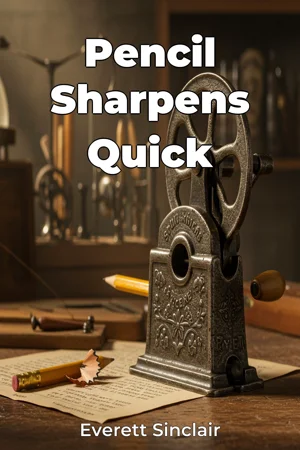
Have you ever considered the surprisingly complex history behind the simple act of sharpening a pencil? "Pencil Sharpens Quick" delves into the evolution of pencil sharpeners from their inception in 1828 to the present day, exploring the intricate blend of design, engineering, and societal impact that has shaped these ubiquitous tools. This book examines the historical context of pencil sharpeners, their diverse designs, and their role in promoting efficiency across various fields. Two key topics are explored. First, the evolution of the mechanical design, charting the shift from rudimentary hand-cranked devices to sophisticated electric models. Second, the impact of these innovations on productivity and accessibility within educational and professional settings. These topics are important because they reveal how a seemingly mundane object reflects broader technological advancements and influences patterns of work and creativity. The historical backdrop begins with the rise of graphite pencils as a preferred writing instrument. This led to the necessity for tools capable of precisely shaping the graphite core. Early sharpening methods were crude and often resulted in uneven points and wasted material. The social context involves the increasing demand for efficiency in offices, schools, and drafting rooms as industrialization accelerated. No prerequisite knowledge beyond basic familiarity with pencils and their use is needed. The central argument is that the evolution of the pencil sharpener mirrors the ongoing pursuit of efficiency and precision in various domains. It demonstrates how incremental improvements in design and technology can have a significant cumulative effect on daily life and work processes. This argument is significant because it encourages us to appreciate the ingenuity behind commonplace objects and to understand how they contribute to broader patterns of innovation. The book's structure is as follows: The introduction establishes the importance of pencil sharpeners and their historical context. The first major section explores the early inventions and patents related to pencil sharpening. The second part analyzes the impact of different designs on sharpening efficiency, examining factors such as point quality, graphite waste, and ease of use. The third one investigates the integration of pencil sharpeners into various professional and educational environments, analyzing their impact on productivity and creativity. It concludes by discussing the future of pencil sharpening technology, considering challenges such as sustainability and the rise of digital alternatives. The evidence presented includes patent documents, historical catalogs, engineering drawings, and user testimonials. Unique data sources include archival materials from manufacturers of pencil sharpeners and analyses of sharpening techniques from historical instructional manuals. Interdisciplinary connections enrich the book's argument. Connections to material science explain the properties of graphite and the mechanics of sharpening. Links to industrial design reveal the aesthetic and functional considerations that have shaped pencil sharpener designs. Connections to business history show the competitive dynamics among pencil sharpener manufacturers and their impact on market trends. This book stands out due to its comprehensive scope, meticulous research, and focus on a seemingly insignificant object that has played a notable role in shaping productivity and design. The writing style is fact-based and analytical, aiming for clarity and precision while maintaining an engaging narrative. The target audience includes design enthusiasts, historians of technology, educators, and anyone interested in the evolution of everyday objects. This book would be valuable because it offers a fresh perspective on the history of innovation and its impact on society. As a work of history and design, this book adheres to genre expectations by providing detailed evidence, rigorous analysis, and a clear narrative arc. The scope of the book covers pencil sharpeners dating from 1828 until current models. Discussion will not extend to other writing instruments like pens or markers, nor broader changes in the writing technology landscape. The information in the book can be applied to understanding the iterative process of design, improving workplace efficiency, and appreciating the impact of seemingly small technological advancements. While the fundamental purpose of a pencil sharpener is straightforward, ongoing discussions pertain to debates around manual versus electric sharpeners, the environmental effect of disposable sharpeners, and the impact of digital writing tools on the demand for traditional pencil sharpeners.
Have you ever considered the surprisingly complex history behind the simple act of sharpening a pencil? "Pencil Sharpens Quick" delves into the evolution of pencil sharpeners from their inception in 1828 to the present day, exploring the intricate blend of design, engineering, and societal impact that has shaped these ubiquitous tools. This book examines the historical context of pencil sharpeners, their diverse designs, and their role in promoting efficiency across various fields. Two key topics are explored. First, the evolution of the mechanical design, charting the shift from rudimentary hand-cranked devices to sophisticated electric models. Second, the impact of these innovations on productivity and accessibility within educational and professional settings. These topics are important because they reveal how a seemingly mundane object reflects broader technological advancements and influences patterns of work and creativity. The historical backdrop begins with the rise of graphite pencils as a preferred writing instrument. This led to the necessity for tools capable of precisely shaping the graphite core. Early sharpening methods were crude and often resulted in uneven points and wasted material. The social context involves the increasing demand for efficiency in offices, schools, and drafting rooms as industrialization accelerated. No prerequisite knowledge beyond basic familiarity with pencils and their use is needed. The central argument is that the evolution of the pencil sharpener mirrors the ongoing pursuit of efficiency and precision in various domains. It demonstrates how incremental improvements in design and technology can have a significant cumulative effect on daily life and work processes. This argument is significant because it encourages us to appreciate the ingenuity behind commonplace objects and to understand how they contribute to broader patterns of innovation. The book's structure is as follows: The introduction establishes the importance of pencil sharpeners and their historical context. The first major section explores the early inventions and patents related to pencil sharpening. The second part analyzes the impact of different designs on sharpening efficiency, examining factors such as point quality, graphite waste, and ease of use. The third one investigates the integration of pencil sharpeners into various professional and educational environments, analyzing their impact on productivity and creativity. It concludes by discussing the future of pencil sharpening technology, considering challenges such as sustainability and the rise of digital alternatives. The evidence presented includes patent documents, historical catalogs, engineering drawings, and user testimonials. Unique data sources include archival materials from manufacturers of pencil sharpeners and analyses of sharpening techniques from historical instructional manuals. Interdisciplinary connections enrich the book's argument. Connections to material science explain the properties of graphite and the mechanics of sharpening. Links to industrial design reveal the aesthetic and functional considerations that have shaped pencil sharpener designs. Connections to business history show the competitive dynamics among pencil sharpener manufacturers and their impact on market trends. This book stands out due to its comprehensive scope, meticulous research, and focus on a seemingly insignificant object that has played a notable role in shaping productivity and design. The writing style is fact-based and analytical, aiming for clarity and precision while maintaining an engaging narrative. The target audience includes design enthusiasts, historians of technology, educators, and anyone interested in the evolution of everyday objects. This book would be valuable because it offers a fresh perspective on the history of innovation and its impact on society. As a work of history and design, this book adheres to genre expectations by providing detailed evidence, rigorous analysis, and a clear narrative arc. The scope of the book covers pencil sharpeners dating from 1828 until current models. Discussion will not extend to other writing instruments like pens or markers, nor broader changes in the writing technology landscape. The information in the book can be applied to understanding the iterative process of design, improving workplace efficiency, and appreciating the impact of seemingly small technological advancements. While the fundamental purpose of a pencil sharpener is straightforward, ongoing discussions pertain to debates around manual versus electric sharpeners, the environmental effect of disposable sharpeners, and the impact of digital writing tools on the demand for traditional pencil sharpeners.
"Pencil Sharpens Quick" unveils the fascinating history of pencil sharpeners, transforming what seems like a mundane object into a lens through which to view broader trends in design, technology, and societal efficiency. From the earliest hand-cranked models to today's electric versions, the book traces the evolution of these essential tools, revealing how innovations in mechanical design have significantly impacted productivity in offices and educational settings. Readers will discover that the quest for the perfectly sharpened pencil point reflects a larger pursuit of precision and efficiency that mirrors the industrial age. Exploring the evolution from rudimentary methods to sophisticated designs, the book highlights how pencil sharpeners have adapted to meet the demands of graphite pencils. By delving into patent documents, historical catalogs, and engineering drawings, "Pencil Sharpens Quick" presents a meticulously researched account of how these tools have influenced the way we work and create. The book progresses chronologically, examining early inventions, analyzing the impact of various designs on sharpening efficiency, and investigating their integration into professional and educational environments, ultimately considering the future of sharpening technology.
Book Details
ISBN
9788235205056
Publisher
Publifye AS
Your Licenses
You don't own any licenses for this book
Purchase a license below to unlock this book and download the EPUB.
Purchase License
Select a tier to unlock this book
Need bulk licensing?
Contact us for enterprise agreements.