
About This Book
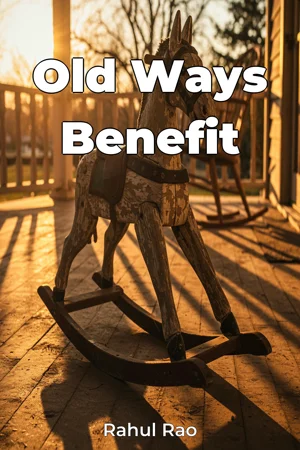
Are modern families truly better off by abandoning the traditional roles that shaped prior generations? "Old Ways Benefit" challenges prevailing assumptions about family structure and societal progress by examining historical family outcomes across various cultures and eras. This book delves into the tangible advantages associated with traditional role differentiation, especially as it relates to family stability, child development, and overall societal well-being. We will explore several key topics. First, we assess the historical impact of clearly defined parental roles on child-rearing practices and educational attainment. Second, we analyze the economic and social consequences of diverging from these established roles, considering factors such as single-parent households and dual-career families. Third, we investigate the evolving definitions of "success" and "happiness" within family units, comparing historical metrics to contemporary standards. Understanding the historical context is essential. We will present data spanning the 18th, 19th, and 20th centuries, drawing from sociological research and archival family records. This historical lens allows for a comparison of family dynamics before and after the widespread adoption of modern, egalitarian ideals. The central argument posits that while societal progress offers certain advancements, the erosion of traditional family roles may inadvertently undermine core aspects of family functionality and cohesion. We contend that the benefits of traditional structure, though often overlooked, can be empirically demonstrated. The book's structure will unfold as follows: a) An introductory chapter will define "traditional family roles" and outline the scope of our historical analysis. b) Subsequent chapters will explore specific facets of traditional family life: - Chapter 1: A detailed analysis of the division of labor within the household and its effects on financial stability. - Chapter 2: An examination of parenting styles and child development outcomes in traditional versus modern family settings. - Chapter 3: A comparative study of family resilience in the face of adversity, such as economic hardship or social upheaval. c) The concluding chapter will synthesize the findings and offer a nuanced perspective on the trade-offs between traditional and modern family models. d) Practical applications and policy recommendations will be discussed, exploring how elements of traditional wisdom can be integrated into contemporary family support systems. Evidence will be drawn from several sources, including census data, historical surveys, and case studies of families across different socioeconomic strata. Unique data will include longitudinal studies tracking the intergenerational outcomes of families adhering to traditional models versus those embracing modern approaches. Interdisciplinary connections will include links to economics, sociology, and developmental psychology. The economic impact of single- versus dual-income families will be examined, alongside sociological analyses of changing family structures and psychological studies of child attachment patterns. This book offers a unique perspective by challenging the uncritical acceptance of modern family norms. It adopts a fact-based approach, relying on quantitative data and qualitative insights to support its arguments. The tone is academic but accessible, aiming to engage both scholars and general readers interested in family history and social trends. The target audience includes sociologists, historians, family therapists, educators, and anyone interested in understanding the long-term consequences of changing family structures. This book is valuable because it provides empirical evidence to inform personal decisions and public policy related to family well-being. As a work of historical and sociological analysis, this book adheres to the conventions of rigorous research and balanced argumentation. The book's scope is intentionally limited to exploring the direct consequences of traditional versus modern family roles. It does not delve into broader issues of gender equality or individual fulfillment outside the context of family life. The information presented can be applied practically by informing discussions on work-life balance, parenting strategies, and social support systems for families. The book addresses the ongoing debate about the role of tradition in modern society, particularly concerning its impact on family stability and child development. It acknowledges that the discussion surrounding traditional family roles is often charged with emotion and ideology, and aims to provide a more measured and fact-based contribution.
Are modern families truly better off by abandoning the traditional roles that shaped prior generations? "Old Ways Benefit" challenges prevailing assumptions about family structure and societal progress by examining historical family outcomes across various cultures and eras. This book delves into the tangible advantages associated with traditional role differentiation, especially as it relates to family stability, child development, and overall societal well-being. We will explore several key topics. First, we assess the historical impact of clearly defined parental roles on child-rearing practices and educational attainment. Second, we analyze the economic and social consequences of diverging from these established roles, considering factors such as single-parent households and dual-career families. Third, we investigate the evolving definitions of "success" and "happiness" within family units, comparing historical metrics to contemporary standards. Understanding the historical context is essential. We will present data spanning the 18th, 19th, and 20th centuries, drawing from sociological research and archival family records. This historical lens allows for a comparison of family dynamics before and after the widespread adoption of modern, egalitarian ideals. The central argument posits that while societal progress offers certain advancements, the erosion of traditional family roles may inadvertently undermine core aspects of family functionality and cohesion. We contend that the benefits of traditional structure, though often overlooked, can be empirically demonstrated. The book's structure will unfold as follows: a) An introductory chapter will define "traditional family roles" and outline the scope of our historical analysis. b) Subsequent chapters will explore specific facets of traditional family life: - Chapter 1: A detailed analysis of the division of labor within the household and its effects on financial stability. - Chapter 2: An examination of parenting styles and child development outcomes in traditional versus modern family settings. - Chapter 3: A comparative study of family resilience in the face of adversity, such as economic hardship or social upheaval. c) The concluding chapter will synthesize the findings and offer a nuanced perspective on the trade-offs between traditional and modern family models. d) Practical applications and policy recommendations will be discussed, exploring how elements of traditional wisdom can be integrated into contemporary family support systems. Evidence will be drawn from several sources, including census data, historical surveys, and case studies of families across different socioeconomic strata. Unique data will include longitudinal studies tracking the intergenerational outcomes of families adhering to traditional models versus those embracing modern approaches. Interdisciplinary connections will include links to economics, sociology, and developmental psychology. The economic impact of single- versus dual-income families will be examined, alongside sociological analyses of changing family structures and psychological studies of child attachment patterns. This book offers a unique perspective by challenging the uncritical acceptance of modern family norms. It adopts a fact-based approach, relying on quantitative data and qualitative insights to support its arguments. The tone is academic but accessible, aiming to engage both scholars and general readers interested in family history and social trends. The target audience includes sociologists, historians, family therapists, educators, and anyone interested in understanding the long-term consequences of changing family structures. This book is valuable because it provides empirical evidence to inform personal decisions and public policy related to family well-being. As a work of historical and sociological analysis, this book adheres to the conventions of rigorous research and balanced argumentation. The book's scope is intentionally limited to exploring the direct consequences of traditional versus modern family roles. It does not delve into broader issues of gender equality or individual fulfillment outside the context of family life. The information presented can be applied practically by informing discussions on work-life balance, parenting strategies, and social support systems for families. The book addresses the ongoing debate about the role of tradition in modern society, particularly concerning its impact on family stability and child development. It acknowledges that the discussion surrounding traditional family roles is often charged with emotion and ideology, and aims to provide a more measured and fact-based contribution.
"Old Ways Benefit" explores whether modern families have truly benefited from abandoning traditional roles. The book examines historical family outcomes, challenging assumptions about family structure and societal progress. Did clearly defined parental roles in previous generations offer tangible advantages concerning family stability and child development? The analysis spans the 18th, 19th, and 20th centuries, drawing from sociological research and archival records to compare family dynamics before and after the rise of modern egalitarian ideals. The book's unique value lies in its fact-based approach. It assesses the impact of traditional family roles on financial stability, parenting styles, and family resilience. Chapters delve into the division of labor within households, examine child development outcomes, and compare family responses to adversity. The conclusion synthesizes findings, offering a nuanced perspective on the trade-offs between traditional and modern family models, and how elements of traditional wisdom can be integrated into contemporary family support systems.
Book Details
ISBN
9788235205018
Publisher
Publifye AS
Your Licenses
You don't own any licenses for this book
Purchase a license below to unlock this book and download the EPUB.
Purchase License
Select a tier to unlock this book
Need bulk licensing?
Contact us for enterprise agreements.