
About This Book
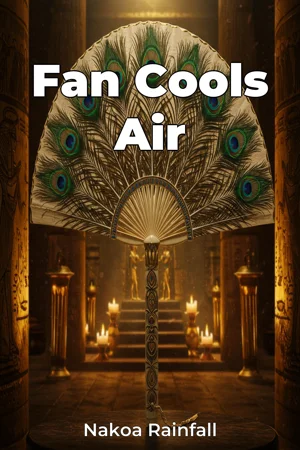
Can a simple hand fan be more than just a relic of the past? "Fan Cools Air" delves into the surprisingly long and significant history of the hand fan, tracing its evolution and effectiveness as a tool for personal cooling from as early as 3000 BCE, substantiated by historical records and scientific principles. This book bridges the disciplines of history and science to offer a comprehensive understanding of an often-overlooked technology. The central argument of "Fan Cools Air" is that the hand fan, far from being a primitive or obsolete device, represents an elegant and efficient solution for personal cooling that has persisted across millennia and cultures, grounded in sound physical principles. Its continued relevance lies not only in its historical significance but also in its potential for sustainable and energy-conscious personal climate control in the future. The book begins with a foundational exploration of the physics of evaporative cooling and convection, explaining how the movement of air across the skin facilitates heat dissipation. It then transitions into a detailed historical survey, starting with archaeological evidence of early fans in ancient civilizations such as Egypt, China, and Greece. These early chapters will establish the sociocultural significance of fans, detailing their use in religious rituals, social hierarchies, and as status symbols, relying on primary source materials like tomb paintings, historical texts, and museum artifacts. The middle portion investigates the evolution of fan design and materials, charting the progression from simple palm leaves and feathers to intricately crafted silk and paper fans. Detailed case studies of specific fan designs from different eras will illustrate how form followed function, with artisans adapting materials and construction techniques to optimize airflow and cooling efficiency. This section also explores the impact of cultural exchange on fan design, examining how trade routes and diplomatic relations led to the cross-pollination of ideas and techniques. The concluding chapters present a scientific analysis of fan performance, employing principles of thermodynamics and fluid dynamics to quantify the cooling effect of different fan designs under varying environmental conditions. This analysis will be supported by experimental data and computational fluid dynamics (CFD) simulations to provide a rigorous scientific basis for understanding how fans work. Furthermore, the book explores the potential of modern materials and manufacturing techniques to improve fan design, potentially creating more effective and sustainable cooling solutions for the future. The book’s evidence includes archaeological findings, historical documents, museum collections, and data from controlled experiments and computer simulations of fan performance. It uniquely brings together historical context with scientific analysis using CFD simulations to quantify the cooling effect, offering unique insights. "Fan Cools Air" connects to fields such as anthropology (cultural significance of fans), engineering (design optimization), and environmental science (sustainable cooling solutions). This interdisciplinary approach enhances the book’s argument by providing a holistic understanding of the hand fan. The book adopts a narrative non-fiction style, blending accessible scientific explanations with engaging historical anecdotes to create a compelling and informative reading experience. It is aimed at a broad audience, including history buffs, science enthusiasts, designers, and anyone interested in sustainable technologies. The scope of the book is intentionally limited to hand-operated fans, excluding electric fans and other powered cooling devices. This focus allows for a deeper exploration of the history, science, and cultural significance of this specific technology. The book also delves slightly into the modern applications of the basic science. The information in "Fan Cools Air" can be applied practically by readers interested in designing and creating their own fans, understanding the principles of personal cooling, or exploring sustainable alternatives to air conditioning. It also touches on energy efficiency concepts. While the effectiveness of hand fans as a primary cooling source has been debated, this book presents scientific data to support their utility, particularly in specific environmental conditions and personal preferences. “Fan Cools Air” synthesizes historical evidence with scientific analyses to provide a complete view of the history and science of the hand fan.
Can a simple hand fan be more than just a relic of the past? "Fan Cools Air" delves into the surprisingly long and significant history of the hand fan, tracing its evolution and effectiveness as a tool for personal cooling from as early as 3000 BCE, substantiated by historical records and scientific principles. This book bridges the disciplines of history and science to offer a comprehensive understanding of an often-overlooked technology. The central argument of "Fan Cools Air" is that the hand fan, far from being a primitive or obsolete device, represents an elegant and efficient solution for personal cooling that has persisted across millennia and cultures, grounded in sound physical principles. Its continued relevance lies not only in its historical significance but also in its potential for sustainable and energy-conscious personal climate control in the future. The book begins with a foundational exploration of the physics of evaporative cooling and convection, explaining how the movement of air across the skin facilitates heat dissipation. It then transitions into a detailed historical survey, starting with archaeological evidence of early fans in ancient civilizations such as Egypt, China, and Greece. These early chapters will establish the sociocultural significance of fans, detailing their use in religious rituals, social hierarchies, and as status symbols, relying on primary source materials like tomb paintings, historical texts, and museum artifacts. The middle portion investigates the evolution of fan design and materials, charting the progression from simple palm leaves and feathers to intricately crafted silk and paper fans. Detailed case studies of specific fan designs from different eras will illustrate how form followed function, with artisans adapting materials and construction techniques to optimize airflow and cooling efficiency. This section also explores the impact of cultural exchange on fan design, examining how trade routes and diplomatic relations led to the cross-pollination of ideas and techniques. The concluding chapters present a scientific analysis of fan performance, employing principles of thermodynamics and fluid dynamics to quantify the cooling effect of different fan designs under varying environmental conditions. This analysis will be supported by experimental data and computational fluid dynamics (CFD) simulations to provide a rigorous scientific basis for understanding how fans work. Furthermore, the book explores the potential of modern materials and manufacturing techniques to improve fan design, potentially creating more effective and sustainable cooling solutions for the future. The book’s evidence includes archaeological findings, historical documents, museum collections, and data from controlled experiments and computer simulations of fan performance. It uniquely brings together historical context with scientific analysis using CFD simulations to quantify the cooling effect, offering unique insights. "Fan Cools Air" connects to fields such as anthropology (cultural significance of fans), engineering (design optimization), and environmental science (sustainable cooling solutions). This interdisciplinary approach enhances the book’s argument by providing a holistic understanding of the hand fan. The book adopts a narrative non-fiction style, blending accessible scientific explanations with engaging historical anecdotes to create a compelling and informative reading experience. It is aimed at a broad audience, including history buffs, science enthusiasts, designers, and anyone interested in sustainable technologies. The scope of the book is intentionally limited to hand-operated fans, excluding electric fans and other powered cooling devices. This focus allows for a deeper exploration of the history, science, and cultural significance of this specific technology. The book also delves slightly into the modern applications of the basic science. The information in "Fan Cools Air" can be applied practically by readers interested in designing and creating their own fans, understanding the principles of personal cooling, or exploring sustainable alternatives to air conditioning. It also touches on energy efficiency concepts. While the effectiveness of hand fans as a primary cooling source has been debated, this book presents scientific data to support their utility, particularly in specific environmental conditions and personal preferences. “Fan Cools Air” synthesizes historical evidence with scientific analyses to provide a complete view of the history and science of the hand fan.
"Fan Cools Air" explores the surprisingly significant history and science behind the humble hand fan, revealing its enduring role in personal cooling across millennia. Far from being a simple object, the book argues that the hand fan represents an elegant, energy-efficient solution for climate control, dating back to ancient civilizations like Egypt and China, where fans held cultural and religious importance. The book uniquely bridges historical context with scientific analysis, enhanced with computational fluid dynamics simulations, to quantify the cooling effect. The book begins by explaining the physics of evaporative cooling and convection, then transitions into a historical survey, charting the evolution of fan design and materials from simple palm leaves to intricate silk creations. Case studies illustrate how artisans adapted designs to optimize airflow, influenced by cultural exchange and trade. One intriguing insight is how fan designs from different eras reflect a deep understanding of thermodynamics and fluid dynamics, principles that are still relevant today. In its concluding chapters, "Fan Cools Air" presents a scientific analysis of fan performance, using experimental data to support their utility. The book adopts a narrative non-fiction style, blending accessible scientific explanations with engaging historical anecdotes. It progresses from foundational physics to historical significance, then to modern applications and future potential, offering a comprehensive understanding of this often-overlooked technology and its potential for sustainable cooling.
Book Details
ISBN
9788235204981
Publisher
Publifye AS
Your Licenses
You don't own any licenses for this book
Purchase a license below to unlock this book and download the EPUB.
Purchase License
Select a tier to unlock this book
Need bulk licensing?
Contact us for enterprise agreements.