
About This Book
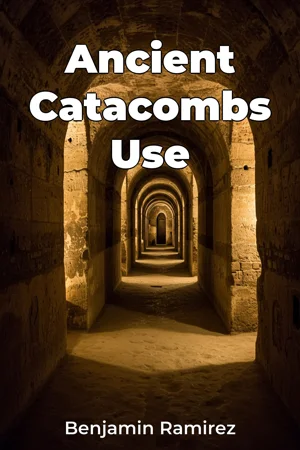
What secrets lie beneath the bustling streets of Rome? This book, "Ancient Catacombs Use," delves into the labyrinthine world of Rome's underground burial sites, exploring their architectural significance and their profound role in shaping early Christian society and Roman culture more broadly. We will explore two key areas: the architectural evolution of the catacombs and their function as vital communal spaces. Understanding these aspects sheds light on the development of early Christian artistic expression and the evolution of burial practices in antiquity. A foundational understanding of Roman history and basic architectural principles will be beneficial, though not essential, for navigating the book's content. The central argument of "Ancient Catacombs Use" posits that the Roman catacombs were not merely places of burial, but dynamic, evolving spaces that reflected and influenced the social, religious, and artistic developments of early Christian communities within the wider Roman Empire. This argument challenges the notion of catacombs as simply hidden, secretive places and reasserts their importance as centers of community life and artistic innovation. The book begins by introducing the origins and development of early burial practices in Rome, contrasting pagan traditions with the rise of Christian catacombs. This initial section provides context for understanding the social pressures and religious beliefs that led to the creation of these subterranean networks. The core of the book is divided into three sections. The first examines the architectural design and construction techniques employed in building the catacombs, analyzing the use of space, the layout of tombs, and the integration of decorative elements. Emphasis is placed on the evolution of these features over time. The second segment details the social functions of the catacombs. It analyzes the evidence of communal meals, religious ceremonies, and artistic programs within the catacombs. Special attention is given to the different roles of the people who built, maintained, and used the catacombs, which includes examining epitaphs and other inscriptions. The final segment considers the development of early Christian art within the catacombs, analyzing the iconography, style, and subject matter of frescoes and sculptures. This includes discussions of the symbols and narratives prevalent in catacomb art and their significance in expressing early Christian beliefs. The book concludes by considering the legacy of the catacombs and their impact on later Christian art, architecture, and social practices, and how they are interpreted today. The research presented draws upon extensive archaeological evidence, including detailed surveys of catacomb architecture, analysis of inscriptions and epitaphs, and examination of artistic programs. Furthermore, the book integrates historical accounts from early Christian texts and Roman sources to provide a comprehensive understanding of the catacombs’ sociopolitical context. "Ancient Catacombs Use" connects to several disciplines, including archaeology, art history, and religious studies. By examining material culture alongside historical and theological perspectives, it offers a holistic view of the catacombs' significance. This book offers a unique interdisciplinary approach, combining architectural analysis with social and religious history to provide a nuanced understanding of the catacombs. This approach challenges traditional interpretations that focus solely on the catacombs as places of burial and instead emphasizes their multifaceted role in shaping early Christian society. Written in an accessible yet scholarly style, this book is intended for students, researchers, and anyone interested in Roman history, early Christian art and architecture, and the intersection of religion and society. It will provide valuable insights into the daily lives, beliefs, and artistic expressions of early Christians, and their influence on the development of Christianity. In line with expectations for academic non-fiction in the genres of history and architecture, the book presents a rigorous analysis of the material, supported by extensive research and clear argumentation. The scope of the book is limited to the catacombs of Rome, with a focus on the period from the 2nd to the 5th centuries AD. The book addresses the ongoing debates surrounding the interpretation of Christian symbols in the catacombs and the extent to which they reflect specific theological doctrines. It provides new perspectives on these debates by considering the architectural context of the art and the social functions of the catacombs in relation to these symbols.
What secrets lie beneath the bustling streets of Rome? This book, "Ancient Catacombs Use," delves into the labyrinthine world of Rome's underground burial sites, exploring their architectural significance and their profound role in shaping early Christian society and Roman culture more broadly. We will explore two key areas: the architectural evolution of the catacombs and their function as vital communal spaces. Understanding these aspects sheds light on the development of early Christian artistic expression and the evolution of burial practices in antiquity. A foundational understanding of Roman history and basic architectural principles will be beneficial, though not essential, for navigating the book's content. The central argument of "Ancient Catacombs Use" posits that the Roman catacombs were not merely places of burial, but dynamic, evolving spaces that reflected and influenced the social, religious, and artistic developments of early Christian communities within the wider Roman Empire. This argument challenges the notion of catacombs as simply hidden, secretive places and reasserts their importance as centers of community life and artistic innovation. The book begins by introducing the origins and development of early burial practices in Rome, contrasting pagan traditions with the rise of Christian catacombs. This initial section provides context for understanding the social pressures and religious beliefs that led to the creation of these subterranean networks. The core of the book is divided into three sections. The first examines the architectural design and construction techniques employed in building the catacombs, analyzing the use of space, the layout of tombs, and the integration of decorative elements. Emphasis is placed on the evolution of these features over time. The second segment details the social functions of the catacombs. It analyzes the evidence of communal meals, religious ceremonies, and artistic programs within the catacombs. Special attention is given to the different roles of the people who built, maintained, and used the catacombs, which includes examining epitaphs and other inscriptions. The final segment considers the development of early Christian art within the catacombs, analyzing the iconography, style, and subject matter of frescoes and sculptures. This includes discussions of the symbols and narratives prevalent in catacomb art and their significance in expressing early Christian beliefs. The book concludes by considering the legacy of the catacombs and their impact on later Christian art, architecture, and social practices, and how they are interpreted today. The research presented draws upon extensive archaeological evidence, including detailed surveys of catacomb architecture, analysis of inscriptions and epitaphs, and examination of artistic programs. Furthermore, the book integrates historical accounts from early Christian texts and Roman sources to provide a comprehensive understanding of the catacombs’ sociopolitical context. "Ancient Catacombs Use" connects to several disciplines, including archaeology, art history, and religious studies. By examining material culture alongside historical and theological perspectives, it offers a holistic view of the catacombs' significance. This book offers a unique interdisciplinary approach, combining architectural analysis with social and religious history to provide a nuanced understanding of the catacombs. This approach challenges traditional interpretations that focus solely on the catacombs as places of burial and instead emphasizes their multifaceted role in shaping early Christian society. Written in an accessible yet scholarly style, this book is intended for students, researchers, and anyone interested in Roman history, early Christian art and architecture, and the intersection of religion and society. It will provide valuable insights into the daily lives, beliefs, and artistic expressions of early Christians, and their influence on the development of Christianity. In line with expectations for academic non-fiction in the genres of history and architecture, the book presents a rigorous analysis of the material, supported by extensive research and clear argumentation. The scope of the book is limited to the catacombs of Rome, with a focus on the period from the 2nd to the 5th centuries AD. The book addresses the ongoing debates surrounding the interpretation of Christian symbols in the catacombs and the extent to which they reflect specific theological doctrines. It provides new perspectives on these debates by considering the architectural context of the art and the social functions of the catacombs in relation to these symbols.
"Ancient Catacombs Use" explores the fascinating world beneath Rome, revealing how these subterranean burial sites shaped early Christian society and Roman culture. Far from being mere cemeteries, the Roman catacombs served as dynamic communal spaces where early Christians gathered, worshiped, and expressed their faith through unique forms of art. The book delves into the architecture of these spaces, highlighting how their design evolved over time to accommodate growing communities and reflect changing religious practices. The book uniquely combines architectural analysis with social and religious history, challenging traditional views of catacombs as simply burial sites. Discover how catacomb art, including frescoes and sculptures, provides insights into early Christian beliefs and the development of Christian symbols. Examining archaeological evidence, inscriptions, and historical accounts, the book progresses from the origins of Roman burial practices to the architectural design and social functions of the catacombs. Finally, the book analyzes the development of early Christian art within the catacombs. It concludes by considering their legacy and impact on later Christian art, architecture, and social practices, and how they are interpreted today. This interdisciplinary approach sheds light on the daily lives, beliefs, and artistic expressions of early Christians, making it a valuable resource for anyone interested in Roman history, early Christian art, and the intersection of religion and society.
Book Details
ISBN
9788235204844
Publisher
Publifye AS
Your Licenses
You don't own any licenses for this book
Purchase a license below to unlock this book and download the EPUB.
Purchase License
Select a tier to unlock this book
Need bulk licensing?
Contact us for enterprise agreements.