
About This Book
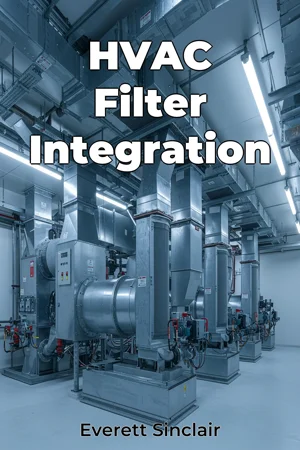
How can buildings breathe cleaner and more efficiently? This is the central question explored in HVAC Filter Integration, a comprehensive examination of optimizing central air systems, navigating filter compatibility standards, and implementing whole-building purification strategies. This book addresses the escalating need for improved indoor air quality (IAQ) in residential, commercial, and industrial buildings, driven by increased awareness of airborne contaminants and their impact on health and well-being. The core concept revolves around a holistic approach to HVAC filtration, moving beyond basic filter replacements to encompass system-wide integration and advanced purification technologies. The book’s primary argument is that effective IAQ management requires a unified strategy, combining appropriate filter selection, optimized system design, and comprehensive maintenance protocols. Poor IAQ impacts occupant health, reduces productivity, and increases energy consumption. Therefore, understanding the intricacies of filter technology and their seamless integration into existing and new HVAC systems is an important consideration for architects, engineers, and building managers. HVAC Filter Integration begins by establishing a foundational understanding of air filtration principles, outlining various filter types (e.g., MERV, HEPA, activated carbon) and their respective capabilities in capturing particulate matter, volatile organic compounds (VOCs), and biological contaminants. It builds upon these principles in subsequent chapters. The book examines the nuances of filter compatibility, particularly the constraints imposed by existing HVAC system designs. Practical guidance on selecting appropriate filters based on system specifications, airflow dynamics, and desired IAQ levels, are discussed. It explores the historical evolution of filter standards (ASHRAE, ISO) and their implications for filter performance and regulatory compliance. The core of the book delves into whole-building purification approaches, evaluating the effectiveness of technologies such as UV-C irradiation, electrostatic precipitation, and photocatalytic oxidation in improving IAQ. Case studies of real-world implementations of HVAC filter integration in diverse building types (hospitals, schools, office buildings) are presented, illustrating the practical benefits and challenges of different approaches. It culminates by addressing ongoing debates surrounding filter performance metrics, energy efficiency, and the long-term sustainability of different filtration strategies. Evidence presented throughout the book is derived from a combination of laboratory testing data, field studies, and manufacturer specifications. Unique data sources include comparative analyses of filter performance under varying environmental conditions and longitudinal studies of IAQ improvements following HVAC system upgrades. Methodologies employed include computational fluid dynamics (CFD) modeling to simulate airflow patterns and contaminant dispersion within buildings. The book establishes interdisciplinary connections between technology, architecture, and public health. It draws upon principles of mechanical engineering to understand HVAC system design, architectural considerations for building envelope and ventilation, and public health research on the impact of IAQ on human health. These connections enhance the book's argument by providing a holistic understanding of the factors that influence IAQ and the interconnectedness of building systems. HVAC Filter Integration adopts a practical and informative tone. It is geared toward architects seeking sustainable building designs, mechanical engineers involved in HVAC system design and installation, and building managers responsible for maintaining optimal IAQ. It provides actionable insights and practical guidance that can be applied in real-world scenarios. The book acknowledges the limitations of existing filtration technologies. It addresses the uncertainties surrounding the long-term effectiveness and environmental impact of certain purification methods. It emphasizes the importance of continuous monitoring and adaptive maintenance strategies to ensure optimal IAQ. The book also touches upon controversies surrounding filter marketing claims and the lack of standardized testing protocols for certain filtration technologies.
How can buildings breathe cleaner and more efficiently? This is the central question explored in HVAC Filter Integration, a comprehensive examination of optimizing central air systems, navigating filter compatibility standards, and implementing whole-building purification strategies. This book addresses the escalating need for improved indoor air quality (IAQ) in residential, commercial, and industrial buildings, driven by increased awareness of airborne contaminants and their impact on health and well-being. The core concept revolves around a holistic approach to HVAC filtration, moving beyond basic filter replacements to encompass system-wide integration and advanced purification technologies. The book’s primary argument is that effective IAQ management requires a unified strategy, combining appropriate filter selection, optimized system design, and comprehensive maintenance protocols. Poor IAQ impacts occupant health, reduces productivity, and increases energy consumption. Therefore, understanding the intricacies of filter technology and their seamless integration into existing and new HVAC systems is an important consideration for architects, engineers, and building managers. HVAC Filter Integration begins by establishing a foundational understanding of air filtration principles, outlining various filter types (e.g., MERV, HEPA, activated carbon) and their respective capabilities in capturing particulate matter, volatile organic compounds (VOCs), and biological contaminants. It builds upon these principles in subsequent chapters. The book examines the nuances of filter compatibility, particularly the constraints imposed by existing HVAC system designs. Practical guidance on selecting appropriate filters based on system specifications, airflow dynamics, and desired IAQ levels, are discussed. It explores the historical evolution of filter standards (ASHRAE, ISO) and their implications for filter performance and regulatory compliance. The core of the book delves into whole-building purification approaches, evaluating the effectiveness of technologies such as UV-C irradiation, electrostatic precipitation, and photocatalytic oxidation in improving IAQ. Case studies of real-world implementations of HVAC filter integration in diverse building types (hospitals, schools, office buildings) are presented, illustrating the practical benefits and challenges of different approaches. It culminates by addressing ongoing debates surrounding filter performance metrics, energy efficiency, and the long-term sustainability of different filtration strategies. Evidence presented throughout the book is derived from a combination of laboratory testing data, field studies, and manufacturer specifications. Unique data sources include comparative analyses of filter performance under varying environmental conditions and longitudinal studies of IAQ improvements following HVAC system upgrades. Methodologies employed include computational fluid dynamics (CFD) modeling to simulate airflow patterns and contaminant dispersion within buildings. The book establishes interdisciplinary connections between technology, architecture, and public health. It draws upon principles of mechanical engineering to understand HVAC system design, architectural considerations for building envelope and ventilation, and public health research on the impact of IAQ on human health. These connections enhance the book's argument by providing a holistic understanding of the factors that influence IAQ and the interconnectedness of building systems. HVAC Filter Integration adopts a practical and informative tone. It is geared toward architects seeking sustainable building designs, mechanical engineers involved in HVAC system design and installation, and building managers responsible for maintaining optimal IAQ. It provides actionable insights and practical guidance that can be applied in real-world scenarios. The book acknowledges the limitations of existing filtration technologies. It addresses the uncertainties surrounding the long-term effectiveness and environmental impact of certain purification methods. It emphasizes the importance of continuous monitoring and adaptive maintenance strategies to ensure optimal IAQ. The book also touches upon controversies surrounding filter marketing claims and the lack of standardized testing protocols for certain filtration technologies.
"HVAC Filter Integration" addresses the critical need for improved indoor air quality (IAQ) in buildings. It emphasizes a holistic approach to HVAC filtration, advocating for system-wide integration and advanced purification technologies beyond simple filter replacements. This book highlights how poor IAQ can negatively impact occupant health, reduce productivity, and increase energy consumption. Understanding filter technology and its integration becomes vital for architects, engineers, and building managers. The book progresses from foundational air filtration principles, explaining filter types like MERV and HEPA, to examining filter compatibility with existing HVAC systems. It explores standards like ASHRAE and delves into whole-building purification methods, such as UV-C irradiation. Case studies illustrate real-world implementations in hospitals, schools, and offices. The information is presented in a practical and informative tone, making it a valuable resource for professionals aiming to design sustainable buildings and maintain optimal IAQ.
Book Details
ISBN
9788235204806
Publisher
Publifye AS
Your Licenses
You don't own any licenses for this book
Purchase a license below to unlock this book and download the EPUB.
Purchase License
Select a tier to unlock this book
Need bulk licensing?
Contact us for enterprise agreements.