
About This Book
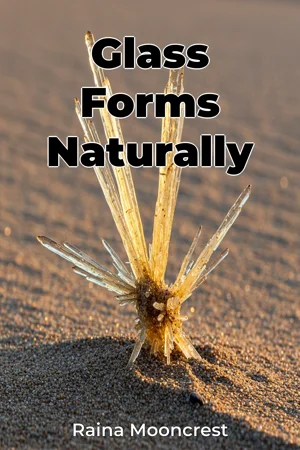
Have you ever wondered what happens when lightning strikes sand? 'Glass Forms Naturally' explores the fascinating world of fulgurites, the glassy tubes created when lightning discharges into sandy soils. This book delves into the science, formation, and significance of these natural wonders, offering a comprehensive look at a unique geological phenomenon. We will examine several key topics, primarily, the conditions necessary for fulgurite formation, including soil composition, moisture content, and lightning strike characteristics. Understanding these factors is crucial for predicting where fulgurites might be found and interpreting their structure. Second, the book explores the morphology of fulgurites, analyzing their shapes, sizes, and internal structures to understand the dynamics of the lightning strike. Finally, we investigate the chemical and physical properties of fulgurite glass, revealing insights into the extreme temperatures and rapid cooling involved in their creation. These topics are important because they provide a window into the power of natural forces and the geological processes that shape our planet. Historically, fulgurites have been viewed with a mixture of awe and superstition. Early discoveries were often attributed to divine intervention, but with the rise of modern science, researchers began to unravel the mysteries behind their formation. This book builds upon decades of scientific research, providing a synthesis of current knowledge and highlighting areas for future exploration. No detailed prerequisite knowledge is needed; the book begins with basic concepts in geology and physics and gradually builds to more complex topics. The central argument of 'Glass Forms Naturally' is that fulgurites are more than just curiosities; they are valuable archives of past lightning activity and environmental conditions. By studying their characteristics, we can gain insights into the frequency and intensity of lightning strikes over time, as well as the composition and properties of the soils in which they formed. This argument is significant because it highlights the potential of fulgurites as a tool for understanding climate change, geological history, and the impact of extreme weather events. The book is structured to guide the reader through a logical progression of topics. Initially, we introduce the basic concepts of lightning, soil science, and glass formation. We then delve into the details of fulgurite formation, examining the role of various factors such as soil type, moisture content, and lightning strike parameters. The core of the book involves the analysis of fulgurite morphology and composition, presenting detailed case studies and research findings. Finally, the book culminates in a discussion of the applications of fulgurite research, including their use as paleoenvironmental indicators and their potential for technological applications. The evidence presented in 'Glass Forms Naturally' is drawn from a variety of sources, including field studies, laboratory experiments, and computer simulations. We analyze data from previously published research and includes original data collected from diverse locations. Unique data sources include microscopic analyses of fulgurite glass and geochemical analyses of soil samples. This book connects to several other fields, including atmospheric science, archaeology, and materials science. By studying fulgurites, atmospheric scientists can improve their understanding of lightning behavior and its impact on the environment. Archaeologists can use fulgurites to date ancient lightning strikes and reconstruct past landscapes. Materials scientists can draw inspiration from the unique properties of fulgurite glass to develop new materials. What sets this book apart is its comprehensive approach to the study of fulgurites. It combines geological, physical, and chemical perspectives to provide a holistic understanding of these natural glasses. The book also emphasizes the practical applications of fulgurite research, demonstrating their relevance to a wide range of scientific disciplines. The tone is informative and accessible, suitable for anyone with an interest in natural phenomena. The writing style is clear and concise, avoiding jargon and technical terms wherever possible. Visual aids such as photographs, diagrams, and maps are used throughout the book. The target audience includes students, researchers, and enthusiasts in the fields of geology, environmental science, earth science geography, and archaeology. This book would be valuable to them because it provides a comprehensive overview of fulgurite science, highlighting current research and future directions. As a non-fiction work in the earth sciences, this book adheres to the conventions of scientific accuracy, objectivity, and rigorous analysis. All claims are supported by evidence, and sources are properly cited. The book is thoroughly peer-reviewed to ensure accuracy and credibility. The scope of the book is limited to the study of fulgurites formed in sandy soils. It does not address fulgurites formed in rocks or other materials. The book also focuses primarily on the scientific aspects of fulgurites, rather than their cultural or spiritual significance. This limitation allows us to delve deeply into the specific processes involved in the creation of these particular fulgurites. The information in this book can be applied in numerous practical ways. Geologists can use fulgurites to map past lightning activity and assess the risk of future strikes. Environmental scientists can use them to monitor soil erosion and pollution. Materials scientists can use them as models for creating new types of glass. While the science behind fulgurite formation is well-established, there are some ongoing debates regarding the precise mechanisms involved. For example, some researchers argue that the composition of fulgurite glass is primarily determined by the soil composition, while others believe that the lightning itself plays a more significant role. These debates are discussed in the book, with evidence presented from both sides.
Have you ever wondered what happens when lightning strikes sand? 'Glass Forms Naturally' explores the fascinating world of fulgurites, the glassy tubes created when lightning discharges into sandy soils. This book delves into the science, formation, and significance of these natural wonders, offering a comprehensive look at a unique geological phenomenon. We will examine several key topics, primarily, the conditions necessary for fulgurite formation, including soil composition, moisture content, and lightning strike characteristics. Understanding these factors is crucial for predicting where fulgurites might be found and interpreting their structure. Second, the book explores the morphology of fulgurites, analyzing their shapes, sizes, and internal structures to understand the dynamics of the lightning strike. Finally, we investigate the chemical and physical properties of fulgurite glass, revealing insights into the extreme temperatures and rapid cooling involved in their creation. These topics are important because they provide a window into the power of natural forces and the geological processes that shape our planet. Historically, fulgurites have been viewed with a mixture of awe and superstition. Early discoveries were often attributed to divine intervention, but with the rise of modern science, researchers began to unravel the mysteries behind their formation. This book builds upon decades of scientific research, providing a synthesis of current knowledge and highlighting areas for future exploration. No detailed prerequisite knowledge is needed; the book begins with basic concepts in geology and physics and gradually builds to more complex topics. The central argument of 'Glass Forms Naturally' is that fulgurites are more than just curiosities; they are valuable archives of past lightning activity and environmental conditions. By studying their characteristics, we can gain insights into the frequency and intensity of lightning strikes over time, as well as the composition and properties of the soils in which they formed. This argument is significant because it highlights the potential of fulgurites as a tool for understanding climate change, geological history, and the impact of extreme weather events. The book is structured to guide the reader through a logical progression of topics. Initially, we introduce the basic concepts of lightning, soil science, and glass formation. We then delve into the details of fulgurite formation, examining the role of various factors such as soil type, moisture content, and lightning strike parameters. The core of the book involves the analysis of fulgurite morphology and composition, presenting detailed case studies and research findings. Finally, the book culminates in a discussion of the applications of fulgurite research, including their use as paleoenvironmental indicators and their potential for technological applications. The evidence presented in 'Glass Forms Naturally' is drawn from a variety of sources, including field studies, laboratory experiments, and computer simulations. We analyze data from previously published research and includes original data collected from diverse locations. Unique data sources include microscopic analyses of fulgurite glass and geochemical analyses of soil samples. This book connects to several other fields, including atmospheric science, archaeology, and materials science. By studying fulgurites, atmospheric scientists can improve their understanding of lightning behavior and its impact on the environment. Archaeologists can use fulgurites to date ancient lightning strikes and reconstruct past landscapes. Materials scientists can draw inspiration from the unique properties of fulgurite glass to develop new materials. What sets this book apart is its comprehensive approach to the study of fulgurites. It combines geological, physical, and chemical perspectives to provide a holistic understanding of these natural glasses. The book also emphasizes the practical applications of fulgurite research, demonstrating their relevance to a wide range of scientific disciplines. The tone is informative and accessible, suitable for anyone with an interest in natural phenomena. The writing style is clear and concise, avoiding jargon and technical terms wherever possible. Visual aids such as photographs, diagrams, and maps are used throughout the book. The target audience includes students, researchers, and enthusiasts in the fields of geology, environmental science, earth science geography, and archaeology. This book would be valuable to them because it provides a comprehensive overview of fulgurite science, highlighting current research and future directions. As a non-fiction work in the earth sciences, this book adheres to the conventions of scientific accuracy, objectivity, and rigorous analysis. All claims are supported by evidence, and sources are properly cited. The book is thoroughly peer-reviewed to ensure accuracy and credibility. The scope of the book is limited to the study of fulgurites formed in sandy soils. It does not address fulgurites formed in rocks or other materials. The book also focuses primarily on the scientific aspects of fulgurites, rather than their cultural or spiritual significance. This limitation allows us to delve deeply into the specific processes involved in the creation of these particular fulgurites. The information in this book can be applied in numerous practical ways. Geologists can use fulgurites to map past lightning activity and assess the risk of future strikes. Environmental scientists can use them to monitor soil erosion and pollution. Materials scientists can use them as models for creating new types of glass. While the science behind fulgurite formation is well-established, there are some ongoing debates regarding the precise mechanisms involved. For example, some researchers argue that the composition of fulgurite glass is primarily determined by the soil composition, while others believe that the lightning itself plays a more significant role. These debates are discussed in the book, with evidence presented from both sides.
"Glass Forms Naturally" explores the fascinating geological phenomenon of fulgurites, the glassy formations created when lightning strikes sandy soils. These natural glasses offer a unique window into the power of lightning and the composition of the earth. Intriguingly, the book reveals how the moisture content and specific characteristics of lightning strikes play a crucial role in fulgurite formation. Understanding these factors helps scientists predict where fulgurites might be found and interpret their unique structures. The book progresses logically, starting with basic concepts in geology and physics, and gradually building to more complex topics like fulgurite morphology and chemical properties. It examines the history of fulgurite research, combining geological, physical, and chemical perspectives. This approach highlights the practical applications of fulgurite research, such as their use as paleoenvironmental indicators, providing valuable insights into climate change, geological history, and the impact of extreme weather events.
Book Details
ISBN
9788235204776
Publisher
Publifye AS
Your Licenses
You don't own any licenses for this book
Purchase a license below to unlock this book and download the EPUB.
Purchase License
Select a tier to unlock this book
Need bulk licensing?
Contact us for enterprise agreements.