
About This Book
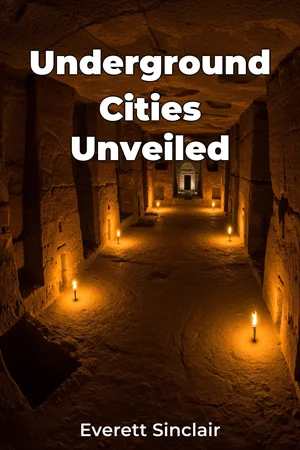
Have you ever wondered what drove entire communities to vanish beneath the surface, carving out existence in the heart of the earth? "Underground Cities Unveiled" delves into the fascinating world of subterranean settlements, examining their construction, purpose, and lasting impact on history and culture. This book explores the practical and symbolic significance of these hidden metropolises, revealing how they served as sanctuaries, strategic strongholds, and testaments to human resilience. This book centers on three core themes: the architectural ingenuity required to construct and sustain these subterranean environments, the socio-political conditions that necessitated their creation, and the enduring legacy they hold as unique cultural and historical landmarks. These themes are crucial for understanding not just the history of architecture, but also the lengths to which societies have gone to ensure their survival and protect their way of life. To fully appreciate the scope of these underground undertakings, the book provides a historical context that spans from ancient times to the modern era. It examines the geological factors that made certain locations suitable for subterranean construction, as well as the technological limitations and innovations that shaped their design. Readers will gain an understanding of basic architectural principles and historical timelines relevant to each site discussed. The central argument of "Underground Cities Unveiled" is that these subterranean complexes represent more than just architectural feats; they are profound expressions of human adaptability and communal solidarity in the face of adversity. Through meticulous research and detailed analysis, the book demonstrates how these underground cities provided refuge during times of war, persecution, and environmental upheaval, fostering unique social structures and cultural practices. The book is structured to guide the reader through a comprehensive exploration of these fascinating sites. It begins with an introduction to the concept of underground urbanism, outlining the various motivations for its development across different cultures. The subsequent sections are organized around geographical regions and historical periods, with dedicated chapters focusing on prominent examples such as Derinkuyu in Turkey, the catacombs of Rome, and the underground cities of China. Each chapter offers a detailed examination of the site's architecture, history, and social context. The culminating chapters synthesize these individual case studies, drawing broader conclusions about the role of underground cities in human history and their relevance to contemporary urban planning and disaster preparedness. The evidence presented in "Underground Cities Unveiled" is drawn from a variety of sources, including archaeological reports, historical documents, architectural plans, and geological surveys. The book incorporates primary source material whenever possible, providing readers with direct access to the voices and perspectives of those who lived in or studied these underground settlements. This exploration of underground cities naturally intersects with several other fields of study, including archaeology, sociology, and political science. The architectural designs of these cities offer valuable insights into the engineering capabilities and aesthetic preferences of past civilizations. Their social structures provide a window into how communities organized themselves in times of crisis. Their strategic importance sheds light on the political dynamics of the regions in which they were located. "Underground Cities Unveiled" takes a multidisciplinary approach, combining architectural analysis with historical and anthropological perspectives to offer a holistic understanding of these subterranean worlds. The book avoids speculative interpretations, instead relying on verifiable data and scholarly analysis to present a balanced and objective account. The writing style is accessible and engaging, designed to appeal to a broad audience of readers interested in history, architecture, and cultural studies. While maintaining scholarly rigor, the book avoids technical jargon and presents complex information in a clear and concise manner. The target audience includes students, researchers, and general readers with an interest in history, archaeology, and architecture. The book offers valuable insights for urban planners and policymakers seeking to develop more resilient and sustainable cities. As a work of non-fiction, "Underground Cities Unveiled" adheres to the highest standards of accuracy and objectivity. All claims are supported by evidence, and sources are cited properly. The book's scope is limited to subterranean settlements that were intentionally constructed for habitation or refuge. It does not cover naturally occurring caves or underground formations. The knowledge gained from studying these historical examples has practical applications in the modern world. As cities face increasing threats from climate change, natural disasters, and political instability, the lessons learned from underground urbanism can inform strategies for creating safer and more resilient communities. While there is general agreement on the historical significance of underground cities, debates continue regarding their precise dating, construction methods, and social organization. "Underground Cities Unveiled" addresses these controversies by presenting different perspectives and offering balanced assessments of the available evidence.
Have you ever wondered what drove entire communities to vanish beneath the surface, carving out existence in the heart of the earth? "Underground Cities Unveiled" delves into the fascinating world of subterranean settlements, examining their construction, purpose, and lasting impact on history and culture. This book explores the practical and symbolic significance of these hidden metropolises, revealing how they served as sanctuaries, strategic strongholds, and testaments to human resilience. This book centers on three core themes: the architectural ingenuity required to construct and sustain these subterranean environments, the socio-political conditions that necessitated their creation, and the enduring legacy they hold as unique cultural and historical landmarks. These themes are crucial for understanding not just the history of architecture, but also the lengths to which societies have gone to ensure their survival and protect their way of life. To fully appreciate the scope of these underground undertakings, the book provides a historical context that spans from ancient times to the modern era. It examines the geological factors that made certain locations suitable for subterranean construction, as well as the technological limitations and innovations that shaped their design. Readers will gain an understanding of basic architectural principles and historical timelines relevant to each site discussed. The central argument of "Underground Cities Unveiled" is that these subterranean complexes represent more than just architectural feats; they are profound expressions of human adaptability and communal solidarity in the face of adversity. Through meticulous research and detailed analysis, the book demonstrates how these underground cities provided refuge during times of war, persecution, and environmental upheaval, fostering unique social structures and cultural practices. The book is structured to guide the reader through a comprehensive exploration of these fascinating sites. It begins with an introduction to the concept of underground urbanism, outlining the various motivations for its development across different cultures. The subsequent sections are organized around geographical regions and historical periods, with dedicated chapters focusing on prominent examples such as Derinkuyu in Turkey, the catacombs of Rome, and the underground cities of China. Each chapter offers a detailed examination of the site's architecture, history, and social context. The culminating chapters synthesize these individual case studies, drawing broader conclusions about the role of underground cities in human history and their relevance to contemporary urban planning and disaster preparedness. The evidence presented in "Underground Cities Unveiled" is drawn from a variety of sources, including archaeological reports, historical documents, architectural plans, and geological surveys. The book incorporates primary source material whenever possible, providing readers with direct access to the voices and perspectives of those who lived in or studied these underground settlements. This exploration of underground cities naturally intersects with several other fields of study, including archaeology, sociology, and political science. The architectural designs of these cities offer valuable insights into the engineering capabilities and aesthetic preferences of past civilizations. Their social structures provide a window into how communities organized themselves in times of crisis. Their strategic importance sheds light on the political dynamics of the regions in which they were located. "Underground Cities Unveiled" takes a multidisciplinary approach, combining architectural analysis with historical and anthropological perspectives to offer a holistic understanding of these subterranean worlds. The book avoids speculative interpretations, instead relying on verifiable data and scholarly analysis to present a balanced and objective account. The writing style is accessible and engaging, designed to appeal to a broad audience of readers interested in history, architecture, and cultural studies. While maintaining scholarly rigor, the book avoids technical jargon and presents complex information in a clear and concise manner. The target audience includes students, researchers, and general readers with an interest in history, archaeology, and architecture. The book offers valuable insights for urban planners and policymakers seeking to develop more resilient and sustainable cities. As a work of non-fiction, "Underground Cities Unveiled" adheres to the highest standards of accuracy and objectivity. All claims are supported by evidence, and sources are cited properly. The book's scope is limited to subterranean settlements that were intentionally constructed for habitation or refuge. It does not cover naturally occurring caves or underground formations. The knowledge gained from studying these historical examples has practical applications in the modern world. As cities face increasing threats from climate change, natural disasters, and political instability, the lessons learned from underground urbanism can inform strategies for creating safer and more resilient communities. While there is general agreement on the historical significance of underground cities, debates continue regarding their precise dating, construction methods, and social organization. "Underground Cities Unveiled" addresses these controversies by presenting different perspectives and offering balanced assessments of the available evidence.
"Underground Cities Unveiled" explores the hidden world of subterranean settlements, revealing how cultures across the globe adapted to adversity by creating entire cities beneath the earth. These underground metropolises, such as Derinkuyu in Turkey and the catacombs of Rome, served as more than just shelters; they were testaments to human resilience and architectural ingenuity. From ancient times to more recent history, societies faced with war, persecution, or environmental challenges sought refuge underground, developing unique social structures and urban planning strategies. The book examines the architecture and history of these subterranean spaces, detailing how they were constructed and used. It emphasizes the socio-political conditions that prompted their creation, as well as their lasting cultural impact. By examining sites across geographical regions and historical periods, the book uncovers the practical and symbolic significance of these urban centers. The book progresses by introducing the concept of underground settlements, then moves to geographical regions, ending with a synthesis of the role of these cities in human history. The book's value lies in its multidisciplinary approach, combining architectural analysis with historical and anthropological perspectives to provide a comprehensive understanding of these subterranean worlds. It highlights how these underground cities represent profound expressions of human adaptability and communal solidarity. The book takes a structured approach, guiding the reader through an exploration of these sites and drawing broader conclusions about their relevance to contemporary urban planning and disaster preparedness.
Book Details
ISBN
9788235204653
Publisher
Publifye AS
Your Licenses
You don't own any licenses for this book
Purchase a license below to unlock this book and download the EPUB.
Purchase License
Select a tier to unlock this book
Need bulk licensing?
Contact us for enterprise agreements.