
About This Book
Imagine standing on a planet where the sun appears more than twice as large as it does on Earth, and temperatures swing from scorching hot to bitterly cold in a matter of hours. This is the reality of Mercury, the innermost planet of our solar system, a world of extremes that presents unique challenges and fascinating scientific enigmas. "Mercury's Scorched Surface" delves into the harsh conditions and dramatic landscapes of this often-overlooked planet, revealing its secrets through the latest research and data. This book explores three key areas: the extreme temperature variations on Mercury, the planet’s unique terrain and geological features, and the ongoing scientific efforts to understand its formation and evolution. These topics are crucial because Mercury's proximity to the Sun and its unusual composition provide valuable insights into the processes that shape planetary bodies throughout the universe. Understanding Mercury can help us better comprehend the formation and evolution of our own planet and other rocky planets both within and beyond our solar system. Mercury’s story begins billions of years ago, shortly after the formation of the solar system. Its high density and relatively large iron core have puzzled scientists for decades, leading to various theories about its origin and evolution. We will examine these theories, considering the historical context of planetary science and the challenges of observing a planet so close to the sun. Readers should have a basic understanding of planetary science concepts, such as planetary formation and geological processes. The central argument of "Mercury's Scorched Surface" is that Mercury, despite its seemingly inhospitable environment, holds vital clues to understanding the fundamental processes that shape rocky planets. By examining its extreme temperature ranges, unique terrain, and magnetic field, we can gain critical insights into the dynamics of planetary evolution. This argument is important because it highlights the value of Mercury as a natural laboratory for studying planetary processes that may be applicable to other planets, including Earth. The book begins by introducing the basic characteristics of Mercury, including its orbit, size, and composition. It then develops the idea of extreme temperatures in the second section, exploring the causes and effects of the massive temperature swings between the day and night sides of the planet. The third section details the planet's surface features, such as impact craters, smooth plains, and the unusual "hollows." The book culminates by discussing the ongoing scientific research and future missions aimed at unlocking the remaining mysteries of Mercury. Practical applications of this knowledge include informing our understanding of how planets respond to extreme environmental conditions and improving our ability to predict the long-term evolution of planetary surfaces. The evidence presented in this book will draw heavily from data collected by NASA's MESSENGER mission and the ESA/JAXA BepiColombo mission, along with ground-based observations and theoretical modeling. Unique data sources include high-resolution images of Mercury's surface, measurements of its magnetic field, and spectroscopic analyses of its composition. "Mercury's Scorched Surface" connects to several other fields of study, including astrophysics (understanding star-planet interactions), geology (studying planetary surface processes), and planetary science (investigating the formation and evolution of planets). These connections enhance the book's argument by providing a broader context for understanding Mercury within the larger framework of planetary science. This book adopts a fact-based, non-fiction writing style. The intention is to present complex scientific information in a clear and accessible manner. The target audience includes students, researchers, and anyone interested in planetary science and space exploration. This book would be valuable because it provides a comprehensive and up-to-date overview of our current understanding of Mercury. As a work of science and Earth sciences geography, one expects this book to present verifiable information, unbiased analysis, and rigorous scientific referencing. The scope of the book is limited to Mercury itself, with only brief references to other planets for comparative purposes. This focus allows for a more in-depth exploration of Mercury's unique characteristics. The information in this book can be applied to understanding planetary formation and evolution in general, as well as to interpreting data from future missions to Mercury and other rocky planets. Ongoing debates in the field, such as the origin of Mercury's magnetic field and the formation of its hollows, will be addressed, presenting different viewpoints and the evidence supporting each.
Imagine standing on a planet where the sun appears more than twice as large as it does on Earth, and temperatures swing from scorching hot to bitterly cold in a matter of hours. This is the reality of Mercury, the innermost planet of our solar system, a world of extremes that presents unique challenges and fascinating scientific enigmas. "Mercury's Scorched Surface" delves into the harsh conditions and dramatic landscapes of this often-overlooked planet, revealing its secrets through the latest research and data. This book explores three key areas: the extreme temperature variations on Mercury, the planet’s unique terrain and geological features, and the ongoing scientific efforts to understand its formation and evolution. These topics are crucial because Mercury's proximity to the Sun and its unusual composition provide valuable insights into the processes that shape planetary bodies throughout the universe. Understanding Mercury can help us better comprehend the formation and evolution of our own planet and other rocky planets both within and beyond our solar system. Mercury’s story begins billions of years ago, shortly after the formation of the solar system. Its high density and relatively large iron core have puzzled scientists for decades, leading to various theories about its origin and evolution. We will examine these theories, considering the historical context of planetary science and the challenges of observing a planet so close to the sun. Readers should have a basic understanding of planetary science concepts, such as planetary formation and geological processes. The central argument of "Mercury's Scorched Surface" is that Mercury, despite its seemingly inhospitable environment, holds vital clues to understanding the fundamental processes that shape rocky planets. By examining its extreme temperature ranges, unique terrain, and magnetic field, we can gain critical insights into the dynamics of planetary evolution. This argument is important because it highlights the value of Mercury as a natural laboratory for studying planetary processes that may be applicable to other planets, including Earth. The book begins by introducing the basic characteristics of Mercury, including its orbit, size, and composition. It then develops the idea of extreme temperatures in the second section, exploring the causes and effects of the massive temperature swings between the day and night sides of the planet. The third section details the planet's surface features, such as impact craters, smooth plains, and the unusual "hollows." The book culminates by discussing the ongoing scientific research and future missions aimed at unlocking the remaining mysteries of Mercury. Practical applications of this knowledge include informing our understanding of how planets respond to extreme environmental conditions and improving our ability to predict the long-term evolution of planetary surfaces. The evidence presented in this book will draw heavily from data collected by NASA's MESSENGER mission and the ESA/JAXA BepiColombo mission, along with ground-based observations and theoretical modeling. Unique data sources include high-resolution images of Mercury's surface, measurements of its magnetic field, and spectroscopic analyses of its composition. "Mercury's Scorched Surface" connects to several other fields of study, including astrophysics (understanding star-planet interactions), geology (studying planetary surface processes), and planetary science (investigating the formation and evolution of planets). These connections enhance the book's argument by providing a broader context for understanding Mercury within the larger framework of planetary science. This book adopts a fact-based, non-fiction writing style. The intention is to present complex scientific information in a clear and accessible manner. The target audience includes students, researchers, and anyone interested in planetary science and space exploration. This book would be valuable because it provides a comprehensive and up-to-date overview of our current understanding of Mercury. As a work of science and Earth sciences geography, one expects this book to present verifiable information, unbiased analysis, and rigorous scientific referencing. The scope of the book is limited to Mercury itself, with only brief references to other planets for comparative purposes. This focus allows for a more in-depth exploration of Mercury's unique characteristics. The information in this book can be applied to understanding planetary formation and evolution in general, as well as to interpreting data from future missions to Mercury and other rocky planets. Ongoing debates in the field, such as the origin of Mercury's magnetic field and the formation of its hollows, will be addressed, presenting different viewpoints and the evidence supporting each.
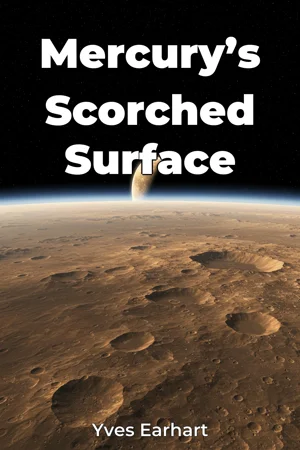
Mercury's Scorched Surface explores the compelling story of the solar system's innermost planet, a world of extreme temperatures and unique geology. Mercury presents a fascinating puzzle for planetary scientists, with temperature variations ranging hundreds of degrees and a surprisingly large iron core. The book examines these extreme conditions and the planet's surface features, such as its impact craters and enigmatic hollows, to reveal insights into planetary formation and evolution. Mercury's Scorched Surface approaches the topic by first introducing Mercury's basic characteristics, then detailing the extreme temperature ranges and their effects. Next, Mercury's Scorched Surface discusses the planet's surface, and concludes with current research and future missions. Data from missions like MESSENGER and BepiColombo, along with ground-based observations, inform our understanding of Mercury's composition and magnetic field. By studying Mercury, a rocky planet, we can better understand the processes shaping other planets, including our own, and address ongoing debates, such as the origin of Mercury's magnetic field.
Book Details
ISBN
9788235204615
Publisher
Publifye AS
Your Licenses
You don't own any licenses for this book
Purchase a license below to unlock this book and download the EPUB.
Purchase License
Select a tier to unlock this book
Need bulk licensing?
Contact us for enterprise agreements.