
About This Book
Imagine a world where the ocean floor, typically perceived as a cold, dark abyss, is actually riddled with fiery volcanoes, shaping the very chemistry and life forms of our planet. 'Ocean Hosts Fire' delves into the unseen realm of submarine volcanism and hydrothermal vents, revealing their profound influence on oceanography, geology, and marine biology. This book explores two fundamental and interconnected topics: the geological processes driving underwater volcanism and the ecological impact of hydrothermal vent systems. The significance cannot be overstated, as these volcanic activities influence global ocean chemistry, contribute to the Earth's heat budget, and foster unique ecosystems capable of thriving in extreme conditions. To understand these processes, the book offers a historical perspective on the exploration of the deep sea, starting from early submersibles to modern remotely operated vehicles (ROVs). Readers will gain an understanding of plate tectonics, mantle plumes, and the formation of oceanic crust, concepts essential to understanding the origins of underwater volcanoes. The central argument of 'Ocean Hosts Fire' is that submarine volcanism and associated hydrothermal vent systems are not isolated phenomena but critical components of the Earth's overall system, playing a vital role in maintaining planetary equilibrium and fostering biodiversity. Establishing this argument is essential for shaping informed policy decisions about deep-sea exploration, resource management, and climate change mitigation. The book is structured in four parts. The first section introduces the geological foundations of underwater volcanism. The second unveils the oceanographic research methods employed to map underwater heat sources and analyze vent fluids. The third details the unique biological communities that flourish around hydrothermal vents. The final section discusses the broader implications of deep-sea volcanism. Evidence presented throughout the book is derived from cutting-edge oceanographic research. Datasets include high-resolution bathymetric surveys, geochemical analyses of vent fluids and volcanic rocks, and biological studies of vent fauna. Unique data sources include previously unpublished seafloor maps, isotopic analyses of vent plumes, and time-lapse imagery of vent ecosystems. 'Ocean Hosts Fire' establishes connections among geology, chemistry, and biology. It highlights the intricate interplay between tectonic activity, hydrothermal fluid circulation, and chemosynthetic life. It also connects to climate science by exploring the role of submarine volcanism in releasing greenhouse gasses and influencing ocean currents. This book offers an integrated perspective on submarine volcanism, combining geological, oceanographic, and biological viewpoints to provide a holistic understanding of these dynamic systems. It presents complex scientific information in a style accessible to a broad audience. The target audience includes students, scientists, policymakers, and anyone with an interest in Earth sciences, oceanography, and environmental issues. The book would be valuable to these readers because it synthesizes current knowledge about a relatively unexplored area of the planet and highlights the importance of understanding deep-sea processes for addressing global challenges. As a work of nature, Earth science and Geography, 'Ocean Hosts Fire' adheres to the conventions of scientific accuracy, objectivity, and thoroughness. It presents factual information based on verifiable data and established scientific principles. The scope of the book is limited to submarine volcanism and its direct effects on the surrounding environment. It does not delve into the details of terrestrial volcanism or broader topics. Understanding submarine volcanism is increasingly important for assessing the potential risks and benefits of deep-sea mining, managing marine protected areas, and modeling climate change. Currently, there are ongoing debates about the environmental impact of deep-sea mining and the sustainability of vent ecosystems. 'Ocean Hosts Fire' addresses these controversies by providing a balanced overview of the scientific evidence and presenting different perspectives on these contentious issues.
Imagine a world where the ocean floor, typically perceived as a cold, dark abyss, is actually riddled with fiery volcanoes, shaping the very chemistry and life forms of our planet. 'Ocean Hosts Fire' delves into the unseen realm of submarine volcanism and hydrothermal vents, revealing their profound influence on oceanography, geology, and marine biology. This book explores two fundamental and interconnected topics: the geological processes driving underwater volcanism and the ecological impact of hydrothermal vent systems. The significance cannot be overstated, as these volcanic activities influence global ocean chemistry, contribute to the Earth's heat budget, and foster unique ecosystems capable of thriving in extreme conditions. To understand these processes, the book offers a historical perspective on the exploration of the deep sea, starting from early submersibles to modern remotely operated vehicles (ROVs). Readers will gain an understanding of plate tectonics, mantle plumes, and the formation of oceanic crust, concepts essential to understanding the origins of underwater volcanoes. The central argument of 'Ocean Hosts Fire' is that submarine volcanism and associated hydrothermal vent systems are not isolated phenomena but critical components of the Earth's overall system, playing a vital role in maintaining planetary equilibrium and fostering biodiversity. Establishing this argument is essential for shaping informed policy decisions about deep-sea exploration, resource management, and climate change mitigation. The book is structured in four parts. The first section introduces the geological foundations of underwater volcanism. The second unveils the oceanographic research methods employed to map underwater heat sources and analyze vent fluids. The third details the unique biological communities that flourish around hydrothermal vents. The final section discusses the broader implications of deep-sea volcanism. Evidence presented throughout the book is derived from cutting-edge oceanographic research. Datasets include high-resolution bathymetric surveys, geochemical analyses of vent fluids and volcanic rocks, and biological studies of vent fauna. Unique data sources include previously unpublished seafloor maps, isotopic analyses of vent plumes, and time-lapse imagery of vent ecosystems. 'Ocean Hosts Fire' establishes connections among geology, chemistry, and biology. It highlights the intricate interplay between tectonic activity, hydrothermal fluid circulation, and chemosynthetic life. It also connects to climate science by exploring the role of submarine volcanism in releasing greenhouse gasses and influencing ocean currents. This book offers an integrated perspective on submarine volcanism, combining geological, oceanographic, and biological viewpoints to provide a holistic understanding of these dynamic systems. It presents complex scientific information in a style accessible to a broad audience. The target audience includes students, scientists, policymakers, and anyone with an interest in Earth sciences, oceanography, and environmental issues. The book would be valuable to these readers because it synthesizes current knowledge about a relatively unexplored area of the planet and highlights the importance of understanding deep-sea processes for addressing global challenges. As a work of nature, Earth science and Geography, 'Ocean Hosts Fire' adheres to the conventions of scientific accuracy, objectivity, and thoroughness. It presents factual information based on verifiable data and established scientific principles. The scope of the book is limited to submarine volcanism and its direct effects on the surrounding environment. It does not delve into the details of terrestrial volcanism or broader topics. Understanding submarine volcanism is increasingly important for assessing the potential risks and benefits of deep-sea mining, managing marine protected areas, and modeling climate change. Currently, there are ongoing debates about the environmental impact of deep-sea mining and the sustainability of vent ecosystems. 'Ocean Hosts Fire' addresses these controversies by providing a balanced overview of the scientific evidence and presenting different perspectives on these contentious issues.
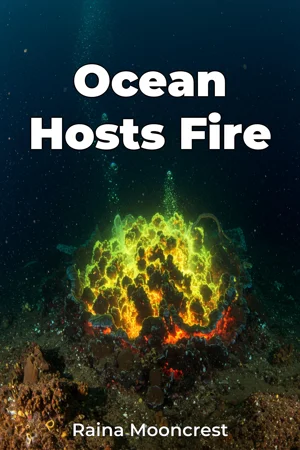
Beneath the waves, a world of fire thrives, and "Ocean Hosts Fire" explores the dynamic realm of submarine volcanism and hydrothermal vents. This book unveils how these underwater volcanoes influence ocean chemistry, contribute to the Earth's heat budget, and support unique ecosystems. Discover how plate tectonics and mantle plumes create these fiery formations on the ocean floor, shaping our planet in profound ways. The book journeys from the earliest deep-sea explorations to modern oceanographic research, detailing methods used to map underwater heat sources and analyze vent fluids. It emphasizes the interconnectedness of geology, chemistry, and marine biology, revealing how tectonic activity and hydrothermal circulation foster chemosynthetic life. Learn about the surprising biodiversity around hydrothermal vents, where life thrives in extreme conditions, fueled by earth sciences. Structured in four parts, "Ocean Hosts Fire" first lays the geological groundwork, then explores oceanographic research techniques, before detailing the biological communities around vents, and finally discussing the broader implications of deep-sea volcanism. This approach provides an integrated perspective, making complex scientific concepts accessible to students, scientists, policymakers, and anyone curious about the hidden forces shaping our oceans and planet.
Book Details
ISBN
9788235204592
Publisher
Publifye AS
Your Licenses
You don't own any licenses for this book
Purchase a license below to unlock this book and download the EPUB.
Purchase License
Select a tier to unlock this book
Need bulk licensing?
Contact us for enterprise agreements.