
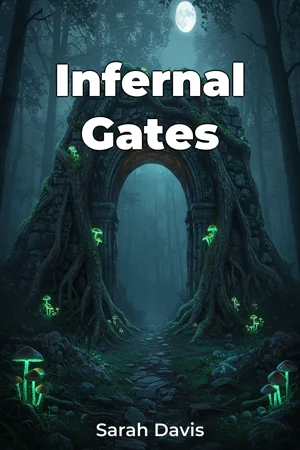
About This Book
Have humans always believed in a physical connection to the underworld? "Infernal Gates" delves into the pervasive myths, religious significance, and enduring folklore surrounding these purported entry points to the realm of the dead. This book explores the historical and cultural importance of these gates, revealing how they reflect humanity's complex relationship with mortality and the afterlife. We embark on a journey through diverse cultures and eras, examining the concept of infernal gateways as more than just fantastic tales. These gates represent profound psychological and spiritual concepts, embodying humanity's confrontation with death, fear of the unknown, and hope for transcendence. The book navigates the nuanced terrain of religious beliefs, historical events, and cultural practices that have shaped our understanding of these gateways. Understanding the historical context of death rituals and beliefs systems is vital, as cultural anxieties surrounding death have profoundly influenced the creation and perpetuation of these gateway myths. We begin with an overview of early religious texts and archaeological findings that suggest a widespread belief in a tangible connection between the living world and the underworld. Through analysis of ancient civilizations such as Greece, Rome, Egypt, and Mesopotamia, the book establishes a foundational understanding of how these cultures conceptualized the passage to the afterlife and the physical portals that facilitated this transition. The central argument posits that infernal gates, whether real or imagined, serve as powerful cultural symbols that reveal underlying anxieties and aspirations. In a world beset by uncertainties, these gates offer a tangible means of confronting the incomprehensible reality of death. The book showcases how these narratives reinforce social structures, moral codes, and spiritual beliefs, providing a framework for understanding human existence within a larger cosmic order. The book progresses through the following stages: First, it introduces the core concept of infernal gateways through an exploration of foundational myths and religious texts. Then, it examines specific examples of these gates across various cultures, analyzing their architectural representations, ritualistic significance, and symbolic meanings. This section focuses on two major points : the archaeological evidence supporting the existence of possible sacred spaces associated with the underworld; and the evolution of infernal gate narratives within religious and philosophical traditions. Finally, the book culminates in a reflection on the enduring appeal of these myths, considering their psychological and social implications for contemporary society. Evidence and research are drawn from a wide range of sources, including archaeological reports, ethnographic studies, religious texts, and historical documents. The book will also analyze visual representations of infernal gates in art and architecture, providing a comprehensive and interdisciplinary perspective on this fascinating topic. Unique data sources include lesser-known regional folklore and previously untranslated religious texts, adding depth and originality to the analysis. "Infernal Gates" benefits from interdisciplinary connections across religious studies, archaeology, and cultural anthropology. The book's exploration of infernal gates enhances our understanding of comparative religion, human-environment interaction, and the socio-cultural contexts that shape belief systems. This book provides a unique approach to mythology and archaeology, moving beyond simple descriptions to explore the underlying cultural and psychological functions of infernal gate narratives. "Infernal Gates" presents the information in an academic, yet accessible manner, aiming to engage readers with diverse backgrounds and levels of expertise. The intended audience includes students and scholars of religion, mythology, archaeology, and folklore, as well as general readers interested in history, comparative religion, and cultural studies. The book will appeal to those seeking a deeper understanding of humanity's enduring fascination with death, the afterlife, and the boundaries between the living and the dead. The book is structured to meet the expectations of a non-fiction genre focused on religion and history by emphasizing factual accuracy, rigorous analysis, and balanced perspectives. While the book explores a wide range of cultural contexts, it primarily focuses on Western and Near Eastern traditions, acknowledging the vastness and complexity of global folklore. The book is a contribution to the ongoing scholarly conversation surrounding death studies, mythology, and the construction of religious belief. By examining the cultural significance of infernal gates, this book offers insights relevant to understanding contemporary attitudes towards death, grief, and mortality.
Have humans always believed in a physical connection to the underworld? "Infernal Gates" delves into the pervasive myths, religious significance, and enduring folklore surrounding these purported entry points to the realm of the dead. This book explores the historical and cultural importance of these gates, revealing how they reflect humanity's complex relationship with mortality and the afterlife. We embark on a journey through diverse cultures and eras, examining the concept of infernal gateways as more than just fantastic tales. These gates represent profound psychological and spiritual concepts, embodying humanity's confrontation with death, fear of the unknown, and hope for transcendence. The book navigates the nuanced terrain of religious beliefs, historical events, and cultural practices that have shaped our understanding of these gateways. Understanding the historical context of death rituals and beliefs systems is vital, as cultural anxieties surrounding death have profoundly influenced the creation and perpetuation of these gateway myths. We begin with an overview of early religious texts and archaeological findings that suggest a widespread belief in a tangible connection between the living world and the underworld. Through analysis of ancient civilizations such as Greece, Rome, Egypt, and Mesopotamia, the book establishes a foundational understanding of how these cultures conceptualized the passage to the afterlife and the physical portals that facilitated this transition. The central argument posits that infernal gates, whether real or imagined, serve as powerful cultural symbols that reveal underlying anxieties and aspirations. In a world beset by uncertainties, these gates offer a tangible means of confronting the incomprehensible reality of death. The book showcases how these narratives reinforce social structures, moral codes, and spiritual beliefs, providing a framework for understanding human existence within a larger cosmic order. The book progresses through the following stages: First, it introduces the core concept of infernal gateways through an exploration of foundational myths and religious texts. Then, it examines specific examples of these gates across various cultures, analyzing their architectural representations, ritualistic significance, and symbolic meanings. This section focuses on two major points : the archaeological evidence supporting the existence of possible sacred spaces associated with the underworld; and the evolution of infernal gate narratives within religious and philosophical traditions. Finally, the book culminates in a reflection on the enduring appeal of these myths, considering their psychological and social implications for contemporary society. Evidence and research are drawn from a wide range of sources, including archaeological reports, ethnographic studies, religious texts, and historical documents. The book will also analyze visual representations of infernal gates in art and architecture, providing a comprehensive and interdisciplinary perspective on this fascinating topic. Unique data sources include lesser-known regional folklore and previously untranslated religious texts, adding depth and originality to the analysis. "Infernal Gates" benefits from interdisciplinary connections across religious studies, archaeology, and cultural anthropology. The book's exploration of infernal gates enhances our understanding of comparative religion, human-environment interaction, and the socio-cultural contexts that shape belief systems. This book provides a unique approach to mythology and archaeology, moving beyond simple descriptions to explore the underlying cultural and psychological functions of infernal gate narratives. "Infernal Gates" presents the information in an academic, yet accessible manner, aiming to engage readers with diverse backgrounds and levels of expertise. The intended audience includes students and scholars of religion, mythology, archaeology, and folklore, as well as general readers interested in history, comparative religion, and cultural studies. The book will appeal to those seeking a deeper understanding of humanity's enduring fascination with death, the afterlife, and the boundaries between the living and the dead. The book is structured to meet the expectations of a non-fiction genre focused on religion and history by emphasizing factual accuracy, rigorous analysis, and balanced perspectives. While the book explores a wide range of cultural contexts, it primarily focuses on Western and Near Eastern traditions, acknowledging the vastness and complexity of global folklore. The book is a contribution to the ongoing scholarly conversation surrounding death studies, mythology, and the construction of religious belief. By examining the cultural significance of infernal gates, this book offers insights relevant to understanding contemporary attitudes towards death, grief, and mortality.
"Infernal Gates" explores humanity's enduring fascination with the underworld through myths, religion, and folklore surrounding purported gateways to the realm of the dead. It delves into how these gates, found in various cultures, reflect our complex relationship with mortality and the afterlife. The book examines the historical and cultural significance of these entry points, revealing them as profound symbols of humanity's confrontation with death, fear of the unknown, and hope for transcendence. Intriguingly, these gates often reinforce social structures and moral codes, providing a framework for understanding human existence within a larger cosmic order. The book journeys through diverse cultures such as Greece, Rome, Egypt, and Mesopotamia, analyzing how ancient civilizations conceptualized the passage to the afterlife and the physical portals facilitating this transition. It progresses by first introducing the core concept of infernal gateways, then examining specific cultural examples, and finally reflecting on the enduring appeal of these myths in contemporary society. Drawing from archaeological reports, religious texts, and historical documents, "Infernal Gates" offers a unique, interdisciplinary perspective by exploring the underlying cultural and psychological functions of infernal gate narratives.
Book Details
ISBN
9788235204585
Publisher
Publifye AS
Your Licenses
You don't own any licenses for this book
Purchase a license below to unlock this book and download the EPUB.
Purchase License
Select a tier to unlock this book
Need bulk licensing?
Contact us for enterprise agreements.