
About This Book
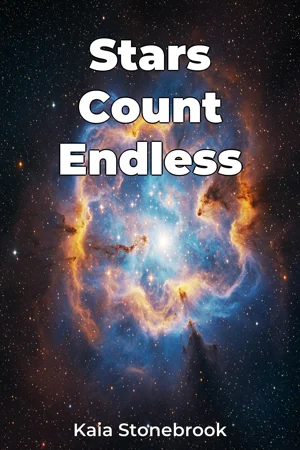
Can the ancient words of Genesis find corroboration in the findings of modern astrophysics? "Stars Count Endless" seeks to answer this question, embarking on a journey that bridges the seemingly disparate worlds of Biblical Studies and contemporary Science. This exploration holds profound significance, potentially reshaping our understanding of the relationship between faith and reason, and offering fresh perspectives on the origins of our universe and humanity's place within it. This book delves into two central themes: the interpretation of the Genesis creation narrative concerning the stars and the cosmos, and the validation of these ancient descriptions using data obtained from modern telescopes and astrophysical research. Understanding the methodologies of both biblical hermeneutics and scientific observation is crucial, and "Stars Count Endless" provides the necessary foundation for readers regardless of their prior expertise in either domain. Our central argument posits that the Genesis account, when interpreted within its proper historical and literary context, anticipates certain cosmological realities later confirmed by scientific advancement. We are not arguing for a literal, scientific reading of Genesis, but rather demonstrating how its underlying cosmological framework aligns surprisingly well with modern discoveries. The significance of this alignment lies in challenging the notion that science and religion are inherently at odds. "Stars Count Endless" begins by introducing the foundational concepts of biblical cosmology and early Jewish understandings of the universe. We explore the literary structure of Genesis 1, paying close attention to its depiction of the creation of the stars and celestial bodies. Next, the book transitions into an overview of modern astronomy, detailing the advancements in telescopic technology and the resulting expansion of our understanding of the universe. We examine discoveries like the sheer number of stars, the expansion of the universe, and the processes of stellar formation and decay, using these findings to illuminate potential parallels with the Genesis narrative. A pivotal section of the book examines specific verses in Genesis, comparing them directly to scientific findings to highlight areas of convergence and divergence. Finally, "Stars Count Endless" culminates by analyzing the broader implications of these findings, discussing how they might inform our understanding of the relationship between science and religion, offering a framework for constructive dialogue. The evidence presented is drawn from a combination of textual analysis of the Hebrew Bible and data collected from astronomical observatories, including publicly available datasets from telescopes like Hubble and ground-based observatories. We will also incorporate peer-reviewed research from leading astrophysics journals. Interdisciplinary connections are vital to this book's thesis. We actively engage with fields such as: 1) the History of Science, by tracing how scientific understanding of the cosmos has evolved over time; 2) Theology, by examining different theological perspectives on creation and the relationship between God and the universe; and 3) Philosophy of Science, by exploring the limits of scientific knowledge and the nature of scientific proof. "Stars Count Endless" offers a unique perspective by approaching the Genesis account not as a literal scientific textbook, but as a theological and cosmological narrative that reflects ancient Near Eastern ways of understanding the world. This allows us to appreciate its symbolic and metaphorical language, and, at the same time, identify surprising points of contact with modern science. The book adopts a respectful and academic tone, striving to present information in a clear and accessible manner, avoiding jargon where possible, but without compromising on accuracy. The intended audience includes readers interested in biblical studies, science and religion, and the history of ideas. It would be valuable to those seeking a balanced and nuanced perspective on the relationship between faith and scientific inquiry. As a work of non-fiction, "Stars Count Endless" adheres to the genre's standards of accuracy, objectivity, and rigorous sourcing. The scope of the book is limited to exploring the alignment of the Genesis creation narrative with specific findings in modern astrophysics, primarily related to the stars. We do not delve into other areas of scientific inquiry, such as biology or geology, nor do we attempt to provide a comprehensive commentary on the entirety of the Genesis text. The information presented in "Stars Count Endless" can be practically applied by readers seeking to engage in informed discussions about science and religion, and those looking to bridge the gap between these two seemingly distinct fields. The book acknowledges the ongoing debates surrounding creationism and intelligent design, but it deliberately avoids taking a stance on these issues, focusing instead on a comparative analysis of texts and data.
Can the ancient words of Genesis find corroboration in the findings of modern astrophysics? "Stars Count Endless" seeks to answer this question, embarking on a journey that bridges the seemingly disparate worlds of Biblical Studies and contemporary Science. This exploration holds profound significance, potentially reshaping our understanding of the relationship between faith and reason, and offering fresh perspectives on the origins of our universe and humanity's place within it. This book delves into two central themes: the interpretation of the Genesis creation narrative concerning the stars and the cosmos, and the validation of these ancient descriptions using data obtained from modern telescopes and astrophysical research. Understanding the methodologies of both biblical hermeneutics and scientific observation is crucial, and "Stars Count Endless" provides the necessary foundation for readers regardless of their prior expertise in either domain. Our central argument posits that the Genesis account, when interpreted within its proper historical and literary context, anticipates certain cosmological realities later confirmed by scientific advancement. We are not arguing for a literal, scientific reading of Genesis, but rather demonstrating how its underlying cosmological framework aligns surprisingly well with modern discoveries. The significance of this alignment lies in challenging the notion that science and religion are inherently at odds. "Stars Count Endless" begins by introducing the foundational concepts of biblical cosmology and early Jewish understandings of the universe. We explore the literary structure of Genesis 1, paying close attention to its depiction of the creation of the stars and celestial bodies. Next, the book transitions into an overview of modern astronomy, detailing the advancements in telescopic technology and the resulting expansion of our understanding of the universe. We examine discoveries like the sheer number of stars, the expansion of the universe, and the processes of stellar formation and decay, using these findings to illuminate potential parallels with the Genesis narrative. A pivotal section of the book examines specific verses in Genesis, comparing them directly to scientific findings to highlight areas of convergence and divergence. Finally, "Stars Count Endless" culminates by analyzing the broader implications of these findings, discussing how they might inform our understanding of the relationship between science and religion, offering a framework for constructive dialogue. The evidence presented is drawn from a combination of textual analysis of the Hebrew Bible and data collected from astronomical observatories, including publicly available datasets from telescopes like Hubble and ground-based observatories. We will also incorporate peer-reviewed research from leading astrophysics journals. Interdisciplinary connections are vital to this book's thesis. We actively engage with fields such as: 1) the History of Science, by tracing how scientific understanding of the cosmos has evolved over time; 2) Theology, by examining different theological perspectives on creation and the relationship between God and the universe; and 3) Philosophy of Science, by exploring the limits of scientific knowledge and the nature of scientific proof. "Stars Count Endless" offers a unique perspective by approaching the Genesis account not as a literal scientific textbook, but as a theological and cosmological narrative that reflects ancient Near Eastern ways of understanding the world. This allows us to appreciate its symbolic and metaphorical language, and, at the same time, identify surprising points of contact with modern science. The book adopts a respectful and academic tone, striving to present information in a clear and accessible manner, avoiding jargon where possible, but without compromising on accuracy. The intended audience includes readers interested in biblical studies, science and religion, and the history of ideas. It would be valuable to those seeking a balanced and nuanced perspective on the relationship between faith and scientific inquiry. As a work of non-fiction, "Stars Count Endless" adheres to the genre's standards of accuracy, objectivity, and rigorous sourcing. The scope of the book is limited to exploring the alignment of the Genesis creation narrative with specific findings in modern astrophysics, primarily related to the stars. We do not delve into other areas of scientific inquiry, such as biology or geology, nor do we attempt to provide a comprehensive commentary on the entirety of the Genesis text. The information presented in "Stars Count Endless" can be practically applied by readers seeking to engage in informed discussions about science and religion, and those looking to bridge the gap between these two seemingly distinct fields. The book acknowledges the ongoing debates surrounding creationism and intelligent design, but it deliberately avoids taking a stance on these issues, focusing instead on a comparative analysis of texts and data.
"Stars Count Endless" explores the intriguing relationship between the Genesis creation narrative and modern astrophysics, seeking corroboration between ancient words and contemporary scientific findings. The book embarks on a journey bridging Biblical Studies and Science, challenging the notion that science and religion are inherently at odds. Readers will discover how the Genesis account, when interpreted within its historical and literary context, anticipates certain cosmological realities later confirmed by scientific advancement. For example, the sheer number of stars alluded to in Genesis resonates with modern astronomical observations, highlighting potential parallels between ancient texts and scientific discovery. The book begins by establishing foundational concepts of biblical cosmology and early Jewish understandings of the universe, then transitions to an overview of modern astronomy, detailing advancements in telescopic technology. Specific verses in Genesis are compared to scientific findings, and the broader implications of these comparisons are analyzed. This approach allows readers to appreciate the symbolic language of Genesis while identifying surprising points of contact with modern scientific concepts. The book's interdisciplinary approach connects the History of Science, Theology, and Philosophy of Science.
Book Details
ISBN
9788235204509
Publisher
Publifye AS
Your Licenses
You don't own any licenses for this book
Purchase a license below to unlock this book and download the EPUB.
Purchase License
Select a tier to unlock this book
Need bulk licensing?
Contact us for enterprise agreements.