
About This Book
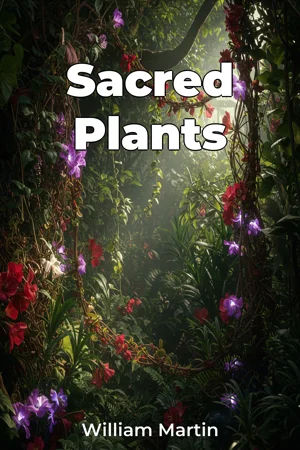
Have you ever considered the profound influence of the plant kingdom on the very fabric of human culture and spirituality? "Sacred Plants" explores the multifaceted relationship between plants and humanity, revealing how these botanical entities have shaped our religions, mythologies, medicinal practices, and daily lives for millennia. This book delves into the fascinating intersection of botany, anthropology, and religious studies, examining the pivotal role plants have played in shaping human understanding of the world and our place within it. We explore two key topics: first, the religious and mythological significance of specific plant species across diverse cultures, and second, the ethnobotanical knowledge embedded in traditional medicinal practices. Why are these topics important? The book will illuminate how certain plants became central to creation myths, sacred rituals, and symbolic representations of deities, demonstrating the deep integration of the natural world into human belief systems. Furthermore, it examines how ancient cultures developed intricate understandings of plant properties for healing and well-being, knowledge that continues to hold relevance today. Understanding this relationship requires a journey through history and across continents, exploring ancient texts, archaeological findings, and ethnographic studies. The reader will encounter the symbolic language of flowers in Victorian England, the ritualistic use of psychoactive plants in indigenous Amazonian cultures, and the detailed descriptions of medicinal herbs in ancient Egyptian papyri. No prior knowledge is required; the book will present the context and science as we progress. The central argument of "Sacred Plants" is that plants are not merely passive resources but active agents in shaping human consciousness, culture, and spirituality. Plants have played a pivotal role in influencing human interactions with the divine, the natural world, and each other. The book begins by introducing the core concepts of ethnobotany, religious symbolism, and the historical context of human-plant interactions. Section one will analyze the role of plants in world religions. Section two will focus on the scientific aspects of plant-derived medicine. Section three will show various plants and their roles in various human cultures. The book culminates by considering the implications of this knowledge for contemporary issues such as conservation, cultural preservation, and the future of medicine. The evidence presented to support these arguments will be drawn from a wide array of sources, including botanical research, anthropological field studies, historical texts, and religious scriptures. We will analyze the chemical properties of plants, ethnographic accounts of ritualistic practices, and archaeological evidence of plant use in ancient civilizations. "Sacred Plants" bridges several disciplines, connecting botany with religious studies, anthropology, and medicine. These connections enhance the book's argument by providing a more holistic understanding of the complex relationship between plants and humanity. This book offers a unique perspective by integrating scientific analysis with cultural interpretation, challenging traditional views of plants as mere commodities. It offers a comprehensive synthesis of ethnobotanical knowledge, cultural history, and scientific research. The overall tone is both academic and accessible, presenting complex information in a clear, engaging style suitable for a broad readership. The book will appeal to readers interested in botany, religion, anthropology, history, and alternative medicine. As a work of non-fiction, "Sacred Plants" adheres to the conventions of accuracy, objectivity, and thorough research. The book focuses specifically on the cultural and religious significance of plants, with limitations with regard to very specific botanical deep dives. The information in "Sacred Plants" has numerous real-world applications, from informing conservation efforts to promoting cultural understanding and inspiring new approaches to medicine. Understanding the historical and cultural significance of plants allows for more respectful and sustainable interactions with the natural world. The book tackles some sensitive issues, considering it touches on cultural and spiritual usages of plants and their derivatives, and the book offers a clear and respectful approach in all cases. "Sacred Plants" offers a journey through history, culture, and science, revealing the profound and enduring significance of the plant kingdom in shaping the human experience.
Have you ever considered the profound influence of the plant kingdom on the very fabric of human culture and spirituality? "Sacred Plants" explores the multifaceted relationship between plants and humanity, revealing how these botanical entities have shaped our religions, mythologies, medicinal practices, and daily lives for millennia. This book delves into the fascinating intersection of botany, anthropology, and religious studies, examining the pivotal role plants have played in shaping human understanding of the world and our place within it. We explore two key topics: first, the religious and mythological significance of specific plant species across diverse cultures, and second, the ethnobotanical knowledge embedded in traditional medicinal practices. Why are these topics important? The book will illuminate how certain plants became central to creation myths, sacred rituals, and symbolic representations of deities, demonstrating the deep integration of the natural world into human belief systems. Furthermore, it examines how ancient cultures developed intricate understandings of plant properties for healing and well-being, knowledge that continues to hold relevance today. Understanding this relationship requires a journey through history and across continents, exploring ancient texts, archaeological findings, and ethnographic studies. The reader will encounter the symbolic language of flowers in Victorian England, the ritualistic use of psychoactive plants in indigenous Amazonian cultures, and the detailed descriptions of medicinal herbs in ancient Egyptian papyri. No prior knowledge is required; the book will present the context and science as we progress. The central argument of "Sacred Plants" is that plants are not merely passive resources but active agents in shaping human consciousness, culture, and spirituality. Plants have played a pivotal role in influencing human interactions with the divine, the natural world, and each other. The book begins by introducing the core concepts of ethnobotany, religious symbolism, and the historical context of human-plant interactions. Section one will analyze the role of plants in world religions. Section two will focus on the scientific aspects of plant-derived medicine. Section three will show various plants and their roles in various human cultures. The book culminates by considering the implications of this knowledge for contemporary issues such as conservation, cultural preservation, and the future of medicine. The evidence presented to support these arguments will be drawn from a wide array of sources, including botanical research, anthropological field studies, historical texts, and religious scriptures. We will analyze the chemical properties of plants, ethnographic accounts of ritualistic practices, and archaeological evidence of plant use in ancient civilizations. "Sacred Plants" bridges several disciplines, connecting botany with religious studies, anthropology, and medicine. These connections enhance the book's argument by providing a more holistic understanding of the complex relationship between plants and humanity. This book offers a unique perspective by integrating scientific analysis with cultural interpretation, challenging traditional views of plants as mere commodities. It offers a comprehensive synthesis of ethnobotanical knowledge, cultural history, and scientific research. The overall tone is both academic and accessible, presenting complex information in a clear, engaging style suitable for a broad readership. The book will appeal to readers interested in botany, religion, anthropology, history, and alternative medicine. As a work of non-fiction, "Sacred Plants" adheres to the conventions of accuracy, objectivity, and thorough research. The book focuses specifically on the cultural and religious significance of plants, with limitations with regard to very specific botanical deep dives. The information in "Sacred Plants" has numerous real-world applications, from informing conservation efforts to promoting cultural understanding and inspiring new approaches to medicine. Understanding the historical and cultural significance of plants allows for more respectful and sustainable interactions with the natural world. The book tackles some sensitive issues, considering it touches on cultural and spiritual usages of plants and their derivatives, and the book offers a clear and respectful approach in all cases. "Sacred Plants" offers a journey through history, culture, and science, revealing the profound and enduring significance of the plant kingdom in shaping the human experience.
"Sacred Plants" explores the deep connection between plants and human culture, revealing their profound influence on religion, mythology, and medicine. For millennia, plants have been central to our understanding of the world, shaping belief systems and healing practices. The book examines how certain plants attained sacred status, becoming integral to creation myths and symbolic representations across diverse cultures. It also delves into the ethnobotanical knowledge of ancient cultures, highlighting their intricate understanding of plant properties for well-being. This exploration bridges botany, anthropology, and religious studies, presenting a holistic view of the plant-human relationship. The book progresses through an introduction to ethnobotany and religious symbolism, an analysis of plants in world religions, a focus on plant-derived medicine, and a showcase of various plants in diverse cultures. By integrating scientific analysis with cultural interpretation, "Sacred Plants" challenges conventional perspectives and emphasizes the active role of plants in shaping human consciousness and spirituality.
Book Details
ISBN
9788235204424
Publisher
Publifye AS
Your Licenses
You don't own any licenses for this book
Purchase a license below to unlock this book and download the EPUB.
Purchase License
Select a tier to unlock this book
Need bulk licensing?
Contact us for enterprise agreements.