
About This Book
Can a torn net truly spell disaster for a fishing family? This book, *Fish Net Mending*, provides a comprehensive guide to net repair techniques, underscoring their vital importance to the livelihood and sustainability of fishing communities. We delve into the practical skills necessary for mending various types of fishing nets, framing these skills not merely as a craft, but as a crucial element of economic stability and resource management for fishing families. The book focuses on three main areas: understanding net materials and construction, mastering essential mending techniques, and applying these skills to different net types and damage scenarios. Each is significant. First, a foundational knowledge of net materials – from traditional natural fibers to modern synthetics – is essential for effective repair. Understanding mesh size, thread strength, and knot types allows for repairs that maintain the net's integrity and fishing efficiency. Second, the book details a range of mending techniques, progressing from basic patching to more complex repairs involving selvedges and tapers. Clear, step-by-step instructions, accompanied by detailed diagrams, ensure that even beginners can master these techniques. Finally, the application of these skills to diverse net types is critical. From gill nets to seines, each net presents unique challenges, and the book provides tailored solutions for repairing damage in various fishing contexts. Historically, net mending was passed down through generations within fishing families. This knowledge ensured self-sufficiency and minimized reliance on external resources. In modern times, however, this traditional skill is often overlooked, leading to increased costs for net replacement and potential disruptions to fishing activities. *Fish Net Mending* seeks to revitalize this essential knowledge, providing a resource that empowers fishing families to maintain their equipment and sustain their livelihoods. The central argument of this book is that proficiency in net repair is not just a practical skill, but a critical factor in the economic resilience and environmental responsibility of fishing communities. By extending the lifespan of nets, families reduce their expenses, decrease waste, and minimize the impact of discarded nets on marine ecosystems. The book begins with an introduction to the history and significance of net making and mending. It explores the evolution of net materials and the environmental considerations associated with different types of fishing gear. The subsequent chapters delve into the practical aspects of net repair, covering essential tools, materials, and knot-tying techniques. Major sections are dedicated to specific mending techniques, such as patching holes, repairing tears, and replacing damaged sections. The book culminates in a chapter on advanced repair strategies and preventative maintenance, emphasizing the importance of regular inspection and timely repairs. Practical applications are highlighted throughout, with case studies and real-world examples demonstrating the economic and environmental benefits of effective net mending. The information presented is based on a combination of historical research, technical manuals, and practical experience gleaned from working directly with fishing communities. Diagrams will illustrate different techniques. *Fish Net Mending* connects to several other fields. Firstly, it relates to marine biology and environmental science, highlighting the impact of fishing gear on marine ecosystems and the role of net repair in reducing waste and minimizing harm to marine life. Secondly, it connects to economics and sustainable development, demonstrating how net repair can contribute to the economic stability and resilience of fishing communities. Finally, it intersects with the field of materials science, examining the properties and performance of different net materials and the impact of repair techniques on their integrity. This book stands out due to its comprehensive and practical approach to net repair. It bridges the gap between traditional knowledge and modern techniques, providing a resource that is both accessible to beginners and valuable to experienced fishers. The tone of the book is informative and encouraging, presenting technical information in a clear, concise, and engaging manner. The target audience includes fishing families, commercial fishers, fisheries managers, and anyone interested in sustainable fishing practices. This book provides valuable knowledge and skills that can enhance their livelihoods, reduce their environmental impact, and contribute to the long-term health of marine ecosystems. As a crafts and hobbies book that is technology related, the core expectation is that it will be detailed and practical. It delivers on those expectations of the genre. The scope of this book focuses primarily on the practical techniques of net repair. While it acknowledges the broader economic and environmental context, it does not delve into the specific regulations or policies related to fisheries management. It presents a how-to resource for a specific skill. The real-world applications of the information in this book are numerous. By mastering the techniques of net repair, fishers can significantly reduce their operating costs, minimize their environmental impact, and enhance the sustainability of their fishing practices. While the book promotes net repair as a sustainable practice, it also acknowledges the ongoing debates surrounding the environmental impact of different fishing gear types and the need for responsible fishing practices.
Can a torn net truly spell disaster for a fishing family? This book, *Fish Net Mending*, provides a comprehensive guide to net repair techniques, underscoring their vital importance to the livelihood and sustainability of fishing communities. We delve into the practical skills necessary for mending various types of fishing nets, framing these skills not merely as a craft, but as a crucial element of economic stability and resource management for fishing families. The book focuses on three main areas: understanding net materials and construction, mastering essential mending techniques, and applying these skills to different net types and damage scenarios. Each is significant. First, a foundational knowledge of net materials – from traditional natural fibers to modern synthetics – is essential for effective repair. Understanding mesh size, thread strength, and knot types allows for repairs that maintain the net's integrity and fishing efficiency. Second, the book details a range of mending techniques, progressing from basic patching to more complex repairs involving selvedges and tapers. Clear, step-by-step instructions, accompanied by detailed diagrams, ensure that even beginners can master these techniques. Finally, the application of these skills to diverse net types is critical. From gill nets to seines, each net presents unique challenges, and the book provides tailored solutions for repairing damage in various fishing contexts. Historically, net mending was passed down through generations within fishing families. This knowledge ensured self-sufficiency and minimized reliance on external resources. In modern times, however, this traditional skill is often overlooked, leading to increased costs for net replacement and potential disruptions to fishing activities. *Fish Net Mending* seeks to revitalize this essential knowledge, providing a resource that empowers fishing families to maintain their equipment and sustain their livelihoods. The central argument of this book is that proficiency in net repair is not just a practical skill, but a critical factor in the economic resilience and environmental responsibility of fishing communities. By extending the lifespan of nets, families reduce their expenses, decrease waste, and minimize the impact of discarded nets on marine ecosystems. The book begins with an introduction to the history and significance of net making and mending. It explores the evolution of net materials and the environmental considerations associated with different types of fishing gear. The subsequent chapters delve into the practical aspects of net repair, covering essential tools, materials, and knot-tying techniques. Major sections are dedicated to specific mending techniques, such as patching holes, repairing tears, and replacing damaged sections. The book culminates in a chapter on advanced repair strategies and preventative maintenance, emphasizing the importance of regular inspection and timely repairs. Practical applications are highlighted throughout, with case studies and real-world examples demonstrating the economic and environmental benefits of effective net mending. The information presented is based on a combination of historical research, technical manuals, and practical experience gleaned from working directly with fishing communities. Diagrams will illustrate different techniques. *Fish Net Mending* connects to several other fields. Firstly, it relates to marine biology and environmental science, highlighting the impact of fishing gear on marine ecosystems and the role of net repair in reducing waste and minimizing harm to marine life. Secondly, it connects to economics and sustainable development, demonstrating how net repair can contribute to the economic stability and resilience of fishing communities. Finally, it intersects with the field of materials science, examining the properties and performance of different net materials and the impact of repair techniques on their integrity. This book stands out due to its comprehensive and practical approach to net repair. It bridges the gap between traditional knowledge and modern techniques, providing a resource that is both accessible to beginners and valuable to experienced fishers. The tone of the book is informative and encouraging, presenting technical information in a clear, concise, and engaging manner. The target audience includes fishing families, commercial fishers, fisheries managers, and anyone interested in sustainable fishing practices. This book provides valuable knowledge and skills that can enhance their livelihoods, reduce their environmental impact, and contribute to the long-term health of marine ecosystems. As a crafts and hobbies book that is technology related, the core expectation is that it will be detailed and practical. It delivers on those expectations of the genre. The scope of this book focuses primarily on the practical techniques of net repair. While it acknowledges the broader economic and environmental context, it does not delve into the specific regulations or policies related to fisheries management. It presents a how-to resource for a specific skill. The real-world applications of the information in this book are numerous. By mastering the techniques of net repair, fishers can significantly reduce their operating costs, minimize their environmental impact, and enhance the sustainability of their fishing practices. While the book promotes net repair as a sustainable practice, it also acknowledges the ongoing debates surrounding the environmental impact of different fishing gear types and the need for responsible fishing practices.
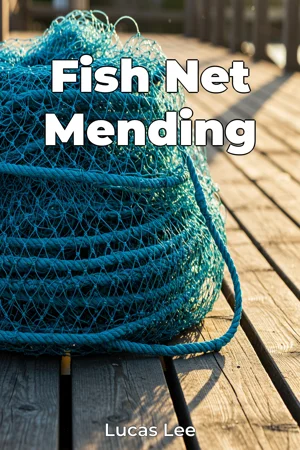
*Fish Net Mending* offers a comprehensive guide to the essential craft of net repair, vital for fishing communities' economic stability and environmental responsibility. The book emphasizes that proficiency in net repair directly impacts a fishing family's bottom line and lessens the strain on marine ecosystems. By understanding net materials—from natural fibers to synthetics—and mastering mending techniques, fishers can extend the lifespan of their gear. This, in turn, reduces waste and minimizes the impact of discarded nets on marine life. The book takes a practical approach, beginning with the history and significance of net making. It then progresses through essential tools, materials, and knot-tying before diving into specific mending techniques like patching holes and repairing tears. Detailed diagrams and step-by-step instructions make complex repairs accessible to beginners. Highlighting the importance of regular inspection and timely repairs, the book underscores how these skills contribute to sustainable fishing as a craft and hobby.
Book Details
ISBN
9788235204370
Publisher
Publifye AS
Your Licenses
You don't own any licenses for this book
Purchase a license below to unlock this book and download the EPUB.
Purchase License
Select a tier to unlock this book
Need bulk licensing?
Contact us for enterprise agreements.