
About This Book
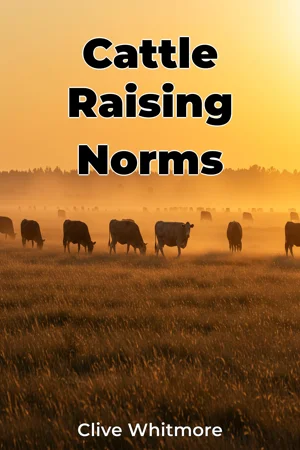
How have bonds between humans and cattle shaped not just diets but entire societies? "Cattle Raising Norms" delves into the intricate world of cattle herding practices and their pivotal role in sustaining pastoral family units across diverse historical and geographical contexts. This is vital because understanding these systems provides insights into the resilience, adaptability, and cultural richness of pastoral communities, offering lessons applicable to contemporary challenges in food security, land management, and cultural preservation. This book examines cattle herding from multiple angles, focusing on land tenure systems, the transmission of indigenous knowledge, and the social structures within pastoral families. It provides historical context by tracing the evolution of cattle raising from its ancient origins to modern commercial practices, looking at how environmental changes, governmental policies, and market forces influence these traditional ways of life. At its core, "Cattle Raising Norms" argues that cattle herding is not merely an economic activity but a cornerstone of social identity, cultural continuity, and ecological balance in pastoral societies. This argument is crucial because it challenges conventional views that often marginalize pastoralism as an outdated or inefficient practice, highlighting its potential for sustainable development and cultural preservation. The book is structured to systematically explore this central thesis. It begins by introducing foundational concepts such as pastoralism, transhumance, and the cultural significance of cattle. It then proceeds to examine specific case studies from various regions of the world, illustrating the diverse strategies pastoral families employ to manage their herds, navigate environmental constraints, and maintain social cohesion. Major points covered include: the impact of climate change on grazing patterns, the role of women in cattle management, and the challenges of preserving traditional knowledge in the face of modernization. The book culminates by discussing the policy implications of its findings, advocating for inclusive approaches that recognize the value of pastoral systems and support their long-term sustainability. The evidence presented in "Cattle Raising Norms" draws from a combination of historical archives, ethnographic studies, ecological data, and economic analyses. It also incorporates indigenous oral histories and community-based participatory research to provide a nuanced understanding of pastoral livelihoods. The book utilizes unique datasets on herd sizes, migration patterns, and market prices to assess the economic viability of cattle raising under different conditions. This book bridges several academic fields, connecting historical analyses of land use with contemporary discussions on sustainable agriculture and gender studies. The historical perspective informs our understanding of current challenges, while the focus on gender dynamics reveals the often-overlooked contributions of women to pastoral economies. Furthermore, the book touches on aspects of environmental science by exploring the ecological impacts of different grazing practices. These interdisciplinary connections enrich the analysis and provide a more holistic view of cattle herding systems. "Cattle Raising Norms" offers a novel perspective by integrating indigenous knowledge with scientific research. This approach challenges the dominance of Western-centric models and provides a more culturally sensitive and context-specific understanding of cattle herding practices. Written in a clear and accessible style, "Cattle Raising Norms" is intended for students, researchers, policymakers, and anyone interested in learning more about the cultural, economic, and ecological dimensions of pastoralism. It is valuable to those studying history, anthropology, sociology, environmental studies, and agricultural economics. As a work of social science and history, our book offers a rigorous and evidence-based analysis of cattle-raising norms, while maintaining an engaging narrative style. The scope of "Cattle Raising Norms" encompasses a global perspective, examining case studies from Africa, Asia, and Latin America. However, it acknowledges the limitations of generalizing across such diverse contexts and emphasizes the importance of local specificities. The information in this book can be applied to develop more effective policies for supporting pastoral communities, promoting sustainable land management practices, and preserving cultural heritage. While the book champions the importance of traditional cattle-raising practices, it also addresses controversies surrounding issues such as overgrazing, land degradation, and animal welfare, offering balanced perspectives and potential solutions.
How have bonds between humans and cattle shaped not just diets but entire societies? "Cattle Raising Norms" delves into the intricate world of cattle herding practices and their pivotal role in sustaining pastoral family units across diverse historical and geographical contexts. This is vital because understanding these systems provides insights into the resilience, adaptability, and cultural richness of pastoral communities, offering lessons applicable to contemporary challenges in food security, land management, and cultural preservation. This book examines cattle herding from multiple angles, focusing on land tenure systems, the transmission of indigenous knowledge, and the social structures within pastoral families. It provides historical context by tracing the evolution of cattle raising from its ancient origins to modern commercial practices, looking at how environmental changes, governmental policies, and market forces influence these traditional ways of life. At its core, "Cattle Raising Norms" argues that cattle herding is not merely an economic activity but a cornerstone of social identity, cultural continuity, and ecological balance in pastoral societies. This argument is crucial because it challenges conventional views that often marginalize pastoralism as an outdated or inefficient practice, highlighting its potential for sustainable development and cultural preservation. The book is structured to systematically explore this central thesis. It begins by introducing foundational concepts such as pastoralism, transhumance, and the cultural significance of cattle. It then proceeds to examine specific case studies from various regions of the world, illustrating the diverse strategies pastoral families employ to manage their herds, navigate environmental constraints, and maintain social cohesion. Major points covered include: the impact of climate change on grazing patterns, the role of women in cattle management, and the challenges of preserving traditional knowledge in the face of modernization. The book culminates by discussing the policy implications of its findings, advocating for inclusive approaches that recognize the value of pastoral systems and support their long-term sustainability. The evidence presented in "Cattle Raising Norms" draws from a combination of historical archives, ethnographic studies, ecological data, and economic analyses. It also incorporates indigenous oral histories and community-based participatory research to provide a nuanced understanding of pastoral livelihoods. The book utilizes unique datasets on herd sizes, migration patterns, and market prices to assess the economic viability of cattle raising under different conditions. This book bridges several academic fields, connecting historical analyses of land use with contemporary discussions on sustainable agriculture and gender studies. The historical perspective informs our understanding of current challenges, while the focus on gender dynamics reveals the often-overlooked contributions of women to pastoral economies. Furthermore, the book touches on aspects of environmental science by exploring the ecological impacts of different grazing practices. These interdisciplinary connections enrich the analysis and provide a more holistic view of cattle herding systems. "Cattle Raising Norms" offers a novel perspective by integrating indigenous knowledge with scientific research. This approach challenges the dominance of Western-centric models and provides a more culturally sensitive and context-specific understanding of cattle herding practices. Written in a clear and accessible style, "Cattle Raising Norms" is intended for students, researchers, policymakers, and anyone interested in learning more about the cultural, economic, and ecological dimensions of pastoralism. It is valuable to those studying history, anthropology, sociology, environmental studies, and agricultural economics. As a work of social science and history, our book offers a rigorous and evidence-based analysis of cattle-raising norms, while maintaining an engaging narrative style. The scope of "Cattle Raising Norms" encompasses a global perspective, examining case studies from Africa, Asia, and Latin America. However, it acknowledges the limitations of generalizing across such diverse contexts and emphasizes the importance of local specificities. The information in this book can be applied to develop more effective policies for supporting pastoral communities, promoting sustainable land management practices, and preserving cultural heritage. While the book champions the importance of traditional cattle-raising practices, it also addresses controversies surrounding issues such as overgrazing, land degradation, and animal welfare, offering balanced perspectives and potential solutions.
"Cattle Raising Norms" explores the deep-seated connections between humans and cattle, revealing how these relationships have shaped societies across history. This book highlights cattle herding as more than just an economic activity; it's a cornerstone of social identity, cultural continuity, and ecological balance in pastoral communities. It examines diverse aspects such as land tenure systems, the transmission of indigenous knowledge, and the social structures within pastoral families. The book emphasizes that understanding these systems offers valuable lessons for addressing contemporary challenges in food security, land management, and cultural preservation. The book uses historical perspectives and economic analyses to trace the evolution of cattle raising, from its ancient roots to modern commercial practices, noting the impact of environmental change, governmental policies, and market forces. For example, it uncovers how climate change directly impacts grazing patterns. Through case studies from various regions, it illustrates the diverse strategies pastoral families use to manage herds, navigate environmental constraints, and maintain social cohesion. This approach integrates indigenous knowledge with scientific research, offering a culturally sensitive understanding of cattle herding practices. Structured to systematically explore its central thesis, the book begins with foundational concepts like pastoralism and transhumance before moving to specific case studies. Concluding with policy implications, "Cattle Raising Norms" champions inclusive approaches that recognize the value of pastoral systems and support their long-term sustainability.
Book Details
ISBN
9788235204356
Publisher
Publifye AS
Your Licenses
You don't own any licenses for this book
Purchase a license below to unlock this book and download the EPUB.
Purchase License
Select a tier to unlock this book
Need bulk licensing?
Contact us for enterprise agreements.