
About This Book
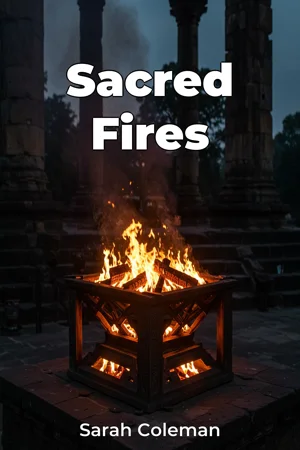
What if the flickering flames of a campfire could illuminate not just the darkness, but also the very foundations of human belief and culture? "Sacred Fires" embarks on a journey to explore the profound and multifaceted role of fire in shaping rituals, mythologies, and storytelling across diverse civilizations throughout history. This book delves into the multifaceted symbolism of fire, examining its representations of destruction, purification, and divine presence, revealing how this elemental force has consistently captivated the human imagination and influenced spiritual practices. This exploration is vital because understanding humanity’s relationship with fire provides invaluable insights into the development of religious practices, the evolution of social structures, and the enduring power of symbolic thought. Fire, as a transformative agent, has served as a focal point for communal gatherings, a catalyst for technological advancements, and a potent symbol of both creation and annihilation. Its enduring presence in cultural narratives makes it a crucial element for understanding the human condition. "Sacred Fires" argues that fire, far from being merely a practical tool, has served as a central organizing principle in human cultures, shaping social structures, belief systems, and artistic expressions. This argument is supported by a comprehensive examination of historical records, archaeological findings, and anthropological studies, revealing the consistent and pervasive influence of fire across different regions and time periods. The book's structure unfolds systematically, beginning with an introduction to the fundamental properties of fire and its early uses by hominids. It elucidates how the control of fire marked a turning point in human evolution, leading to advancements in cooking, toolmaking, and social organization. The book is then divided into three major sections: firstly, the role of fire in religious rituals, exploring its use in sacrificial ceremonies, purification rites, and as a conduit for communicating with the divine. Case studies from ancient Greece, Rome, and Vedic India illustrate how fire altars served as central points of worship and the creation of sacred space. Secondly, the exploration of fire's diverse symbolic meanings across cultures, from its association with destruction and chaos to its representation of renewal and transformation. Myths and legends from around the world, including those of Prometheus, अग्नि, and Pele, are analyzed to reveal the archetypal themes associated with fire. Thirdly, the investigation of the impact of fire on storytelling and artistic expression, highlighting its presence in epic poems, dramatic performances, and visual arts. Examples range from the depiction of infernos in Renaissance paintings to the use of fire imagery in contemporary literature. The narrative culminates in a discussion of the modern-day relevance of fire symbolism, addressing its presence in contemporary art, environmental activism, and spiritual practices. The analysis draws upon a wide range of evidence, including ancient texts, archaeological artifacts, ethnographic studies, and comparative religious analyses. Original research conducted on lesser-known fire cults and rituals provides new perspectives on the subject. "Sacred Fires" connects to fields such as anthropology, sociology, and art history, offering a holistic understanding of fire's cultural significance. Its unique perspective lies in its interdisciplinary approach, which brings together scientific, historical, and cultural insights to provide a nuanced and comprehensive account of fire's role in human life. Written in an accessible yet scholarly style, "Sacred Fires" is aimed at a broad audience, including students of religion, history enthusiasts, and anyone interested in the cultural significance of natural elements. It offers valuable insights for courses on comparative religion, mythology, cultural anthropology, and related subjects. While the book covers a vast expanse of human history and culture, it focuses primarily on societies where fire played a prominent role in religious and cultural practices, acknowledging that some cultures may have had limited interactions with fire due to environmental factors or technological constraints. The information presented has practical applications for understanding contemporary issues related to environmental conservation, cultural preservation, and the interpretation of symbolic language in art and literature. By examining the historical relationship between humans and fire, we can gain a deeper appreciation of the complex interplay between nature, culture, and spirituality. While acknowledging ongoing debates about the interpretation of ancient rituals and mythological narratives, the book aims to present a balanced and well-researched account of fire's enduring legacy.
What if the flickering flames of a campfire could illuminate not just the darkness, but also the very foundations of human belief and culture? "Sacred Fires" embarks on a journey to explore the profound and multifaceted role of fire in shaping rituals, mythologies, and storytelling across diverse civilizations throughout history. This book delves into the multifaceted symbolism of fire, examining its representations of destruction, purification, and divine presence, revealing how this elemental force has consistently captivated the human imagination and influenced spiritual practices. This exploration is vital because understanding humanity’s relationship with fire provides invaluable insights into the development of religious practices, the evolution of social structures, and the enduring power of symbolic thought. Fire, as a transformative agent, has served as a focal point for communal gatherings, a catalyst for technological advancements, and a potent symbol of both creation and annihilation. Its enduring presence in cultural narratives makes it a crucial element for understanding the human condition. "Sacred Fires" argues that fire, far from being merely a practical tool, has served as a central organizing principle in human cultures, shaping social structures, belief systems, and artistic expressions. This argument is supported by a comprehensive examination of historical records, archaeological findings, and anthropological studies, revealing the consistent and pervasive influence of fire across different regions and time periods. The book's structure unfolds systematically, beginning with an introduction to the fundamental properties of fire and its early uses by hominids. It elucidates how the control of fire marked a turning point in human evolution, leading to advancements in cooking, toolmaking, and social organization. The book is then divided into three major sections: firstly, the role of fire in religious rituals, exploring its use in sacrificial ceremonies, purification rites, and as a conduit for communicating with the divine. Case studies from ancient Greece, Rome, and Vedic India illustrate how fire altars served as central points of worship and the creation of sacred space. Secondly, the exploration of fire's diverse symbolic meanings across cultures, from its association with destruction and chaos to its representation of renewal and transformation. Myths and legends from around the world, including those of Prometheus, अग्नि, and Pele, are analyzed to reveal the archetypal themes associated with fire. Thirdly, the investigation of the impact of fire on storytelling and artistic expression, highlighting its presence in epic poems, dramatic performances, and visual arts. Examples range from the depiction of infernos in Renaissance paintings to the use of fire imagery in contemporary literature. The narrative culminates in a discussion of the modern-day relevance of fire symbolism, addressing its presence in contemporary art, environmental activism, and spiritual practices. The analysis draws upon a wide range of evidence, including ancient texts, archaeological artifacts, ethnographic studies, and comparative religious analyses. Original research conducted on lesser-known fire cults and rituals provides new perspectives on the subject. "Sacred Fires" connects to fields such as anthropology, sociology, and art history, offering a holistic understanding of fire's cultural significance. Its unique perspective lies in its interdisciplinary approach, which brings together scientific, historical, and cultural insights to provide a nuanced and comprehensive account of fire's role in human life. Written in an accessible yet scholarly style, "Sacred Fires" is aimed at a broad audience, including students of religion, history enthusiasts, and anyone interested in the cultural significance of natural elements. It offers valuable insights for courses on comparative religion, mythology, cultural anthropology, and related subjects. While the book covers a vast expanse of human history and culture, it focuses primarily on societies where fire played a prominent role in religious and cultural practices, acknowledging that some cultures may have had limited interactions with fire due to environmental factors or technological constraints. The information presented has practical applications for understanding contemporary issues related to environmental conservation, cultural preservation, and the interpretation of symbolic language in art and literature. By examining the historical relationship between humans and fire, we can gain a deeper appreciation of the complex interplay between nature, culture, and spirituality. While acknowledging ongoing debates about the interpretation of ancient rituals and mythological narratives, the book aims to present a balanced and well-researched account of fire's enduring legacy.
"Sacred Fires" explores the profound role of fire in shaping human culture, religion, and history. It examines fire's multifaceted symbolism, from destruction to purification, and its influence on spiritual practices across diverse civilizations. Did you know that fire altars in ancient Greece, Rome, and Vedic India served as central points of worship, creating sacred spaces? Or that myths, such as those of Prometheus, Agni, and Pele, reveal archetypal themes associated with fire? The book argues that fire has been a central organizing principle in human societies, influencing social structures, belief systems, and artistic expressions. Through historical records, archaeological findings, and anthropological studies, "Sacred Fires" reveals fire's pervasive influence. The book begins by introducing fire's fundamental properties and early uses, progressing through its role in religious rituals and symbolic meanings across cultures, and culminating in its impact on storytelling and artistic expression. This unique perspective offers an interdisciplinary approach, combining scientific, historical, and cultural insights to provide a comprehensive account of fire's role in human life. It is a valuable resource for anyone interested in understanding the cultural significance of natural elements, offering insights into comparative religion, mythology, and cultural anthropology.
Book Details
ISBN
9788235204233
Publisher
Publifye AS
Your Licenses
You don't own any licenses for this book
Purchase a license below to unlock this book and download the EPUB.
Purchase License
Select a tier to unlock this book
Need bulk licensing?
Contact us for enterprise agreements.