
About This Book
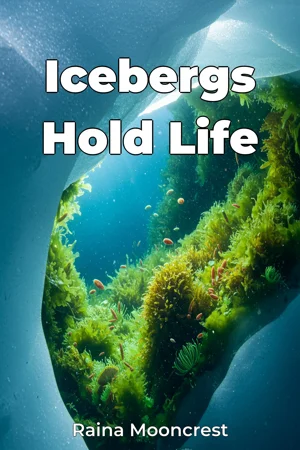
Have you ever considered the possibility of life thriving within the seemingly barren expanse of an iceberg? "Icebergs Hold Life" reveals the diverse and dynamic ecosystems that exist within these floating islands of ice, presenting a compelling case for their ecological significance in polar regions. This book delves into the surprising biodiversity harbored by icebergs, exploring the complex interplay of physical processes, biological adaptations, and ecological interactions that sustain these unique environments. At the heart of this exploration are key concepts: iceberg ecology, polar biodiversity, and the impact of climate change on these fragile ecosystems. Understanding these topics is crucial as the Arctic and Antarctic landscapes undergo rapid transformation, and icebergs are increasingly recognized as critical habitats and dispersal mechanisms for a variety of species. We must understand the history of polar exploration and the advancements in oceanographic and biological research that have allowed scientists to unravel the mysteries of iceberg ecosystems. Readers will also gain a basic understanding of marine ecology and glaciology. "Icebergs Hold Life" argues that icebergs are not simply inert blocks of ice, but rather act as mobile oases, supporting a surprising array of life and playing a vital role in nutrient cycling and species distribution in polar waters. This understanding challenges conventional views of polar ecosystems and highlights the underappreciated importance of icebergs in maintaining biodiversity and ecosystem function. This book unfolds by first introducing the formation and movement of icebergs, establishing their role as both physical features of the polar landscape and as potential habitats. We begin with the origins of Icebergs and discuss the unique geological events that cause their creation. Then we delve into the biological communities that colonize icebergs. The book will highlight the microorganisms, algae, invertebrates, and even larger animals that depend on icebergs for survival. The book then explores the ecological interactions within iceberg ecosystems, focusing on food webs, nutrient cycling, and the role of icebergs in facilitating species dispersal. We will examine case studies from different polar regions, showcasing the diversity of iceberg ecosystems and the specific adaptations of their inhabitants. Finally, it culminates in a discussion of the threats facing these ecosystems, particularly from climate change and human activities, offering perspectives on conservation and management strategies. The arguments presented are supported by a wealth of scientific evidence, including data from field expeditions, satellite imagery, and laboratory experiments. We will present original research findings, showcasing innovative methodologies used to study iceberg ecosystems. "Icebergs Hold Life" intersects with several disciplines, including oceanography, climate science, and conservation biology. By integrating these perspectives, the book offers a holistic understanding of iceberg ecosystems and their broader significance. The book offers a novel perspective by combining traditional ecological research with cutting-edge technologies to reveal the hidden world within icebergs. The book will be academic but accessible, aiming to engage a broad audience while maintaining scientific rigor. The writing style will be clear, concise, and engaging, incorporating vivid descriptions and compelling narratives to bring the science to life. The target audience includes students, researchers, conservationists, and anyone interested in polar biology, climate change, and the wonders of the natural world. This book will be valuable to readers seeking a deeper understanding of the complex interactions between ice, life, and climate in polar regions. As a work of nature and science, "Icebergs Hold Life" adheres to genre conventions of accuracy, objectivity, and evidence-based reasoning. It presents factual information in a clear and organized manner, supported by credible sources and scientific data. The book's scope encompasses iceberg ecosystems across both the Arctic and Antarctic, but it primarily focuses on the biological communities associated with the ice itself. While it touches upon the broader impacts of climate change, it does not delve into political or economic issues related to polar resource management. The knowledge gained from this book can be applied to inform conservation efforts, guide policy decisions related to polar resource management, and raise public awareness about the importance of protecting these fragile ecosystems. The book addresses ongoing debates surrounding the role of icebergs in carbon cycling and their potential as indicators of climate change. It presents different perspectives on these issues.
Have you ever considered the possibility of life thriving within the seemingly barren expanse of an iceberg? "Icebergs Hold Life" reveals the diverse and dynamic ecosystems that exist within these floating islands of ice, presenting a compelling case for their ecological significance in polar regions. This book delves into the surprising biodiversity harbored by icebergs, exploring the complex interplay of physical processes, biological adaptations, and ecological interactions that sustain these unique environments. At the heart of this exploration are key concepts: iceberg ecology, polar biodiversity, and the impact of climate change on these fragile ecosystems. Understanding these topics is crucial as the Arctic and Antarctic landscapes undergo rapid transformation, and icebergs are increasingly recognized as critical habitats and dispersal mechanisms for a variety of species. We must understand the history of polar exploration and the advancements in oceanographic and biological research that have allowed scientists to unravel the mysteries of iceberg ecosystems. Readers will also gain a basic understanding of marine ecology and glaciology. "Icebergs Hold Life" argues that icebergs are not simply inert blocks of ice, but rather act as mobile oases, supporting a surprising array of life and playing a vital role in nutrient cycling and species distribution in polar waters. This understanding challenges conventional views of polar ecosystems and highlights the underappreciated importance of icebergs in maintaining biodiversity and ecosystem function. This book unfolds by first introducing the formation and movement of icebergs, establishing their role as both physical features of the polar landscape and as potential habitats. We begin with the origins of Icebergs and discuss the unique geological events that cause their creation. Then we delve into the biological communities that colonize icebergs. The book will highlight the microorganisms, algae, invertebrates, and even larger animals that depend on icebergs for survival. The book then explores the ecological interactions within iceberg ecosystems, focusing on food webs, nutrient cycling, and the role of icebergs in facilitating species dispersal. We will examine case studies from different polar regions, showcasing the diversity of iceberg ecosystems and the specific adaptations of their inhabitants. Finally, it culminates in a discussion of the threats facing these ecosystems, particularly from climate change and human activities, offering perspectives on conservation and management strategies. The arguments presented are supported by a wealth of scientific evidence, including data from field expeditions, satellite imagery, and laboratory experiments. We will present original research findings, showcasing innovative methodologies used to study iceberg ecosystems. "Icebergs Hold Life" intersects with several disciplines, including oceanography, climate science, and conservation biology. By integrating these perspectives, the book offers a holistic understanding of iceberg ecosystems and their broader significance. The book offers a novel perspective by combining traditional ecological research with cutting-edge technologies to reveal the hidden world within icebergs. The book will be academic but accessible, aiming to engage a broad audience while maintaining scientific rigor. The writing style will be clear, concise, and engaging, incorporating vivid descriptions and compelling narratives to bring the science to life. The target audience includes students, researchers, conservationists, and anyone interested in polar biology, climate change, and the wonders of the natural world. This book will be valuable to readers seeking a deeper understanding of the complex interactions between ice, life, and climate in polar regions. As a work of nature and science, "Icebergs Hold Life" adheres to genre conventions of accuracy, objectivity, and evidence-based reasoning. It presents factual information in a clear and organized manner, supported by credible sources and scientific data. The book's scope encompasses iceberg ecosystems across both the Arctic and Antarctic, but it primarily focuses on the biological communities associated with the ice itself. While it touches upon the broader impacts of climate change, it does not delve into political or economic issues related to polar resource management. The knowledge gained from this book can be applied to inform conservation efforts, guide policy decisions related to polar resource management, and raise public awareness about the importance of protecting these fragile ecosystems. The book addresses ongoing debates surrounding the role of icebergs in carbon cycling and their potential as indicators of climate change. It presents different perspectives on these issues.
"Icebergs Hold Life" unveils the surprisingly vibrant ecosystems thriving within these seemingly barren polar structures, highlighting their critical role in polar biodiversity. These floating islands aren't just inert blocks of ice; they serve as mobile oases, supporting a diverse array of life. The book explores how icebergs function as crucial habitats and dispersal mechanisms, challenging conventional views of polar ecosystems. Did you know that icebergs play a vital role in nutrient cycling, distributing essential elements throughout polar waters? Or that various species, from microorganisms to larger animals, depend on these icy habitats for survival? The book progresses from the geological origins of icebergs to the biological communities that colonize them. It explores the intricate ecological interactions within these ecosystems, focusing on food webs and species dispersal. By integrating perspectives from oceanography, climate science, and conservation biology, "Icebergs Hold Life" offers a holistic understanding of these unique environments. The book emphasizes the threats these ecosystems face, particularly from climate change, and proposes potential conservation strategies.
Book Details
ISBN
9788235203809
Publisher
Publifye AS
Your Licenses
You don't own any licenses for this book
Purchase a license below to unlock this book and download the EPUB.
Purchase License
Select a tier to unlock this book
Need bulk licensing?
Contact us for enterprise agreements.