
About This Book
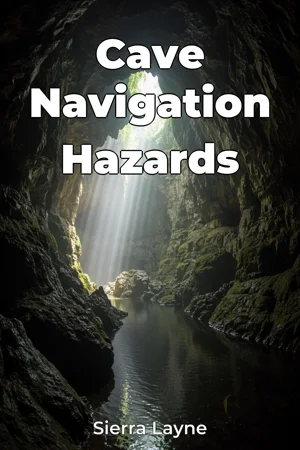
Have you ever considered the profound risks that lie hidden beneath our feet, in the silent, unexplored depths of the Earth's cave systems? 'Cave Navigation Hazards' delves into the critical dangers of disorientation and collapse inherent in underground exploration, providing a comprehensive guide for cavers, geologists, rescue personnel, and anyone venturing into subterranean environments. Disorientation, often leading to life-threatening situations, is a primary concern, alongside the ever-present threat of structural collapse within these complex geological formations. This book addresses two central themes: the cognitive challenges of navigating in disorienting cave environments and the geological factors contributing to cave instability and collapse. Understanding these elements is vital for mitigating risk and ensuring the safety of individuals exploring or working in these unique settings. Navigation in caves presents unique mental challenges due to the absence of familiar landmarks, the repetitive nature of passages, and the potential for sensory deprivation. Simultaneously, an understanding of geology is essential for interpreting cave structures and minimizing the risk of collapse. The exploration of caves has always been intertwined with both scientific inquiry and human adventure. From early spelunkers charting unknown territories to modern geologists studying cave formations, humanity's fascination with the underground world has driven exploration and research. However, this pursuit carries inherent risks that necessitate thorough understanding and preparation. A fundamental knowledge of basic geological principles, mapping techniques, signaling protocols, and first aid is assumed. The central thesis of 'Cave Navigation Hazards' is that a multi-faceted understanding of both navigational psychology and cave geology is paramount for safe and effective underground exploration. By integrating knowledge from various disciplines, we aim to equip readers with the tools and awareness necessary to navigate and assess cave environments safely. This book is structured to provide a comprehensive understanding of the hazards involved in cave navigation. It begins with an introduction to the psychological and physiological factors that contribute to disorientation, explaining how our senses can be deceived in the absence of light and familiar landmarks. It follows with a thorough exploration of cave geology, focusing on rock types, structural features, and processes that lead to cave formation and, eventually, collapse. Later chapters detail mapping techniques, equipment considerations, and emergency procedures, equipping the reader with practical skills. The book culminates with case studies of actual cave incidents, analyzing the causes and offering lessons learned. The arguments presented are supported by a combination of scientific literature, experimental data from cognitive psychology, geological surveys, and firsthand accounts from experienced cavers and rescue personnel. We will draw on data from cave surveys, incident reports, and geological studies to provide concrete examples and evidence-based recommendations. 'Cave Navigation Hazards' connects to various other fields of study, including cognitive psychology, geology, meteorology, and emergency medicine. Cognitive psychology informs our understanding of spatial awareness and decision-making under stress. Geology provides insights into the structural integrity of caves. Meteorology can help predict flooding events. Emergency medicine provides life-saving intervention techniques. These interdisciplinary connections enrich the book's perspective and provide a more holistic approach to cave safety. This book distinguishes itself by integrating a unique combination of psychological principles and geological analysis to address the challenges of cave navigation. By highlighting the importance of mental preparedness alongside technical skills, it offers a more complete approach to mitigating risk in underground environments. The writing style aims to be informative and accessible, balancing scientific accuracy with practical guidance. The tone is serious and cautionary, emphasizing the potential dangers while providing practical solutions. Information is presented in a logical, step-by-step manner, ensuring clarity and comprehension. The primary target audience includes cavers of all experience levels, from novices to seasoned explorers, as well as geologists, search and rescue personnel, and environmental scientists who work in or study cave systems. This book is also valuable for educators and students in earth sciences, geography, and related fields. In line with the conventions of earth sciences and adventure non-fiction, this book incorporates detailed maps, diagrams, photographs, and real-life case studies to illustrate key concepts and enhance the reader's understanding. It aligns with the standards of scientific accuracy expected in the field while maintaining an engaging and accessible tone for a broader audience. The scope covers common cave environments and navigational challenges but does not delve into highly specialized topics such as deep cave diving or advanced geological modeling. The focus remains on providing practical knowledge applicable to a wide range of cave exploration scenarios. The information presented has real-world applications for cave safety, risk management, and emergency response. By understanding the principles outlined in this book, readers can improve their navigation skills, assess cave stability, and respond effectively to emergencies. While this book does not directly engage in ongoing debates, it addresses areas of differing opinion regarding best practices in cave exploration and risk assessment, offering a balanced perspective based on current research and expert consensus.
Have you ever considered the profound risks that lie hidden beneath our feet, in the silent, unexplored depths of the Earth's cave systems? 'Cave Navigation Hazards' delves into the critical dangers of disorientation and collapse inherent in underground exploration, providing a comprehensive guide for cavers, geologists, rescue personnel, and anyone venturing into subterranean environments. Disorientation, often leading to life-threatening situations, is a primary concern, alongside the ever-present threat of structural collapse within these complex geological formations. This book addresses two central themes: the cognitive challenges of navigating in disorienting cave environments and the geological factors contributing to cave instability and collapse. Understanding these elements is vital for mitigating risk and ensuring the safety of individuals exploring or working in these unique settings. Navigation in caves presents unique mental challenges due to the absence of familiar landmarks, the repetitive nature of passages, and the potential for sensory deprivation. Simultaneously, an understanding of geology is essential for interpreting cave structures and minimizing the risk of collapse. The exploration of caves has always been intertwined with both scientific inquiry and human adventure. From early spelunkers charting unknown territories to modern geologists studying cave formations, humanity's fascination with the underground world has driven exploration and research. However, this pursuit carries inherent risks that necessitate thorough understanding and preparation. A fundamental knowledge of basic geological principles, mapping techniques, signaling protocols, and first aid is assumed. The central thesis of 'Cave Navigation Hazards' is that a multi-faceted understanding of both navigational psychology and cave geology is paramount for safe and effective underground exploration. By integrating knowledge from various disciplines, we aim to equip readers with the tools and awareness necessary to navigate and assess cave environments safely. This book is structured to provide a comprehensive understanding of the hazards involved in cave navigation. It begins with an introduction to the psychological and physiological factors that contribute to disorientation, explaining how our senses can be deceived in the absence of light and familiar landmarks. It follows with a thorough exploration of cave geology, focusing on rock types, structural features, and processes that lead to cave formation and, eventually, collapse. Later chapters detail mapping techniques, equipment considerations, and emergency procedures, equipping the reader with practical skills. The book culminates with case studies of actual cave incidents, analyzing the causes and offering lessons learned. The arguments presented are supported by a combination of scientific literature, experimental data from cognitive psychology, geological surveys, and firsthand accounts from experienced cavers and rescue personnel. We will draw on data from cave surveys, incident reports, and geological studies to provide concrete examples and evidence-based recommendations. 'Cave Navigation Hazards' connects to various other fields of study, including cognitive psychology, geology, meteorology, and emergency medicine. Cognitive psychology informs our understanding of spatial awareness and decision-making under stress. Geology provides insights into the structural integrity of caves. Meteorology can help predict flooding events. Emergency medicine provides life-saving intervention techniques. These interdisciplinary connections enrich the book's perspective and provide a more holistic approach to cave safety. This book distinguishes itself by integrating a unique combination of psychological principles and geological analysis to address the challenges of cave navigation. By highlighting the importance of mental preparedness alongside technical skills, it offers a more complete approach to mitigating risk in underground environments. The writing style aims to be informative and accessible, balancing scientific accuracy with practical guidance. The tone is serious and cautionary, emphasizing the potential dangers while providing practical solutions. Information is presented in a logical, step-by-step manner, ensuring clarity and comprehension. The primary target audience includes cavers of all experience levels, from novices to seasoned explorers, as well as geologists, search and rescue personnel, and environmental scientists who work in or study cave systems. This book is also valuable for educators and students in earth sciences, geography, and related fields. In line with the conventions of earth sciences and adventure non-fiction, this book incorporates detailed maps, diagrams, photographs, and real-life case studies to illustrate key concepts and enhance the reader's understanding. It aligns with the standards of scientific accuracy expected in the field while maintaining an engaging and accessible tone for a broader audience. The scope covers common cave environments and navigational challenges but does not delve into highly specialized topics such as deep cave diving or advanced geological modeling. The focus remains on providing practical knowledge applicable to a wide range of cave exploration scenarios. The information presented has real-world applications for cave safety, risk management, and emergency response. By understanding the principles outlined in this book, readers can improve their navigation skills, assess cave stability, and respond effectively to emergencies. While this book does not directly engage in ongoing debates, it addresses areas of differing opinion regarding best practices in cave exploration and risk assessment, offering a balanced perspective based on current research and expert consensus.
"Cave Navigation Hazards" explores the multifaceted dangers of underground exploration, focusing on cave hazards such as disorientation and cave collapse. It highlights that cave navigation presents unique mental challenges due to the absence of familiar landmarks and repetitive passages. The book delves into the geological factors that contribute to cave instability, emphasizing the importance of understanding cave geology to minimize risks. For instance, structural collapse is a significant threat due to the complex geological formations found within these subterranean environments. This book integrates psychological insights and geological analysis, providing a comprehensive approach to cave safety. Mapping techniques, emergency procedures, and equipment considerations are detailed to equip readers with practical skills. The book begins by addressing the psychological and physiological factors contributing to disorientation, then explores cave geology, and finally details mapping techniques and emergency procedures. By combining scientific literature, experimental data, and firsthand accounts, "Cave Navigation Hazards" offers a balanced perspective on risk management in cave exploration. It's valuable for cavers, geologists, and rescue personnel, providing essential knowledge to navigate and assess cave environments safely while emphasizing the necessity of mental preparedness. It progresses by first introducing the psychological challenges, then the geological factors, and concludes with practical skills and case studies.
Book Details
ISBN
9788235203618
Publisher
Publifye AS
Your Licenses
You don't own any licenses for this book
Purchase a license below to unlock this book and download the EPUB.
Purchase License
Select a tier to unlock this book
Need bulk licensing?
Contact us for enterprise agreements.