
About This Book
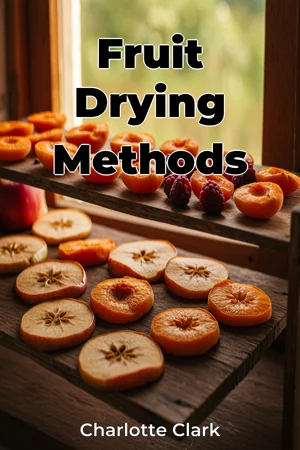
Are you ready to unlock the secrets to preserving nature's sweet bounty while strengthening family bonds? "Fruit Drying Methods" offers a comprehensive exploration of preserving fruits through drying, interwoven with the practicalities of building effective family food storage plans. This book addresses two key areas: the science and art of fruit drying and the integration of these preserved foods into a family's long-term sustenance strategy. These topics are important because they empower individuals to reduce food waste, enjoy seasonal fruits year-round, and proactively safeguard their family's nutritional needs. Historically, drying has been one of humanity’s earliest methods of food preservation, crucial for survival and trade. Understanding the principles behind dehydration, such as moisture content, microbial activity, and enzymatic processes, is essential for successful fruit drying. This book requires no prior knowledge other than a basic understanding of cooking and food safety. The central argument posits that fruit drying is not merely a preservation technique but a pathway to greater self-sufficiency, healthier eating habits, and strengthened family resilience. By mastering these techniques, individuals can take control of their food supply and reduce dependence on commercially processed foods. This book is structured to guide the reader from novice to confident fruit dryer. It begins by introducing fundamental concepts: the science behind drying, optimal fruit selection, and essential equipment. The book will then thoroughly discuss various drying methods, including sun drying, oven drying, dehydrator use, and even innovative techniques like microwave drying, elaborating on the advantages and disadvantages, including costs and time considerations, of each method. Further chapters focus on preventing spoilage, proper storage techniques to maximize shelf life, and creative ways to incorporate dried fruits into everyday meals and snacks. The culminating section will provide practical guidance on creating a family food storage plan, tailored to different needs and preferences. The book's arguments are supported by a blend of scientific research, historical data on food preservation, and practical recipes and guidelines tested in real-world settings. Data sources will include agricultural extension publications, food science journals, and surveys of experienced fruit dryers. The book’s content will connect to other disciplines like nutrition (examining the nutritional value of dried fruits), economics (analyzing the cost-effectiveness of home drying versus purchasing commercially dried fruits), and environmental science (considering the sustainability of different drying methods). These connections enrich the book's argument by providing a multidimensional understanding of fruit drying's impact. "Fruit Drying Methods" offers a unique perspective by integrating detailed technical information on drying techniques with the social and emotional aspects of family food security. It emphasizes the shared activity of preparing for the future as a way to foster stronger family relationships. Written in a clear and accessible style, the book aims to present complex information in an easily digestible format for a broad audience. It targets home cooks, gardeners, homesteaders, and anyone interested in sustainable living and family preparedness. This book will be valuable to them by offering a comprehensive resource for mastering fruit drying and integrating it into a broader food storage strategy. As a cooking and family relationships resource, it offers detailed instructions, appealing recipes, and a focus on the social benefits of shared food preparation and storage. The scope of the book is intentionally limited to fruit drying and related family food storage practices, excluding other forms of food preservation like canning or pickling. This focused approach allows for a more in-depth exploration of the chosen topics. Readers will learn how to apply the information practically by following step-by-step instructions for drying various fruits, creating customized storage plans based on their family's needs, and confidently preparing healthy, delicious meals using their dried fruit bounty. While fruit drying is a well-established practice, debates exist regarding the optimal methods for preserving specific nutrients and flavors. This book will address such controversies by presenting different perspectives and offering evidence-based recommendations.
Are you ready to unlock the secrets to preserving nature's sweet bounty while strengthening family bonds? "Fruit Drying Methods" offers a comprehensive exploration of preserving fruits through drying, interwoven with the practicalities of building effective family food storage plans. This book addresses two key areas: the science and art of fruit drying and the integration of these preserved foods into a family's long-term sustenance strategy. These topics are important because they empower individuals to reduce food waste, enjoy seasonal fruits year-round, and proactively safeguard their family's nutritional needs. Historically, drying has been one of humanity’s earliest methods of food preservation, crucial for survival and trade. Understanding the principles behind dehydration, such as moisture content, microbial activity, and enzymatic processes, is essential for successful fruit drying. This book requires no prior knowledge other than a basic understanding of cooking and food safety. The central argument posits that fruit drying is not merely a preservation technique but a pathway to greater self-sufficiency, healthier eating habits, and strengthened family resilience. By mastering these techniques, individuals can take control of their food supply and reduce dependence on commercially processed foods. This book is structured to guide the reader from novice to confident fruit dryer. It begins by introducing fundamental concepts: the science behind drying, optimal fruit selection, and essential equipment. The book will then thoroughly discuss various drying methods, including sun drying, oven drying, dehydrator use, and even innovative techniques like microwave drying, elaborating on the advantages and disadvantages, including costs and time considerations, of each method. Further chapters focus on preventing spoilage, proper storage techniques to maximize shelf life, and creative ways to incorporate dried fruits into everyday meals and snacks. The culminating section will provide practical guidance on creating a family food storage plan, tailored to different needs and preferences. The book's arguments are supported by a blend of scientific research, historical data on food preservation, and practical recipes and guidelines tested in real-world settings. Data sources will include agricultural extension publications, food science journals, and surveys of experienced fruit dryers. The book’s content will connect to other disciplines like nutrition (examining the nutritional value of dried fruits), economics (analyzing the cost-effectiveness of home drying versus purchasing commercially dried fruits), and environmental science (considering the sustainability of different drying methods). These connections enrich the book's argument by providing a multidimensional understanding of fruit drying's impact. "Fruit Drying Methods" offers a unique perspective by integrating detailed technical information on drying techniques with the social and emotional aspects of family food security. It emphasizes the shared activity of preparing for the future as a way to foster stronger family relationships. Written in a clear and accessible style, the book aims to present complex information in an easily digestible format for a broad audience. It targets home cooks, gardeners, homesteaders, and anyone interested in sustainable living and family preparedness. This book will be valuable to them by offering a comprehensive resource for mastering fruit drying and integrating it into a broader food storage strategy. As a cooking and family relationships resource, it offers detailed instructions, appealing recipes, and a focus on the social benefits of shared food preparation and storage. The scope of the book is intentionally limited to fruit drying and related family food storage practices, excluding other forms of food preservation like canning or pickling. This focused approach allows for a more in-depth exploration of the chosen topics. Readers will learn how to apply the information practically by following step-by-step instructions for drying various fruits, creating customized storage plans based on their family's needs, and confidently preparing healthy, delicious meals using their dried fruit bounty. While fruit drying is a well-established practice, debates exist regarding the optimal methods for preserving specific nutrients and flavors. This book will address such controversies by presenting different perspectives and offering evidence-based recommendations.
"Fruit Drying Methods" explores the art and science of preserving fruits, offering readers a path to self-sufficiency and family food security. The book emphasizes that drying is not merely a preservation technique but a means to healthier eating and stronger relationships through shared activities. Readers will discover how understanding dehydration principles, such as managing moisture content to prevent microbial activity, is key to successful fruit drying. The book progresses logically from fundamental concepts like fruit selection and essential equipment to diverse drying methods, including sun drying, oven drying, and dehydrator use. It uniquely integrates detailed technical information with the social aspects of family food storage, highlighting how preparing together can foster stronger family relationships. The culmination is practical guidance on creating tailored food storage plans, ensuring families can enjoy the fruits of their labor year-round, promoting sustainable living and family resilience.
Book Details
ISBN
9788235203601
Publisher
Publifye AS
Your Licenses
You don't own any licenses for this book
Purchase a license below to unlock this book and download the EPUB.
Purchase License
Select a tier to unlock this book
Need bulk licensing?
Contact us for enterprise agreements.