
About This Book
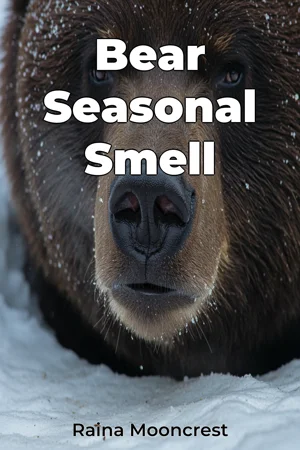
How can a hibernating bear, in a state of near suspended animation, detect the faint aroma of a food source miles away? "Bear Seasonal Smell" delves into the intricate olfactory world of bears, revealing the biological mechanisms and ecological significance of their remarkable sense of smell, particularly during the critical periods of hyperphagia and hibernation. This book explores the confluence of physiology, ecology, and behavior that allows bears to thrive in challenging environments. This book primarily focuses on three key topics. First, we examine the neurobiological basis of the bear's olfactory system, from the structure of their nasal passages to the processing of scent information in the brain. Second, we explore the ecological role of olfaction in foraging behavior, habitat selection, and predator avoidance; and third, we examine how seasonal changes, particularly hibernation, influence a bear's olfactory sensitivity and its subsequent behavior. These topics are vital because they contribute to understanding the survival strategies of bears and their impact on ecosystem dynamics. Building upon foundational research in mammalian olfaction and bear biology, this book presents a comprehensive overview of the current understanding of bear olfaction. Readers will benefit from a basic understanding of animal physiology and ecology; however, the book will provide clear explanations of these concepts as they arise. The central argument of "Bear Seasonal Smell" is that a bear's sense of smell is not merely a passive sensory input but an active, dynamic system that adapts to changing environmental conditions and physiological states, playing a crucial role in their survival and reproductive success. This argument challenges the conventional view of hibernation as a period of sensory deprivation, highlighting the remarkable adaptations that allow bears to maintain environmental awareness even in a state of dormancy. The book begins by introducing the basic principles of olfaction and the unique adaptations of the bear's olfactory system. It then develops its main argument through three major sections. The first section details the neuroanatomy and neurophysiology of the bear's olfactory system, including the olfactory receptors, the olfactory bulb, and higher brain regions involved in scent processing. The second section examines the ecological context of bear olfaction, exploring how bears use scent to locate food sources, find mates, and avoid predators. The third section investigates the impact of seasonal changes, especially hibernation, on olfactory sensitivity and behavior, examining the hormonal and metabolic changes that influence a bear's ability to detect and respond to odors during this critical period. The book culminates by discussing practical applications of this knowledge, such as improving bear management strategies and mitigating human-wildlife conflicts. This book relies on a diverse range of evidence, including anatomical studies of bear nasal passages and brains, physiological measurements of olfactory receptor responses, behavioral experiments on scent discrimination, and field observations of bear foraging behavior. Original data from recent studies on the effects of hibernation on bear olfactory sensitivity will also be presented. "Bear Seasonal Smell" also connects to several other fields of study, including: (1) Animal behavior: Understanding how bears use scent to communicate and interact with their environment. (2) Conservation biology: Informing strategies for managing bear populations and mitigating human-wildlife conflict. (3) Sensory ecology: Providing insights into the evolution and function of olfactory systems in mammals. These interdisciplinary connections enrich the book's argument by providing a broader context for understanding the significance of bear olfaction. This book offers a unique perspective by combining detailed neurobiological analyses with ecological and behavioral observations, highlighting the dynamic interplay between physiology and environment. The writing style will be accessible, yet scientifically rigorous, making it suitable for both students and professionals in the fields of biology, ecology, and wildlife management. The target audience includes undergraduate and graduate students in biology, ecology, and wildlife management, as well as researchers and professionals working in these fields, and also informed general readers interested in animal behavior and ecology. It will be valuable to them because it provides a comprehensive and up-to-date overview of bear olfaction, synthesizing information from diverse sources and presenting it in a clear and engaging manner. This book adheres to the conventions of scientific writing, emphasizing empirical evidence, logical reasoning, and clear communication. The scope of this book is limited to the study of olfaction in bears, with a primary focus on North American species. While it mentions other aspects of bear biology, the main focus is on their sense of smell. The knowledge presented in this book can inform practical applications such as developing more effective bear deterrents, improving bear-resistant food storage containers, and designing habitat management strategies that minimize human-bear conflict. While the remarkable olfactory capabilities of bears are widely acknowledged, ongoing debates exist regarding the precise mechanisms underlying their ability to detect faint odors over long distances. "Bear Seasonal Smell" addresses these debates by presenting a balanced review of the current evidence and identifying areas for future research.
How can a hibernating bear, in a state of near suspended animation, detect the faint aroma of a food source miles away? "Bear Seasonal Smell" delves into the intricate olfactory world of bears, revealing the biological mechanisms and ecological significance of their remarkable sense of smell, particularly during the critical periods of hyperphagia and hibernation. This book explores the confluence of physiology, ecology, and behavior that allows bears to thrive in challenging environments. This book primarily focuses on three key topics. First, we examine the neurobiological basis of the bear's olfactory system, from the structure of their nasal passages to the processing of scent information in the brain. Second, we explore the ecological role of olfaction in foraging behavior, habitat selection, and predator avoidance; and third, we examine how seasonal changes, particularly hibernation, influence a bear's olfactory sensitivity and its subsequent behavior. These topics are vital because they contribute to understanding the survival strategies of bears and their impact on ecosystem dynamics. Building upon foundational research in mammalian olfaction and bear biology, this book presents a comprehensive overview of the current understanding of bear olfaction. Readers will benefit from a basic understanding of animal physiology and ecology; however, the book will provide clear explanations of these concepts as they arise. The central argument of "Bear Seasonal Smell" is that a bear's sense of smell is not merely a passive sensory input but an active, dynamic system that adapts to changing environmental conditions and physiological states, playing a crucial role in their survival and reproductive success. This argument challenges the conventional view of hibernation as a period of sensory deprivation, highlighting the remarkable adaptations that allow bears to maintain environmental awareness even in a state of dormancy. The book begins by introducing the basic principles of olfaction and the unique adaptations of the bear's olfactory system. It then develops its main argument through three major sections. The first section details the neuroanatomy and neurophysiology of the bear's olfactory system, including the olfactory receptors, the olfactory bulb, and higher brain regions involved in scent processing. The second section examines the ecological context of bear olfaction, exploring how bears use scent to locate food sources, find mates, and avoid predators. The third section investigates the impact of seasonal changes, especially hibernation, on olfactory sensitivity and behavior, examining the hormonal and metabolic changes that influence a bear's ability to detect and respond to odors during this critical period. The book culminates by discussing practical applications of this knowledge, such as improving bear management strategies and mitigating human-wildlife conflicts. This book relies on a diverse range of evidence, including anatomical studies of bear nasal passages and brains, physiological measurements of olfactory receptor responses, behavioral experiments on scent discrimination, and field observations of bear foraging behavior. Original data from recent studies on the effects of hibernation on bear olfactory sensitivity will also be presented. "Bear Seasonal Smell" also connects to several other fields of study, including: (1) Animal behavior: Understanding how bears use scent to communicate and interact with their environment. (2) Conservation biology: Informing strategies for managing bear populations and mitigating human-wildlife conflict. (3) Sensory ecology: Providing insights into the evolution and function of olfactory systems in mammals. These interdisciplinary connections enrich the book's argument by providing a broader context for understanding the significance of bear olfaction. This book offers a unique perspective by combining detailed neurobiological analyses with ecological and behavioral observations, highlighting the dynamic interplay between physiology and environment. The writing style will be accessible, yet scientifically rigorous, making it suitable for both students and professionals in the fields of biology, ecology, and wildlife management. The target audience includes undergraduate and graduate students in biology, ecology, and wildlife management, as well as researchers and professionals working in these fields, and also informed general readers interested in animal behavior and ecology. It will be valuable to them because it provides a comprehensive and up-to-date overview of bear olfaction, synthesizing information from diverse sources and presenting it in a clear and engaging manner. This book adheres to the conventions of scientific writing, emphasizing empirical evidence, logical reasoning, and clear communication. The scope of this book is limited to the study of olfaction in bears, with a primary focus on North American species. While it mentions other aspects of bear biology, the main focus is on their sense of smell. The knowledge presented in this book can inform practical applications such as developing more effective bear deterrents, improving bear-resistant food storage containers, and designing habitat management strategies that minimize human-bear conflict. While the remarkable olfactory capabilities of bears are widely acknowledged, ongoing debates exist regarding the precise mechanisms underlying their ability to detect faint odors over long distances. "Bear Seasonal Smell" addresses these debates by presenting a balanced review of the current evidence and identifying areas for future research.
"Bear Seasonal Smell" explores the fascinating world of bear olfaction, revealing how their powerful sense of smell underpins their survival. This book delves into the neurobiology behind a bear's ability to detect scents from miles away, even during hibernation, a period when one might expect sensory perception to be diminished. Discover how their olfactory system actively adapts to seasonal changes, influencing everything from foraging behavior to predator avoidance. The book examines the intricate connection between a bear's physiology, ecology, and behavior, highlighting the critical role of olfaction in their ability to thrive. It presents a comprehensive overview of bear olfaction, from the structure of their nasal passages to the processing of scent information in the brain. For example, bears use their exceptional sense of smell to locate food sources, find mates, and avoid predators, demonstrating the ecological importance of this sensory ability. Beginning with the basic principles of olfaction and the unique adaptations of the bear's olfactory system, the book progresses through detailed sections on neuroanatomy, ecological context, and the impact of seasonal changes. Ultimately, "Bear Seasonal Smell" showcases how a bear's sense of smell is a dynamic system that adapts to environmental conditions, playing a crucial role in their survival and reproductive success.
Book Details
ISBN
9788235203588
Publisher
Publifye AS
Your Licenses
You don't own any licenses for this book
Purchase a license below to unlock this book and download the EPUB.
Purchase License
Select a tier to unlock this book
Need bulk licensing?
Contact us for enterprise agreements.