
About This Book
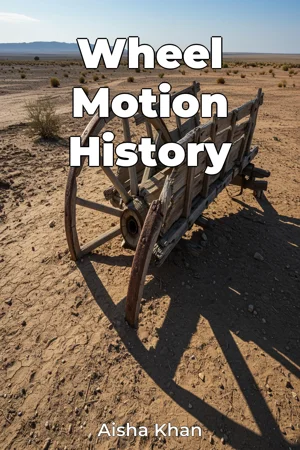
Imagine a world without the simple circle we call the wheel. ‘Wheel Motion History’ embarks on a comprehensive exploration of this pivotal invention, tracing its evolution from rudimentary pottery wheels to the sophisticated transportation systems that define the modern era. This book delves into the wheel's profound influence on societal development, technological advancement, and the very course of human history. This book primarily addresses three interconnected themes: the technological evolution of the wheel itself, its impact on various civilizations throughout history, and its continuing relevance in contemporary society. Understanding these aspects provides essential insights into how a seemingly simple invention has shaped our world, offering a lens through which to examine technological progress and its cultural consequences. To fully appreciate the wheel's significance, we will examine its presence and impact across different periods and cultures, which requires knowledge of early Mesopotamian societies, the Roman Empire's infrastructure, and the Industrial Revolution. Basic concepts of physics (friction, force, motion) are also helpful, though not mandatory, as the book will explain the principles involved in an accessible manner. The central argument of 'Wheel Motion History' posits that the wheel is not merely a mechanical device but a catalyst for societal transformation. Its development and refinement have consistently spurred economic growth, facilitated cultural exchange, and enabled unprecedented levels of mobility and connectivity. Understanding this transformative power is crucial for appreciating the interconnectedness of technology and societal evolution. The book is structured into three major parts. The first section explores the origins of the wheel, examining its early iterations in pottery and rudimentary transportation. The second section explores the wheel's impact on different civilizations, detailing its adoption and adaptation in various cultural contexts. The final section focuses on the modern wheel, examining its role in contemporary transportation, manufacturing, and other key industries. We will discuss the wheel in cars, planes, trains, and other vehicles. The arguments presented are supported by extensive historical research, archaeological findings, and engineering analyses of wheel designs. Primary sources, such as ancient texts, diagrams, and existing examples of early wheels, are used alongside scholarly interpretations. 'Wheel Motion History' draws connections between technology, history, and sociology. It examines the wheel's impact on trade networks (economics), its influence on urban development (sociology), and its role in shaping military strategies (military history). These interdisciplinary links highlight the far-reaching implications of wheeled technology. This book adopts a historical perspective, tracing the wheel's development chronologically while also incorporating thematic analyses of its impact on different aspects of society. This approach allows for a comprehensive and nuanced understanding of the wheel's multifaceted influence. The target audience includes history enthusiasts, technology buffs, students of engineering and sociology, and anyone curious about the forces that have shaped the modern world. The book will be valuable to readers seeking a deeper understanding of the relationship between technological innovation and societal progress. As a work of non-fiction, 'Wheel Motion History' adheres to the genre's conventions by presenting factual information, thoroughly researched evidence, and objective analysis. It aims to inform, educate, and provoke critical thinking about the wheel's significance. The scope of the book is broad, encompassing the wheel's entire history from its origins to its current applications. However, it focuses primarily on the wheel's impact on transportation and societal development, with some limitations in its coverage of highly specialized industrial applications. The knowledge provided is intended for applications far beyond simple reading. Understanding the development and implementation of the wheel helps to understand other technologies and how to implement them in society. While the wheel itself is not a source of major controversy, there are ongoing debates about the environmental impact of wheeled transportation and the search for sustainable alternatives. This book will acknowledge these discussions.
Imagine a world without the simple circle we call the wheel. ‘Wheel Motion History’ embarks on a comprehensive exploration of this pivotal invention, tracing its evolution from rudimentary pottery wheels to the sophisticated transportation systems that define the modern era. This book delves into the wheel's profound influence on societal development, technological advancement, and the very course of human history. This book primarily addresses three interconnected themes: the technological evolution of the wheel itself, its impact on various civilizations throughout history, and its continuing relevance in contemporary society. Understanding these aspects provides essential insights into how a seemingly simple invention has shaped our world, offering a lens through which to examine technological progress and its cultural consequences. To fully appreciate the wheel's significance, we will examine its presence and impact across different periods and cultures, which requires knowledge of early Mesopotamian societies, the Roman Empire's infrastructure, and the Industrial Revolution. Basic concepts of physics (friction, force, motion) are also helpful, though not mandatory, as the book will explain the principles involved in an accessible manner. The central argument of 'Wheel Motion History' posits that the wheel is not merely a mechanical device but a catalyst for societal transformation. Its development and refinement have consistently spurred economic growth, facilitated cultural exchange, and enabled unprecedented levels of mobility and connectivity. Understanding this transformative power is crucial for appreciating the interconnectedness of technology and societal evolution. The book is structured into three major parts. The first section explores the origins of the wheel, examining its early iterations in pottery and rudimentary transportation. The second section explores the wheel's impact on different civilizations, detailing its adoption and adaptation in various cultural contexts. The final section focuses on the modern wheel, examining its role in contemporary transportation, manufacturing, and other key industries. We will discuss the wheel in cars, planes, trains, and other vehicles. The arguments presented are supported by extensive historical research, archaeological findings, and engineering analyses of wheel designs. Primary sources, such as ancient texts, diagrams, and existing examples of early wheels, are used alongside scholarly interpretations. 'Wheel Motion History' draws connections between technology, history, and sociology. It examines the wheel's impact on trade networks (economics), its influence on urban development (sociology), and its role in shaping military strategies (military history). These interdisciplinary links highlight the far-reaching implications of wheeled technology. This book adopts a historical perspective, tracing the wheel's development chronologically while also incorporating thematic analyses of its impact on different aspects of society. This approach allows for a comprehensive and nuanced understanding of the wheel's multifaceted influence. The target audience includes history enthusiasts, technology buffs, students of engineering and sociology, and anyone curious about the forces that have shaped the modern world. The book will be valuable to readers seeking a deeper understanding of the relationship between technological innovation and societal progress. As a work of non-fiction, 'Wheel Motion History' adheres to the genre's conventions by presenting factual information, thoroughly researched evidence, and objective analysis. It aims to inform, educate, and provoke critical thinking about the wheel's significance. The scope of the book is broad, encompassing the wheel's entire history from its origins to its current applications. However, it focuses primarily on the wheel's impact on transportation and societal development, with some limitations in its coverage of highly specialized industrial applications. The knowledge provided is intended for applications far beyond simple reading. Understanding the development and implementation of the wheel helps to understand other technologies and how to implement them in society. While the wheel itself is not a source of major controversy, there are ongoing debates about the environmental impact of wheeled transportation and the search for sustainable alternatives. This book will acknowledge these discussions.
"Wheel Motion History" explores the captivating story of the wheel, tracing its evolution from ancient pottery tools to the complex transportation systems of today. This exploration reveals how a seemingly simple invention has profoundly shaped societal development and technological advancement. Intriguingly, the wheel's early iterations weren't initially for transportation; its first known uses were in pottery making. The book highlights the wheel's transformative power, demonstrating how it spurred economic growth, facilitated cultural exchange, and enabled unprecedented mobility. The book adopts a historical perspective, progressing chronologically to trace the wheel's development. It examines the wheel's impact across diverse civilizations, from its adoption in early Mesopotamian societies to its pivotal role in the Roman Empire's infrastructure and the Industrial Revolution. "Wheel Motion History" presents extensive research and engineering analyses to support its arguments, showcasing the wheel's enduring relevance in contemporary transportation, manufacturing, and various key industries.
Book Details
ISBN
9788235203571
Publisher
Publifye AS
Your Licenses
You don't own any licenses for this book
Purchase a license below to unlock this book and download the EPUB.
Purchase License
Select a tier to unlock this book
Need bulk licensing?
Contact us for enterprise agreements.