
About This Book
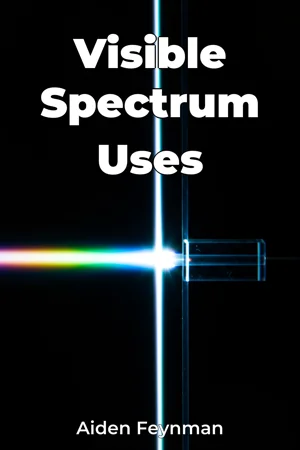
Did you know that the light illuminating your screen is not just for seeing cat videos? "Visible Spectrum Uses" unveils the vast and often unseen applications of visible light across diverse technological and scientific landscapes. This book explores how we harness this portion of the electromagnetic spectrum to innovate, diagnose, and create. The power of visible light extends far beyond simple illumination, and understanding its properties and applications is increasingly important in our technology-driven world. This book will explore three key areas: imaging technologies, sensing and detection methods, and artistic and aesthetic applications. Imaging technologies, from medical diagnostics to industrial quality control, rely heavily on visible light to create detailed representations of objects and processes. Sensing and detection methods use visible light to identify and quantify substances, monitor environmental conditions, and ensure safety in various settings. Finally, the book will delve into how artists and designers utilize visible light to enhance visual experiences and create compelling works. To fully appreciate these modern applications, the book begins with a foundational overview of the physics of visible light, discussing its wave-particle duality, spectral composition, and interaction with matter. Readers will gain an understanding of refraction, reflection, absorption, and fluorescence. Crucially, the book aims to demonstrate that the visible spectrum is not just a passive phenomenon, but an active tool that shapes industries and expands scientific understanding. The central argument of "Visible Spectrum Uses" is that visible light, often taken for granted, is an indispensable resource driving innovation across multiple sectors. By understanding how to manipulate and interpret visible light, we unlock possibilities for advancements in medicine, manufacturing, environmental monitoring, and artistic expression. This argument is vital because it highlights the potential for further exploration and development within this relatively well-understood portion of the electromagnetic spectrum. The book is structured to first introduce the fundamental principles of visible light. Then, it systematically explores its applications across different sectors. The core of the book will cover major points: Firstly, it details its implementation in advanced imaging techniques, like microscopy and endoscopy. Secondly, it examines detection and sensing mechanisms, including spectrophotometry and remote sensing. Lastly, it investigates creative applications in art, design, and entertainment, like holography and light painting. The book culminates by discussing future trends and potential breakthroughs in visible light technology. The arguments presented are supported by a wide array of evidence, including experimental data from scientific studies, case studies of successful technology implementations, and examples of artistic innovations. Data drawn from peer-reviewed publications, industry reports, and patent filings ensure the accuracy and reliability of the information presented. "Visible Spectrum Uses" also makes connections to other fields such as chemistry (spectroscopy), biology (microscopy), and engineering (optical design). Exploring these interdisciplinary connections enriches the understanding of visible light’s versatile applications. This book offers a consolidated view of the multifaceted utility of visible light, emphasizing practical applications and future possibilities. Written in an accessible yet informative style, "Visible Spectrum Uses" is targeted towards scientists, engineers, students, and anyone curious about the pervasive influence of visible light in our daily lives. This book will benefit readers seeking a deeper understanding of light-based technologies and their real-world impact. As a work of science and technology non-fiction, the book prioritizes factual accuracy, clear explanations, and a structured presentation of information. While this book attempts to cover a substantial range of applications, it intentionally limits its scope to only discuss the visible portion of the electromagnetic spectrum, excluding infrared and ultraviolet applications. The knowledge contained within "Visible Spectrum Uses" can empower readers to evaluate and understand the technologies that surround them, inspire innovation in their respective fields, and appreciate the art that surrounds us. While visible light applications are generally accepted and well-established, the book also discusses evolving safety standards in areas such as high-intensity lighting and laser technology, acknowledging ongoing discussions around potential long-term effects.
Did you know that the light illuminating your screen is not just for seeing cat videos? "Visible Spectrum Uses" unveils the vast and often unseen applications of visible light across diverse technological and scientific landscapes. This book explores how we harness this portion of the electromagnetic spectrum to innovate, diagnose, and create. The power of visible light extends far beyond simple illumination, and understanding its properties and applications is increasingly important in our technology-driven world. This book will explore three key areas: imaging technologies, sensing and detection methods, and artistic and aesthetic applications. Imaging technologies, from medical diagnostics to industrial quality control, rely heavily on visible light to create detailed representations of objects and processes. Sensing and detection methods use visible light to identify and quantify substances, monitor environmental conditions, and ensure safety in various settings. Finally, the book will delve into how artists and designers utilize visible light to enhance visual experiences and create compelling works. To fully appreciate these modern applications, the book begins with a foundational overview of the physics of visible light, discussing its wave-particle duality, spectral composition, and interaction with matter. Readers will gain an understanding of refraction, reflection, absorption, and fluorescence. Crucially, the book aims to demonstrate that the visible spectrum is not just a passive phenomenon, but an active tool that shapes industries and expands scientific understanding. The central argument of "Visible Spectrum Uses" is that visible light, often taken for granted, is an indispensable resource driving innovation across multiple sectors. By understanding how to manipulate and interpret visible light, we unlock possibilities for advancements in medicine, manufacturing, environmental monitoring, and artistic expression. This argument is vital because it highlights the potential for further exploration and development within this relatively well-understood portion of the electromagnetic spectrum. The book is structured to first introduce the fundamental principles of visible light. Then, it systematically explores its applications across different sectors. The core of the book will cover major points: Firstly, it details its implementation in advanced imaging techniques, like microscopy and endoscopy. Secondly, it examines detection and sensing mechanisms, including spectrophotometry and remote sensing. Lastly, it investigates creative applications in art, design, and entertainment, like holography and light painting. The book culminates by discussing future trends and potential breakthroughs in visible light technology. The arguments presented are supported by a wide array of evidence, including experimental data from scientific studies, case studies of successful technology implementations, and examples of artistic innovations. Data drawn from peer-reviewed publications, industry reports, and patent filings ensure the accuracy and reliability of the information presented. "Visible Spectrum Uses" also makes connections to other fields such as chemistry (spectroscopy), biology (microscopy), and engineering (optical design). Exploring these interdisciplinary connections enriches the understanding of visible light’s versatile applications. This book offers a consolidated view of the multifaceted utility of visible light, emphasizing practical applications and future possibilities. Written in an accessible yet informative style, "Visible Spectrum Uses" is targeted towards scientists, engineers, students, and anyone curious about the pervasive influence of visible light in our daily lives. This book will benefit readers seeking a deeper understanding of light-based technologies and their real-world impact. As a work of science and technology non-fiction, the book prioritizes factual accuracy, clear explanations, and a structured presentation of information. While this book attempts to cover a substantial range of applications, it intentionally limits its scope to only discuss the visible portion of the electromagnetic spectrum, excluding infrared and ultraviolet applications. The knowledge contained within "Visible Spectrum Uses" can empower readers to evaluate and understand the technologies that surround them, inspire innovation in their respective fields, and appreciate the art that surrounds us. While visible light applications are generally accepted and well-established, the book also discusses evolving safety standards in areas such as high-intensity lighting and laser technology, acknowledging ongoing discussions around potential long-term effects.
"Visible Spectrum Uses" reveals the diverse and often overlooked applications of visible light across technology and science. From medical diagnostics to artistic expression, this book explores how we utilize visible light, a part of the electromagnetic spectrum, to innovate and understand the world around us. For example, advanced imaging technologies like microscopy and endoscopy rely on visible light to create detailed representations, while sensing and detection methods employ it for environmental monitoring, demonstrating its versatility. The book begins with the physics of visible light, explaining its wave-particle duality and interaction with matter, before systematically exploring its applications. It highlights the use of visible light in imaging technologies, sensing and detection, and artistic applications, emphasizing its role in shaping industries and expanding scientific understanding. The book argues that visible light is an indispensable resource, driving innovation across medicine, manufacturing, and art, and concludes with future trends in this field. This resource is valuable to scientists, engineers, students, and anyone curious about light technology and its real-world impact. By understanding how to manipulate and interpret visible light, we unlock possibilities for advancements and gain a deeper appreciation for its influence.
Book Details
ISBN
9788235203540
Publisher
Publifye AS
Your Licenses
You don't own any licenses for this book
Purchase a license below to unlock this book and download the EPUB.
Purchase License
Select a tier to unlock this book
Need bulk licensing?
Contact us for enterprise agreements.