
About This Book
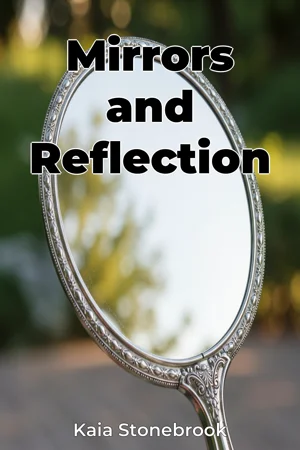
Have you ever stopped to consider the profound impact of a simple reflection? "Mirrors and Reflection" embarks on a journey through time to explore the multifaceted history of mirrors, revealing their pivotal role in science, culture, and technology. This book examines not only the evolution of mirror technology but also the profound influence of mirrors on self-perception, artistic expression, and scientific discovery. This exploration hinges on three key themes: the technological advancements in crafting mirrors, the cultural significance attributed to them across different societies, and their instrumental role in scientific progress. Understanding these elements is crucial because mirrors, far from being mere objects of vanity, have shaped our understanding of the universe and ourselves. We begin by establishing a historical context, tracing the origins of reflective surfaces from naturally occurring pools of water to the development of obsidian mirrors and, eventually, the sophisticated glass mirrors we know today. No specific prior knowledge is required; however, an appreciation for history and scientific curiosity will enhance the reading experience. The central argument posits that mirrors, throughout history, have acted as both tools and symbols, reflecting not only our physical appearances but also our evolving societal values and scientific understanding. This thesis unfolds through a structured narrative. Initially, we delve into the origins of mirrors and their early uses in divination and ritual practices. Then, we investigate the development of mirror-making technologies, focusing on innovations in glass production and metal coating techniques. The book culminates by examining the modern applications of mirrors in telescopes, lasers, and medical imaging, illustrating their continuing relevance in scientific discovery. The arguments presented are supported by extensive research drawn from historical accounts, archaeological findings, scientific publications, and art historical analyses. Primary source materials, such as ancient texts and patents for mirror-making processes, are examined to provide a comprehensive and nuanced understanding. "Mirrors and Reflection" explores interdisciplinary connections. Firstly, its analysis of mirror technologies intersects with materials science, engineering, and chemistry. Secondly, its examination of the cultural symbolism of mirrors links to art history, literature, and psychology. Finally, its exploration of mirrors in scientific instruments makes ties to physics, astronomy, and medicine. These connections enrich the book's argument, demonstrating the pervasive influence of mirrors across diverse fields. What sets this book apart is its comprehensive approach, weaving together technological history, cultural analysis, and scientific applications to provide a holistic understanding of mirrors. The tone is informative and accessible, aimed at engaging a broad readership without sacrificing scholarly rigor. The target audience includes history enthusiasts, science buffs, art lovers, and anyone curious about the hidden stories behind everyday objects. It would be valuable to students, researchers, and general readers seeking a comprehensive yet engaging exploration of mirrors. As a work of non-fiction, "Mirrors and Reflection" adheres to standards of accuracy, objectivity, and thorough referencing. The scope encompasses a broad historical sweep, from ancient times to the present day, focusing primarily on the Western world but also incorporating examples from other cultures. One limitation is the relatively less emphasis on contemporary digital "mirrors," such as social media profiles, to maintain focus on physical reflective surfaces. The knowledge gained from this book can be applied practically by providing a deeper appreciation for the technologies that shape our lives and the cultural values embedded within them. Understanding the history of mirrors can also inform contemporary discussions about self-image, representation, and the impact of technology on society. While the use of mirrors in scientific instruments is largely uncontroversial, the book addresses some debates surrounding the cultural implications of mirrors, such as their role in perpetuating beauty standards and their use in surveillance technologies.
Have you ever stopped to consider the profound impact of a simple reflection? "Mirrors and Reflection" embarks on a journey through time to explore the multifaceted history of mirrors, revealing their pivotal role in science, culture, and technology. This book examines not only the evolution of mirror technology but also the profound influence of mirrors on self-perception, artistic expression, and scientific discovery. This exploration hinges on three key themes: the technological advancements in crafting mirrors, the cultural significance attributed to them across different societies, and their instrumental role in scientific progress. Understanding these elements is crucial because mirrors, far from being mere objects of vanity, have shaped our understanding of the universe and ourselves. We begin by establishing a historical context, tracing the origins of reflective surfaces from naturally occurring pools of water to the development of obsidian mirrors and, eventually, the sophisticated glass mirrors we know today. No specific prior knowledge is required; however, an appreciation for history and scientific curiosity will enhance the reading experience. The central argument posits that mirrors, throughout history, have acted as both tools and symbols, reflecting not only our physical appearances but also our evolving societal values and scientific understanding. This thesis unfolds through a structured narrative. Initially, we delve into the origins of mirrors and their early uses in divination and ritual practices. Then, we investigate the development of mirror-making technologies, focusing on innovations in glass production and metal coating techniques. The book culminates by examining the modern applications of mirrors in telescopes, lasers, and medical imaging, illustrating their continuing relevance in scientific discovery. The arguments presented are supported by extensive research drawn from historical accounts, archaeological findings, scientific publications, and art historical analyses. Primary source materials, such as ancient texts and patents for mirror-making processes, are examined to provide a comprehensive and nuanced understanding. "Mirrors and Reflection" explores interdisciplinary connections. Firstly, its analysis of mirror technologies intersects with materials science, engineering, and chemistry. Secondly, its examination of the cultural symbolism of mirrors links to art history, literature, and psychology. Finally, its exploration of mirrors in scientific instruments makes ties to physics, astronomy, and medicine. These connections enrich the book's argument, demonstrating the pervasive influence of mirrors across diverse fields. What sets this book apart is its comprehensive approach, weaving together technological history, cultural analysis, and scientific applications to provide a holistic understanding of mirrors. The tone is informative and accessible, aimed at engaging a broad readership without sacrificing scholarly rigor. The target audience includes history enthusiasts, science buffs, art lovers, and anyone curious about the hidden stories behind everyday objects. It would be valuable to students, researchers, and general readers seeking a comprehensive yet engaging exploration of mirrors. As a work of non-fiction, "Mirrors and Reflection" adheres to standards of accuracy, objectivity, and thorough referencing. The scope encompasses a broad historical sweep, from ancient times to the present day, focusing primarily on the Western world but also incorporating examples from other cultures. One limitation is the relatively less emphasis on contemporary digital "mirrors," such as social media profiles, to maintain focus on physical reflective surfaces. The knowledge gained from this book can be applied practically by providing a deeper appreciation for the technologies that shape our lives and the cultural values embedded within them. Understanding the history of mirrors can also inform contemporary discussions about self-image, representation, and the impact of technology on society. While the use of mirrors in scientific instruments is largely uncontroversial, the book addresses some debates surrounding the cultural implications of mirrors, such as their role in perpetuating beauty standards and their use in surveillance technologies.
"Mirrors and Reflection" delves into the captivating history of mirrors, revealing their surprising impact on science, culture, and technology. More than simple objects of vanity, mirrors have played a crucial role in shaping our understanding of both the universe and ourselves. The book explores how mirrors evolved from ancient pools of water to sophisticated scientific instruments, tracing technological advancements in mirror-making. One intriguing fact is that early mirrors were often associated with divination and ritual practices, highlighting their cultural significance beyond mere reflection. Exploring the cultural significance of mirrors across different societies, the book also details their instrumental role in scientific progress. "Mirrors and Reflection" examines how mirrors are indispensable in telescopes, lasers, and medical imaging. This comprehensive approach sets this book apart, weaving together technological history, cultural analysis, and scientific applications. The book starts by establishing a historical context, then investigates the development of mirror-making technologies, and culminates in examining the modern applications of mirrors in science.
Book Details
ISBN
9788235203496
Publisher
Publifye AS
Your Licenses
You don't own any licenses for this book
Purchase a license below to unlock this book and download the EPUB.
Purchase License
Select a tier to unlock this book
Need bulk licensing?
Contact us for enterprise agreements.